How to Use Air Fryer for the First Time: Simple Setup Tips
To use your air fryer for the first time, start by removing all packaging and washing the basket and tray.
Place it on a stable, heat-resistant surface with good airflow and plug it directly into a grounded outlet.
If your manual allows, run an empty cycle at about 350°F for 10–15 minutes to burn off odors.
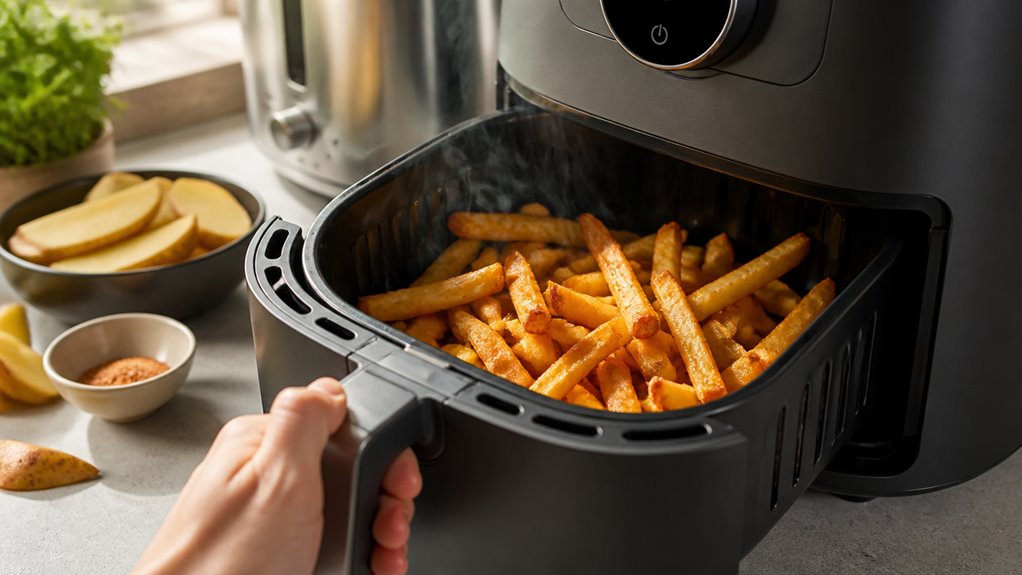
Preheat if recommended, then add food in a single layer without crowding.
Keep an eye on it for even cooking and safety.
There’s much more to master for perfect results.
Key Takeaways
- Remove all packaging, wash the basket and tray, and wipe the exterior before assembling your air fryer.
- Place the air fryer on a stable, heat-resistant surface with adequate ventilation and plug into a grounded wall outlet.
- Run an empty cycle at about 350°F (180°C) for 10–15 minutes to burn off factory residues if the manual allows.
- Preheat the air fryer for 3–5 minutes at the cooking temperature to ensure even heat distribution before adding food.
- Load food in a single, even layer without overcrowding, and monitor cooking to avoid burning or uneven results.
How to Prepare Your Air Fryer for First Use?
Before you fire up your new air fryer, start by carefully reading the manual that came with it. This guide will walk you through the specific steps and precautions unique to your model.
Begin by thoroughly reading your air fryer’s manual to understand its unique features and safety tips.
Next, remove all packaging, tape, and protective stickers from both the unit and the basket. Wash the removable basket and tray thoroughly with warm, soapy water.
Then dry them completely before assembling. Wipe the appliance’s exterior with a damp cloth, but never submerge the main unit in water.
If your manual permits, run the air fryer empty once to burn off any factory residues or odors. Some models suggest a first-use cycle, while others don’t.
Following these steps guarantees your air fryer is clean, safe, and ready to cook delicious meals. For best results and safety, ensure your air fryer features AirCrisp® technology, which promotes even hot air circulation and healthier cooking with less fat.
How to Place Your Air Fryer Safely?
Once your air fryer is clean and prepped, the next step is to find the perfect spot for it in your kitchen.
Place it on a stable, level surface that’s heat-resistant and non-flammable, like a countertop made of stone or metal.
Make sure there’s enough space around the fryer, at least a few inches, to keep vents clear and allow proper airflow, which prevents overheating.
Avoid placing it near curtains, paper towels, or other flammable items.
Never put it on a surface that could be damaged by heat or steam.
Choosing the right spot not only keeps you safe but also guarantees your air fryer works efficiently every time you use it.
For optimal results, ensure your air fryer’s placement allows easy visibility of the viewing window to monitor cooking progress without opening the unit.
How to Plug in Your Air Fryer Safely?
Although setting up your air fryer might feel straightforward, plugging it in safely is essential for both performance and fire prevention.
First, make certain the appliance sits on a stable, heat-resistant surface with good ventilation. Avoid using extension cords or power strips; instead, plug your air fryer directly into a grounded wall outlet designed for kitchen appliances.
Before plugging it in, check the power cord for any damage and keep it away from hot surfaces to prevent melting or sparks.
Make sure the cord isn’t stretched tight or tangled, which could cause accidents. Position the fryer so the cord doesn’t cross walkways or counter edges, reducing tripping hazards.
Following these simple steps will help your air fryer work efficiently and keep your kitchen safe.
Additionally, choosing a model with sufficient heating power ensures optimal performance and faster cooking times.
How to Perform the First Empty Test Run Safely?
Start your air fryer’s first empty test run by carefully following the manufacturer’s specific instructions, as models vary in temperature settings and duration.
Place your air fryer on a stable, heat-resistant surface with plenty of ventilation space.
Make sure the basket and tray are clean and dry, and the appliance body wiped down.
Plug it directly into a suitable outlet, avoiding extension cords.
If your manual permits, set the temperature, often around 350°F (180°C), and run it for 10 to 15 minutes.
Keep the kitchen ventilated, as new units may emit a mild odor.
Stay close during the cycle to monitor for unusual smells or smoke.
This test run helps burn off manufacturing residues, ensuring your air fryer is safe and ready for cooking.
Preheating the air fryer before use ensures the heating element stabilizes for consistent temperature and optimal performance during the first run, making it an essential step in the setup process for even heat distribution.
When and How to Preheat Your Air Fryer?
Because preheating needs vary by model and recipe, you should always check your air fryer’s manual before beginning. Some models require preheating, while others don’t. When you do preheat, it’s typically for 2 to 5 minutes at the cooking temperature to guarantee even heat distribution.
Preheating helps your food cook faster and crispier, but skipping it won’t ruin most recipes.
Here’s a quick guide:
| Preheat Needed? | Typical Duration | Common Temp | Notes |
|---|---|---|---|
| Yes | 3-5 minutes | 350°F-400°F | For frozen foods |
| Yes | 2-3 minutes | 325°F | For delicate items |
| No | N/A | N/A | Some slow-cook meals |
| Follow Manual | Varies | Varies | Always your best bet |
Many Cuisinart air fryer models feature advanced airflow technology, like AirAdvantage, which ensures even heat distribution during cooking.
Follow these tips for peak results.
How to Load Food Properly for Best Cooking Results?
To get the best cooking results, it’s important not to overfill the basket. You want to give that hot air plenty of space to circulate around your food. Think of it like giving your dish some breathing room!
Arranging your items in a single, even layer is key, too. This helps everything cook evenly and achieve that nice, crispy texture we all love.
And don’t forget to follow your recipe’s instructions for temperature and timing. Sticking to those guidelines will help you whip up perfect dishes every time!
Using models with 360º superheated airflow or steam & crisp modes can further enhance even cooking and moisture retention.
Avoid Overfilling Basket
Frequently, the key to perfectly cooked air fryer meals lies in how you load the basket.
Avoid overfilling it; crowding restricts airflow, which is essential for even cooking and crispiness.
Think of your air fryer as a mini convection oven; air needs space to circulate freely around each piece of food.
When you stuff the basket too full, some areas won’t get enough heat, leading to uneven results and longer cooking times.
Keep the basket no more than two-thirds full to allow hot air to flow properly.
This simple step not only guarantees your food cooks evenly but also helps prevent sogginess or undercooked spots.
Proper airflow and even heat distribution are critical to restoring crispness and maintaining juiciness during reheating.
Arrange Food Evenly
Arrange your food in a single, even layer to maximize airflow and guarantee consistent cooking throughout. Properly spacing your ingredients helps hot air circulate evenly, preventing soggy or undercooked spots.
Avoid stacking or crowding items, as this blocks airflow and compromises texture and doneness.
To load your air fryer basket effectively:
Place similar-sized pieces together for uniform cooking times. Leave small gaps between items to promote air circulation. Avoid overlapping food to secure crispiness on all sides. Use the basket’s surface area wisely without piling up. Preheating your air fryer to 370°F (190°C) ensures even and efficient cooking results.
Follow Recipe Instructions
When you follow recipe instructions carefully, you make certain that your air fryer cooks your food evenly and thoroughly.
Pay close attention to how the recipe advises loading the basket. Avoid overfilling it, as crowding blocks the hot air flow that crisps and cooks your food perfectly.
Arrange ingredients in a single, even layer whenever possible to encourage consistent heat distribution.
Recipes often specify ideal temperatures and times tailored to different foods; stick to these to prevent undercooking or burning.
If the recipe suggests shaking or flipping food midway, don’t skip it. That step guarantees every side gets that golden, crispy finish.
Preheating the air fryer for 3–5 minutes ensures even heat distribution and helps avoid soggy results by jump-starting the crisping process, making it a key step for optimal cooking.
How to Set Temperature and Timer for Your Recipes?
Although air fryer controls vary by model, setting the right temperature and timer is essential to achieving perfectly cooked food every time. You’ll want to follow your recipe’s instructions carefully, adjusting based on your specific appliance.
Most air fryers let you select temperatures from about 180°F to 400°F (80°C to 200°C), with timers ranging from a few minutes up to an hour.
Here’s how to set temperature and timer for your recipes:
Match the temperature to your recipe’s recommendation for best texture and doneness.
Set the timer to the suggested cooking duration; you can always add more time if needed.
Use the manual or digital controls to make precise adjustments.
Avoid overfilling the basket to guarantee even cooking at your set temperature and time.
Setting these correctly helps you enjoy delicious results every time. Keep in mind that reducing oven recipe times by about 20% when using an air fryer can help prevent overcooking and achieve optimal results with shorter cooking durations, as explained in recipe conversion guidelines.
How to Monitor Your Air Fryer While Cooking?
Regularly keeping an eye on your air fryer while it cooks helps guarantee your food turns out perfectly and safely.
Stay nearby to catch any burning smells, unusual noises, or smoke early. These signs mean you should switch it off immediately.
Avoid touching hot surfaces and keep your hands and face clear of vents where hot air or steam escapes to prevent burns.
Don’t add oil or liquids unless your manual says it’s okay. Never block airflow by covering vents or placing plastic inside.
If your recipe or manual suggests, shake or turn your food halfway through cooking to encourage even browning.
Watching closely not only prevents accidents but also helps you learn your air fryer’s quirks for better future results.
Safe Accessories to Use With Your Air Fryer
You’ll often find that using the right accessories can enhance your air frying experience, but it’s important to choose only those approved for your specific model.
Using safe accessories keeps your appliance functioning well and prevents airflow blockages or damage. Always check your manual before adding anything new.
Consider these safe options to optimize cooking:
- Silicone mats or liners designed for air fryers that resist heat and allow air circulation.
- Metal racks or trays that fit your basket, letting you cook multiple layers without overcrowding.
- Oven-safe parchment paper with perforations to prevent sticking while maintaining airflow.
- Heatproof tongs or utensils to safely turn or remove food without scratching the basket’s coating.
Stick with these guidelines, and your air frying will stay safe and efficient.
How to Cool and Clean Your Air Fryer?
Once you finish cooking, switch off and unplug your air fryer to guarantee safety before letting it cool down completely. This pause prevents burns and ensures the appliance is safe to handle.
When cooled, remove the basket and tray carefully. Wash these parts with warm, soapy water or follow your manual’s dishwasher instructions if suitable. For stubborn grease, soak them until residue softens.
Wipe the interior gently with a damp cloth or sponge; never immerse the main unit in water. Dry all components thoroughly before reassembling.
Regular cleaning keeps your air fryer efficient and extends its lifespan while also preventing unpleasant odors and buildup. Taking these simple steps after each use guarantees your air fryer stays in top shape for many delicious meals ahead.
Frequently Asked Questions
Can I Use Aluminum Foil in My Air Fryer?
Yes, you can use aluminum foil in your air fryer, but only if your model’s manual explicitly approves it.
When you do, make sure to secure the foil tightly so it doesn’t block airflow or cover ventilation openings. Air circulation is key for even cooking.
Avoid placing foil directly on the basket’s bottom and never let it touch heating elements. Following these precautions keeps your food safe and your fryer working efficiently.
How Do I Prevent Food From Sticking to the Basket?
Did you know 70% of air fryer users struggle with food sticking? To prevent this, lightly coat the basket with a high-smoke-point oil, like avocado or canola.
Avoid overfilling the basket; leave space for hot air to circulate evenly. You can also use perforated parchment paper designed for air fryers, but never block vents.
Shaking or flipping food halfway through cooking helps too, ensuring a crispy, non-stuck finish every time.
Are Air Fryer Recipes Transferable to Other Brands?
Yes, you can transfer air fryer recipes between brands, but expect some tweaks. Each air fryer varies in size, wattage, and airflow, affecting cooking time and temperature.
You’ll want to monitor your food closely the first few tries, adjusting as needed for crispiness or doneness. Think of recipes as flexible guides rather than strict rules. You’ll quickly learn how your specific model performs for the best results.
Can I Cook Frozen Foods Without Thawing First?
Imagine tossing frozen fries into a 1950s jukebox—it’s instant, no thawing needed.
Yes, you can cook frozen foods straight from the freezer in your air fryer.
Just don’t overload the basket; keep it about two-thirds full for even air circulation.
Adjust time and temperature based on the food type and recipe, shaking or flipping halfway through.
You’ll get crispy, delicious results without waiting for thawing.
What Should I Do if My Air Fryer Emits Smoke?
If your air fryer emits smoke, immediately switch it off and unplug it.
Check for excess grease or food debris inside the basket or heating element, as buildup can cause smoking.
Let it cool before cleaning thoroughly, removing any stuck-on residue.
Avoid overcrowding the basket and never add oil unless your model allows it.
Ensure good ventilation, and if smoke persists, consult your manual or contact customer support for safety advice.
Start Your Air Fryer Journey With Confidence
Using your air fryer for the first time is like setting sail on a smooth, exciting voyage.
By prepping it properly, placing it safely, and monitoring your cooking, you’ll navigate each recipe with ease.
Remember to preheat when needed, use safe accessories, and cool it down before cleaning.
With these simple steps, your air fryer will become your trusty kitchen companion, turning everyday meals into crispy, delicious adventures.