Air Fryer vs Oven Times: Which Appliance Saves You More Time?
You’ll cook about 20% faster in an air fryer than in a conventional oven, thanks to rapid hot-air circulation and efficient heat transfer.
For example, a 30-minute oven recipe takes around 24 minutes in an air fryer, with temperatures lowered by 15–25°C to avoid burning.
Air fryers also preheat quicker and deliver crispier results in smaller batches.
If you want to master adjustments and avoid overcooking, there’s more valuable info ahead.
Key Takeaways
- Air fryers cook food about 20–25% faster than conventional ovens due to rapid hot-air circulation and smaller cooking chambers.
- To convert oven recipes, reduce cooking time by 20% and lower temperature by 15–25°C for air fryer use.
- Air fryers preheat much faster, typically in 0–4 minutes, compared to ovens requiring 10–15 minutes.
- Avoid overcrowding the air fryer basket to maintain efficient airflow and consistent cooking times.
- Use air fryers for quick meals under 30 minutes, and ovens for larger or slow-cooked dishes.
Cooking Times and Features for Air Fryers Versus Ovens
| Aspect | Air Fryer | Conventional Oven |
|---|---|---|
| Cooking Speed | 20–25% faster due to rapid hot-air circulation | Standard cooking times, slower heat transfer |
| Preheat Time | 0–4 minutes, heats up quickly | 10–15 minutes, longer warm-up period |
| Cooking Capacity | Compact 2–9 quarts, ideal for small batches | Much larger cavities, suits big meals |
| Temperature Adjustment | Lower by 15–25°C from oven recipe for best results | Use recipe temperature as is |
| Best For | Quick meals, crispy textures, reheating leftovers | Large portions, baking, slow cooking |
| Energy Consumption | Up to 50% less energy due to shorter cooking and preheat times | Higher energy use for longer cooking and preheating |
| Tips for Optimal Use | Avoid overcrowding to maintain airflowShake or stir food halfway throughPreheat for even crispiness | Allow full preheat for even cookingUse multiple racks for larger mealsCheck doneness periodically |
Air Fryer vs Oven: Which Cooks Faster?

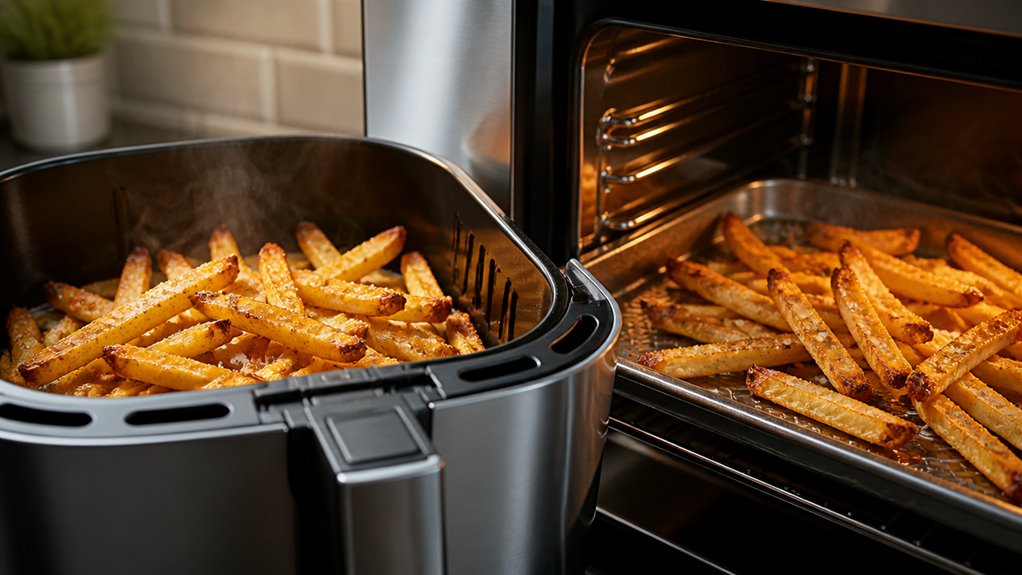
Although conventional ovens are versatile, air fryers cook your food noticeably faster due to their rapid hot-air circulation.
You’ll typically see about a 20% reduction in cooking time when using an air fryer compared to an oven.
For example, if a recipe calls for 30 minutes in the oven, expect around 24 minutes in the air fryer.
This speed advantage makes air fryers ideal when you want quick meals or fast reheats.
You should also consider that air fryer preheat times are much shorter, often just a few minutes, compared to ovens.
Keep this time difference in mind, especially when you’re juggling a tight schedule or cooking small portions, as air fryers deliver speed without sacrificing quality.
Many models feature Rapid Super Convection technology that further reduces cooking time and ensures even heating.
Why Air Fryers Cook Food More Quickly?
You’ll notice that air fryers cook food faster, and that’s mainly because they’ve this amazing rapid hot-air circulation.
It really speeds up heat transfer, which means your food gets cooked evenly and quickly.
Another thing to consider is their smaller cooking capacity.
Since there’s less space to heat up, your food reaches the right temperature much quicker.
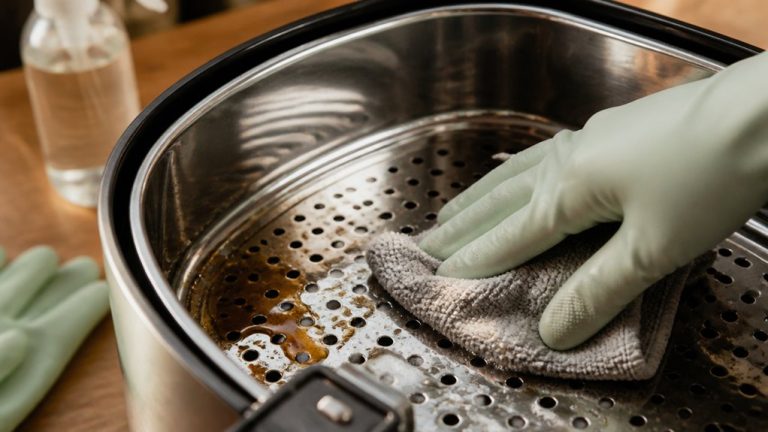
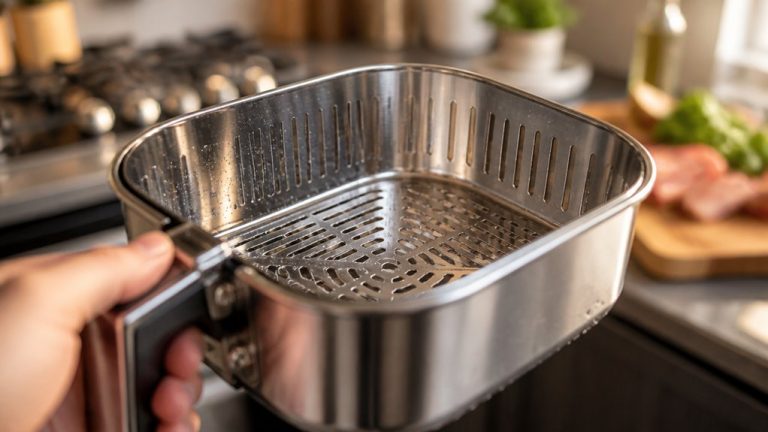
To maintain this efficiency, it’s important to perform regular cleaning of the air fryer basket to prevent residue buildup and ensure optimal airflow.
Rapid Hot-Air Circulation
Rapid hot-air circulation powers the air fryer’s ability to cook food faster than a conventional oven. When you use an air fryer, a powerful fan quickly circulates hot air around your food, creating an even and intense heat environment.
This rapid airflow speeds up the cooking process by transferring heat more efficiently to the food’s surface, promoting crispiness without drying out the inside. Unlike traditional ovens, which rely on slower convection or radiant heat, the air fryer’s focused air movement reduces cooking times by roughly 20–25%.
You’ll notice this especially when preparing small batches or reheating leftovers. Understanding this circulation mechanism helps you adjust cooking times and temperatures properly, ensuring your food cooks quickly, evenly, and with the perfect texture every time. Maintaining at least a one-inch gap between food or racks is essential to allow super-heated air circulation for optimal crisping and even cooking.
Smaller Cooking Capacity
The focused hot-air circulation in an air fryer works best within its smaller cooking chamber. This markedly impacts cooking speed. Because the cooking space is compact, heat reaches your food more efficiently, reducing cook times compared to a larger oven cavity.
This smaller capacity means the air fryer can rapidly maintain consistent temperatures, crisping your food faster.
Air fryers often utilize AirCrisp® technology to circulate hot air evenly, enhancing crispiness while using up to 75% less fat than traditional frying.
| Appliance | Cooking Capacity | Preheat Time | Typical Cook Time | Best For |
|---|---|---|---|---|
| Air Fryer | 2–9 quarts | 0–4 minutes | 20% faster | Small batches, quick meals |
| Conventional Oven | Much larger | 10–15 minutes | Standard | Large meals, baking |
You’ll find air fryers ideal for speedy cooking without sacrificing texture or flavor.
Adjusting Oven Recipes for Air Fryers
When you’re converting your oven recipes for the air fryer, a good rule of thumb is to cut the cooking time by about 20%. This helps to avoid overcooking your food. Also, don’t forget to lower the temperature by about 15–25°C (or around 25°F). This way, you can prevent burning while still keeping that delicious crispiness.
And here’s a little tip: make sure to check on your food halfway through. This lets you make any quick adjustments based on how your specific air fryer cooks. Happy air frying!
For best results, consider preheating your air fryer to ensure even cooking and crispier texture before adding your food.
Time Reduction Tips
Cutting down cooking time is one of the biggest advantages you’ll notice when switching from an oven to an air fryer.
To adjust oven recipes effectively, reduce the cooking time by about 20%, keeping a close eye on your food as it cooks.
For example, if a recipe calls for 30 minutes in the oven, start checking around 24 minutes in the air fryer.
Since air fryers cook faster due to rapid hot-air circulation, checking early helps prevent overcooking.
Also, avoid overcrowding the basket, as it can slow cooking and affect crispiness.
Remember, small-batch meals benefit most from these time reductions.
Using an air fryer with precise temperature control and efficient airflow ensures even cooking and optimal crispness while reducing overall cooking time.
Temperature Adjustment Guidelines
Along with shortening cooking times, you’ll want to adjust temperatures to get the best results when using an air fryer.
Since air fryers circulate hot air rapidly, they cook food faster and more intensely than ovens. To avoid overcooking or burning, lower the temperature from your oven recipe by about 15–25°C (25°F).
Here’s a practical guide to help you:
- Reduce oven temperature by 15–25°C (e.g., 200°C oven becomes 175–185°C air fryer).
- Cut cooking time by roughly 20% and check food halfway through.
- If browning happens too fast, lower the temperature another 10–15°C.
Following these guidelines guarantees your air fryer meals come out crispy and perfectly cooked every time. Using models with precise temperature control further enhances cooking accuracy and energy efficiency.
Best Temperature Conversions: Oven to Air Fryer
Although air fryers cook faster than conventional ovens, you’ll want to adjust the temperature to prevent over-browning or burning. A good rule of thumb is to reduce the oven temperature by about 15–25°C (25°F) when switching to an air fryer.
For example, if your oven recipe calls for 200°C, set your air fryer to around 175–185°C. This temperature drop accounts for the air fryer’s rapid hot-air circulation, which cooks food more efficiently.
Common conversions include lowering 220°C to 205°C and 190°C to 175°C. Starting with these adjustments helps you achieve similar results without risking burnt or overly browned food.
Always check early since air fryer performance can vary by model and food thickness. The use of convection and airflow design in air fryers is crucial for achieving consistent crispiness and even cooking results.
Practical Time Reduction Examples for Air Fryer Cooking
When you switch from oven to air fryer cooking, you’ll want to shorten your cooking times by about 20%. This adjustment accounts for the air fryer’s rapid hot-air circulation, which cooks food faster and crispier.
For practical time conversions, consider these examples: A 30-minute oven recipe usually takes about 24 minutes in the air fryer. If your oven recipe says 15 minutes, start checking around 12 minutes in the air fryer.
For a 60-minute oven dish, expect it done in about 45–48 minutes using an air fryer. Always check your food early to avoid overcooking.
These time reductions help you enjoy quicker meals without sacrificing texture or taste, making air fryers great for efficient cooking. Using a crisper tray can further enhance cooking efficiency and achieve more even browning due to improved hot air circulation.
Preventing Overcooking in Air Fryers
Since air fryers cook food faster and at slightly lower temperatures than conventional ovens, you need to adjust your cooking approach to prevent overcooking.
Start by reducing the oven recipe time by about 20% and lowering the temperature by 15–25°C.
Check food halfway through to avoid burning or drying out.
Avoid overcrowding the basket, as this blocks air circulation and causes uneven cooking.
If food browns too quickly, lower the temperature further.
Using air fryers with EvenCrisp technology can help achieve crispy results while using significantly less oil.
| Oven Time | Air Fryer Time |
|---|---|
| 30 mins | 24 mins |
| 20 mins | 16 mins |
| 15 mins | 12 mins |
| 10 mins | 8 mins |
When to Use an Air Fryer vs Oven Based on Cooking Time?
Because air fryers cook food faster than conventional ovens, you’ll want to choose your appliance based on how much time you have and the size of your meal.
Air fryers save time, so pick your appliance based on meal size and how quickly you need to cook.
If you’re short on time or preparing a small batch, the air fryer is your best bet. For larger meals or dishes requiring even baking, the oven works better.
Consider these points:
Use an air fryer for quick meals under 30 minutes, especially when crispiness matters.
Opt for the oven when cooking large portions or dishes needing slow, even heat.
Switch based on convenience, like reheating small leftovers in an air fryer versus roasting a whole chicken in the oven.
This way, you maximize efficiency and get the best results from each appliance.
How Preheat Times Differ Between Air Fryers and Ovens?
Choosing between an air fryer and an oven isn’t just about cooking speed or meal size; it also impacts how quickly your appliance heats up.
Air fryers typically preheat in 0 to 4 minutes thanks to their compact size and powerful rapid hot-air circulation. This means you can start cooking almost immediately, saving valuable time in your meal prep.
On the other hand, conventional ovens usually require 10 to 15 minutes to reach the desired temperature, especially when heating a larger cavity. This longer preheat time is necessary to guarantee even heating throughout the oven space.
How Food Type and Quantity Affect Cooking Times?
Adjusting cooking times in your air fryer or oven depends heavily on the type and amount of food you’re preparing. Different foods absorb heat uniquely, and larger quantities slow down cooking.
Cooking times vary with food type and quantity, as heat absorption and volume impact how quickly food cooks.
For example, dense meats take longer than vegetables, and stacking items can block airflow, especially in air fryers.
Keep these tips in mind:
Food density: Thick or dense foods need more time; thin or small items cook faster.
Quantity: Crowding the basket or tray reduces hot air circulation, extending cook times.
Moisture content: High-moisture foods can steam rather than crisp, requiring adjustments in temperature or time.
Frequently Asked Questions
Can I Use the Same Cookware in an Air Fryer and Oven?
You can often use the same cookware in both an air fryer and an oven, but you need to check if it fits inside your air fryer basket or tray.
Make sure your cookware is oven-safe and can handle high heat.
Avoid glass or ceramic dishes unless they’re labeled air fryer-safe since air fryers rely on air circulation and smaller spaces.
Metal pans, silicone molds, and some nonstick trays usually work well in both appliances.
How Does Humidity Affect Cooking Times in Air Fryers Vs Ovens?
Humidity impacts cooking times by slowing moisture evaporation.
In an air fryer, lower humidity and rapid hot-air circulation speed cooking, making food crispier faster.
In contrast, ovens often have higher humidity, which can lengthen cooking times and soften textures.
You’ll notice air fryers dry foods quicker, so you might need to watch closely to avoid overcooking.
Ovens might require slightly longer times to achieve similar browning and doneness.
Are Air Fryer Cooking Times Affected by Altitude Like Ovens?
Imagine climbing a mountain where the air thins and your breath quickens. Just like your lungs, cooking reacts to altitude.
Yes, air fryer cooking times do change with altitude, but less dramatically than ovens. You’ll want to increase cooking time slightly and possibly raise the temperature a bit since lower air pressure affects heat transfer.
Always check your food early and adjust as needed to avoid undercooking or dryness.
Do Air Fryers Require Shaking or Stirring Food for Even Cooking?
Yes, you usually need to shake or stir food in an air fryer for even cooking.
Because air fryers circulate hot air rapidly within a confined basket, shaking helps expose all surfaces to heat.
This prevents uneven browning or undercooked spots.
For foods like fries or nuggets, giving the basket a quick shake halfway through cooking guarantees crispiness and uniform texture.
Just be careful when handling hot baskets to avoid burns.
How Do Energy Consumption Levels Compare Between Air Fryers and Ovens?
You’ll use about 50% less energy with an air fryer compared to a conventional oven.
Because air fryers cook faster and require less preheating, they consume less electricity overall.
This efficiency makes them great for small meals or quick snacks.
However, if you’re cooking large portions, ovens might balance out energy use better.
Elevate Your Meals with Smart Air Fryer Vs Oven Times Adjustments
When you’re juggling dinner time, picture the air fryer as your speedy kitchen sidekick, crisping food faster with a powerful hot air whirlwind.
While ovens offer steady, even cooking for larger meals, the air fryer’s quick heat means you’ll enjoy that golden crunch sooner.
Just tweak temperatures and times a bit, and you’ll master both tools.
Whether it’s a busy weeknight or a relaxed feast, knowing when to use each saves time and elevates every bite.