
Baking Substitute for Eggs: 10 Swaps for Cakes, Cookies and Muffins
The best baking substitute for eggs depends on what the egg does in your recipe. For one egg, the most reliable all-round swap is a flax egg (1 tablespoon ground flaxseed mixed with 3 tablespoons of water, rested 5 minutes). For moist cakes and muffins, ¼ cup of applesauce, mashed banana or plain yogurt works well. For light, airy bakes, 3 tablespoons of aquafaba (the liquid from a can of chickpeas) or 1 teaspoon baking powder + 1 tablespoon oil + 1 tablespoon water gives lift. Most swaps work best in recipes with one or two eggs.
The chart below lists ten substitutes with the amount per egg and the bakes each one suits, followed by tips for cakes, cookies, muffins and brownies. Pick the swap that matches the job the egg does in your recipe, and your bake will turn out closer to the original.
Key Takeaways
- Eggs bind, add moisture, help bakes rise and add richness; pick a substitute that does the job your recipe needs.
- Flax egg: the best general binder for cookies, muffins and quick breads.
- Applesauce, banana and yogurt: add moisture to cakes, muffins and brownies.
- Aquafaba or baking powder + oil + water: best when you need lift.
- Replace up to 2 eggs easily; recipes with 3 or more eggs (sponge cake, custard) are hard to swap.
What Do Eggs Do in Baking?
Before choosing a swap, it helps to know which job the egg is doing. Most recipes use eggs for more than one of these:
- Binding: proteins set as they heat and hold the crumbs together (cookies, meatloaf-style bars, quick breads).
- Moisture: a large egg is about three-quarters water, which keeps cakes and muffins tender.
- Leavening: beaten eggs trap air, and their water turns to steam in the oven (sponge cake, soufflé, popovers).
- Richness and color: the yolk adds fat, flavor and a golden crumb and crust.
- Emulsifying: the yolk helps fat and liquid blend smoothly.
In a cookie the egg mostly binds; in a muffin it adds moisture and binding; in a sponge cake it provides almost all of the rise. That is why no single substitute works everywhere.
Egg Substitutes for Baking Chart
| Substitute | Amount per egg | Best for | Effect |
|---|---|---|---|
| Flax egg | 1 tbsp ground flaxseed + 3 tbsp water | Cookies, muffins, quick breads, pancakes | Binds well; slightly nutty, denser |
| Chia egg | 1 tbsp chia seeds + 3 tbsp water | Muffins, brownies, oat bakes | Binds; visible seeds |
| Applesauce | ¼ cup unsweetened | Cakes, muffins, brownies, quick breads | Moist, slightly denser |
| Mashed banana | ¼ cup ripe banana | Muffins, pancakes, brownies, banana-friendly cakes | Moist, banana flavor |
| Plain yogurt | ¼ cup | Cakes, muffins, cupcakes | Moist, tender, a little tang |
| Buttermilk | ¼ cup | Cakes, cupcakes, pancakes | Tender; pair with baking soda |
| Aquafaba | 3 tbsp (2 tbsp for a white) | Meringues, macarons, light cakes, cookies | Light and airy; neutral taste |
| Baking powder + oil + water | 1 tsp + 1 tbsp + 1 tbsp | Cakes, cupcakes, muffins | Lift and moisture |
| Vinegar + baking soda | 1 tbsp vinegar + 1 tsp baking soda | Fluffy cakes, cupcakes | Lift; add right before baking |
| Silken tofu | ¼ cup blended | Brownies, dense cakes, cheesecake-style bakes | Rich and moist, dense |
10 Best Egg Substitutes, Explained
Each substitute below replaces one large egg. Double it for two.
1. Flax Egg
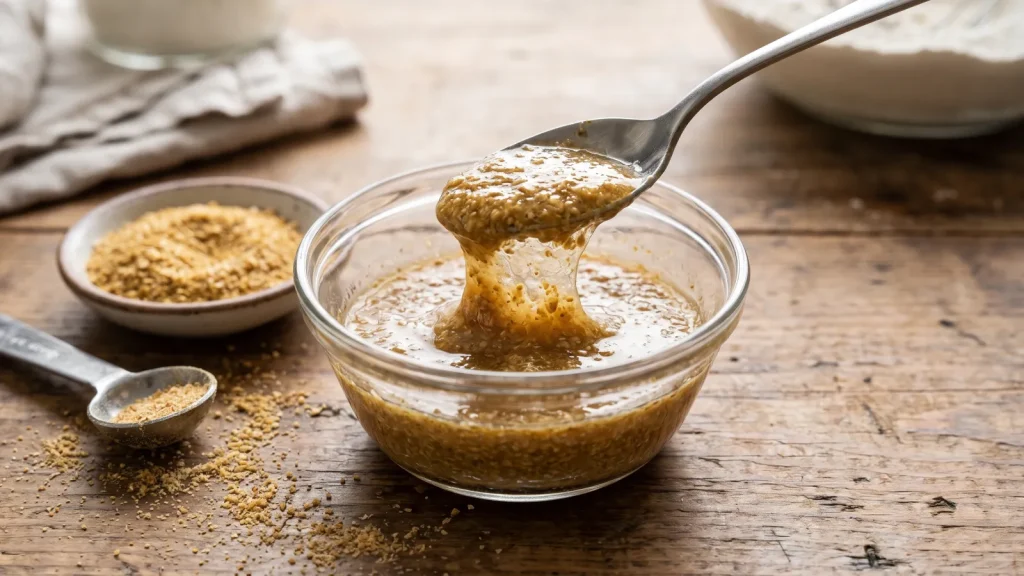
Stir 1 tablespoon of ground flaxseed into 3 tablespoons of water and leave it for 5 minutes until it turns gel-like. It binds almost like an egg and suits cookies, muffins, pancakes and quick breads. Use golden flax in pale bakes to avoid brown flecks. Whole seeds don’t work; grind them first.
2. Chia Egg
Mix 1 tablespoon of chia seeds with 3 tablespoons of water and rest 10 minutes. It binds like a flax egg. The seeds stay visible, so it suits rustic muffins and brownies best. Grind the seeds for a smoother texture.
3. Applesauce
Use ¼ cup of unsweetened applesauce per egg. It keeps cakes, muffins and brownies moist but doesn’t help them rise much, so add ½ teaspoon of baking powder per egg replaced if the recipe needs lift. If you only have sweetened applesauce, cut the sugar slightly.
4. Mashed Banana
¼ cup of very ripe mashed banana per egg. It binds and moistens well but tastes of banana, so use it where that fits: muffins, pancakes, oat bars, chocolate cakes and brownies.
5. Plain Yogurt
¼ cup of plain or Greek yogurt per egg gives tender, moist cakes and cupcakes. Dairy-free yogurt works too. Its acidity pairs well with a little baking soda.
6. Buttermilk
¼ cup of buttermilk per egg keeps cakes and pancakes soft. Like yogurt, it is acidic, so recipes that already use baking soda rise nicely. To make your own, stir 1 teaspoon of lemon juice into ¼ cup of milk and wait 5 minutes.
7. Aquafaba
Aquafaba is the thick liquid from a can of chickpeas. Use 3 tablespoons per whole egg or 2 tablespoons per egg white. Whipped with a few drops of lemon juice, it forms stiff peaks for meringues and macarons. Unwhipped, it binds cookies and light cakes. It has no chickpea flavor once baked.
8. Baking Powder, Oil and Water
Mix 1 teaspoon of baking powder, 1 tablespoon of neutral oil and 1 tablespoon of water per egg. It adds both lift and moisture, so it is good in cakes, cupcakes and muffins. Make sure the baking powder is fresh; see baking powder vs baking soda for a quick freshness test.
9. Vinegar and Baking Soda
Stir 1 tablespoon of white or apple cider vinegar with 1 teaspoon of baking soda and add it to the batter right away. The fizz lifts light cakes and cupcakes. Bake as soon as it is mixed in.
10. Silken Tofu
Blend ¼ cup of silken tofu until smooth. It makes rich, dense, moist bakes such as brownies, chocolate cake and pumpkin bars. It adds no flavor but doesn’t help with rise.
Best Egg Substitute for Cakes and Cupcakes
Cakes need lift and moisture. The best choices are baking powder + oil + water, yogurt or buttermilk, and vinegar + baking soda. Applesauce works if you add ½ teaspoon of baking powder per egg. Avoid swapping eggs in recipes that rely on them for height, such as sponge, chiffon and angel food cake; choose a recipe written without eggs instead.
Best Egg Substitute for Cookies
Cookies mostly need binding. A flax egg gives the closest result to a regular cookie. Aquafaba gives a slightly crisper cookie, and yogurt a softer, cakier one. Chill the dough for 30 minutes before baking; egg-free doughs tend to spread a little more.
Best Egg Substitute for Muffins and Quick Breads
Muffins and quick breads are the most forgiving. Applesauce, mashed banana, yogurt or a flax egg all work well. For taller muffins, add ½ teaspoon of baking powder for each egg you replace. Don’t overmix the batter: without egg proteins, a dense crumb comes more from overmixing than from the substitute.
Best Egg Substitute for Brownies
Fudgy brownies need moisture and binding. Use mashed banana, silken tofu, applesauce or a flax egg. Banana and tofu give the fudgiest texture. Bake for the same time, but check a few minutes early; egg-free brownies set more slowly in the center and firm up as they cool.
How to Replace Egg Whites or Egg Yolks?
- Egg white: 2 tablespoons of aquafaba per white. Whip it with a few drops of lemon juice for meringue.
- Egg yolk: 1 tablespoon of neutral oil or melted butter plus 1 teaspoon of water adds richness. For binding, 1 teaspoon of ground flax mixed with 1 tablespoon of water works.
- Egg wash: brush with milk, plant milk, melted butter or a little maple syrup thinned with water for shine.
Tips for Baking Without Eggs
- Replace only one or two eggs. Recipes with three or more eggs change too much; look for a recipe written to be egg-free, such as this gluten and egg free bread recipe.
- Measure by weight. A large egg without its shell weighs about 50 g, so aim for about 50 g of substitute.
- Expect a slightly denser crumb. That’s normal; a little extra baking powder helps.
- Check doneness by touch or a toothpick, not color: some substitutes brown less.
For more ideas, see our collection of gluten, egg and dairy free recipes and these fluffy no-egg sourdough discard pancakes. Each one shows how a bake can work without eggs, so they are a good place to practice.
Which Egg Substitute Should You Choose?
Match the swap to the job. For cookies and quick breads, use a flax egg. For cakes, cupcakes and muffins, use yogurt, buttermilk, or baking powder with oil and water. For brownies, use banana or silken tofu. For meringue or macarons, use aquafaba. If a recipe needs more than two eggs, pick an egg-free recipe instead of swapping.
Frequently Asked Questions
What is the best egg substitute for baking?
A flax egg (1 tablespoon ground flaxseed + 3 tablespoons water) is the most versatile. For moist cakes and muffins, applesauce, yogurt or mashed banana work best; for lift, aquafaba or baking powder with oil and water.
How do I substitute 1 egg in baking?
Use one of these: 1 flax egg, ¼ cup applesauce, ¼ cup mashed banana, ¼ cup yogurt, 3 tablespoons aquafaba, or 1 teaspoon baking powder with 1 tablespoon each of oil and water. Start with the flax egg or applesauce if you are unsure, because both are forgiving in cakes, muffins and quick breads.
Can I use baking powder instead of eggs?
Baking powder alone adds lift but no moisture or binding. Mix 1 teaspoon of baking powder with 1 tablespoon of oil and 1 tablespoon of water to replace one egg in cakes and muffins.
Can I bake a cake without eggs?
Yes. Use yogurt, buttermilk, applesauce, or baking powder with oil and water. Choose recipes that use one or two eggs, or recipes written to be egg-free.
Does mayonnaise work as an egg substitute?
Yes, in cakes: 3 tablespoons of mayonnaise replace one egg, because mayonnaise is mostly oil and egg yolk. It isn’t egg-free, though, so it doesn’t suit egg allergies or vegan baking.