
How Do You Make Quark Cheese Perfectly Every Time?
To make quark cheese, start with pasteurized whole milk heated to about 30°C (86°F).
Add full-fat buttermilk or a mesophilic culture for fermentation, and a few drops of rennet if desired.
Maintain a steady temperature between 22°C and 30°C (72°F–86°F) for 16 to 24 hours until curds form.
Then strain the mixture through cheesecloth for several hours.
Finally, season and adjust the texture to taste. Understanding these fundamentals sets the stage for mastering quark’s perfect consistency and flavor.
Key Takeaways
- Heat pasteurized whole milk to 30°C (86°F) before adding full-fat buttermilk or mesophilic starter culture for proper fermentation.
- Add minimal rennet or use cultured buttermilk as a starter, stirring gently to distribute without breaking curds.
- Ferment the mixture at 22°C–30°C (72°F–86°F) for 16 to 24 hours until curds form and acidify.
- Strain curds in a cheesecloth-lined colander for 5 to 8+ hours, adjusting draining time for desired quark firmness.
- Season with salt and add cream or milk if needed, then store refrigerated in an airtight container for up to 7 days.
Key Ingredients and Steps for Making Quark Cheese
| Step | Ingredient or Action | Details & Tips | Purpose / Outcome |
|---|---|---|---|
| 1 | Pasteurized Whole Milk | Heat to 30°C (86°F) carefully using a reliable thermometer. | Provides ideal fat content and environment for fermentation. |
| 2 | Starter Culture or Full-Fat Buttermilk | Add mesophilic culture (e.g., Flora Danica) or 3.5% fat buttermilk evenly over milk surface. | Initiates fermentation and curd formation. |
| 3 | Rennet (Optional) | Add a few drops (~2 drops per gallon) gently to avoid hard curds. | Assists mild coagulation, maintaining smooth texture. |
| 4 | Fermentation | Maintain temperature between 22°C and 30°C (72°F–86°F) for 16–24 hours undisturbed. | Develops acidification and forms soft curds. |
| 5 | Straining | Pour into cheesecloth-lined colander; drain for 5 to 8+ hours based on desired firmness. | Controls moisture, achieving perfect quark consistency. |
| 6 | Seasoning & Texture Adjustment | Add salt (~1 tsp) and optionally cream or milk to adjust creaminess. | Enhances flavor and mouthfeel, balancing dryness or tang. |
| 7 | Storage | Store in an airtight container refrigerated at 4°C (39°F) or below for up to 7 days. | Preserves freshness and prevents contamination. |
Picking the Best Milk for Your Quark Cheese

Start by selecting the right milk to guarantee your quark cheese develops the proper texture and flavor.
Choosing the perfect milk is key to achieving the ideal texture and flavor in your quark cheese.
Whole milk offers ideal fat content for a creamy consistency, though you can use 2% or a half-and-half mix to reduce richness.
Always choose pasteurized cow milk to ensure safety and predictable fermentation.
If you need dietary alternatives, nut or soy milk works but affects texture and taste.
Full-fat buttermilk at 3.5% fat is essential for fermentation; avoid 1% buttermilk as it compromises curd formation.
Lactose-free and nonfat milk serve as substitutes when whole milk isn’t available, but expect variations in texture.
Store-bought cultured buttermilk suffices as a starter, eliminating the need for specialized cultures.
Proper milk selection sets the foundation for successful quark cheese-making.
Choosing Starter Cultures and Rennet for Quark
To kick off your quark-making journey, you’ll want to pick a mesophilic culture, like Flora Danica, or go for a freeze-dried version if that’s easier for you. Make sure to dose it just right; getting the measurements precise is key to consistent fermentation.
Now, when it comes to rennet, you don’t need much—just a few drops per gallon will do the trick. This helps the curds form without turning everything into a hard texture. Remember, accuracy in your measurements is super important here. It’s what gives quark that lovely smoothness and tang we all love!
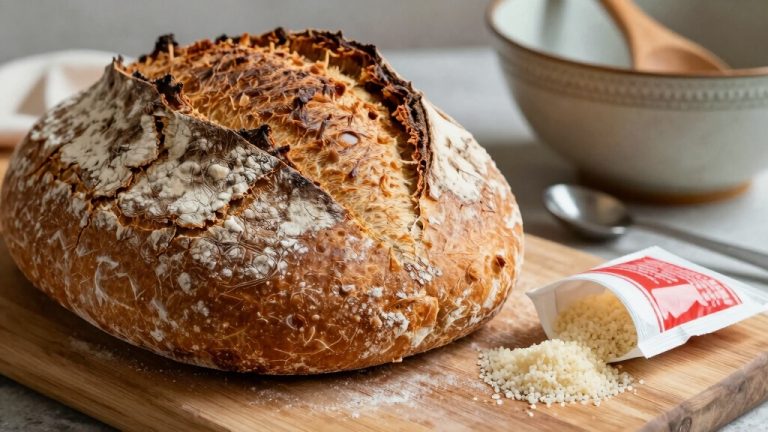
The fermentation process in quark is somewhat similar to that in sourdough fermentation, where precise microbial activity shapes the final flavor and texture.
Mesophilic Culture Options
Selecting the right mesophilic culture is essential for successfully fermenting quark, as it directly impacts the cheese’s texture and flavor development.
You can use freeze-dried mesophilic cultures at 1/8 teaspoon per gallon of milk or liquid whey cultures at 1/4 cup per gallon for consistent results.
Flora Danica or equivalent cultures require a precise dosage of 1/32 teaspoon per 2 liters of milk.
These cultures thrive at 22°C to 30°C (72°F to 86°F), producing the lactic acid necessary to coagulate the milk gently without forming hard curds.
If you lack specialized cultures, high-fat cultured buttermilk serves as a reliable alternative starter.
Remember to sprinkle the culture evenly over the milk’s surface and maintain ideal fermentation temperature for effective activation.
To ensure safety and quality during fermentation, it is important to use sterilized jars and utensils to minimize contamination risks.
Rennet Usage Guidelines
Although rennet is essential for coagulating milk in many cheese varieties, you’ll want to use it sparingly when making quark to avoid hard curd formation. Quark relies primarily on mesophilic starter cultures for acidification and gentle curd setting.
Adding too much rennet creates dense, rubbery curds, which contradicts quark’s soft texture. When selecting your starter culture and rennet doses, remember:
Use mesophilic cultures like Flora Danica at 1/32 tsp per 2 liters of milk. Employ freeze-dried mesophilic cultures at 1/8 tsp per gallon alternatively.
Add minimal rennet: about 2 drops per gallon or 5 drops per half gallon. Make sure milk temperature is around 30°C before culture and rennet addition.
Stir gently to distribute culture without breaking curds prematurely. Following these guidelines guarantees a smooth, creamy quark texture.
Maintaining starter culture health by preventing mold and contamination ensures consistent acidification and ideal curd formation in your quark.
Heating and Preparing Milk for Quark Making
When preparing milk for quark cheese, you need to heat it carefully to guarantee the proper environment for culture activation.
Heat pasteurized whole or 2% milk to precisely 30°C (86°F). This temperature optimizes mesophilic culture growth without denaturing proteins.
Use a reliable thermometer to monitor temperature accurately. Avoid overheating, which can kill beneficial bacteria or alter milk proteins, impacting curd formation.
If your recipe includes buttermilk, bring milk briefly to a simmer, then cool it to room temperature before adding.
Maintain gentle stirring to distribute heat evenly, preventing hotspots. Once the target temperature is reached, promptly add your starter culture and rennet.
This controlled heating step ensures consistent fermentation and the desired quark texture in subsequent processes.
For best results, use a digital thermometer with fast response time and high accuracy to ensure precise temperature control during heating.
Ideal Fermentation Temperature and Timing for Quark
To make quark, it’s important to keep the fermentation temperature comfy—aim for between 22°C and 30°C (that’s about 72°F to 86°F). This range ensures that your cultures are active and doing their thing.
Now, how long should you let it ferment? Generally, you’re looking at around 16 to 24 hours. This can vary a bit depending on your specific culture and the texture you’re after.
Oh, and here’s a little tip: try to keep the environment stable and undisturbed during fermentation. This helps achieve a consistent curd formation, which is what you want for that perfect quark!
Additionally, maintaining a clean environment and avoiding contamination is crucial to prevent mold growth during fermentation.
Optimal Temperature Range
Because maintaining the right temperature is vital for cultivating the proper bacterial activity, you should keep the milk between 22°C and 30°C (72°F to 86°F) during fermentation. This range optimizes mesophilic culture performance, ensuring consistent acidification and curd formation without compromising texture or flavor.
Temperature fluctuations can inhibit bacterial growth or cause undesirable curd hardness. To maintain this prime environment, consider these techniques:
Heat milk to 30°C (86°F) before inoculation.
Use an oven light or warm spot to sustain temperature.
Monitor with a precise thermometer regularly.
Avoid direct heat sources that create hot spots.
Keep the fermentation vessel covered to retain warmth and moisture.
Strictly controlling temperature within these limits guarantees a smooth, creamy quark with ideal consistency. Maintaining a consistent temperature is as important in fermentation as monitoring the starter’s activity in sourdough to ensure optimal results.
Fermentation Duration Guidelines
Although temperature control is essential, the fermentation duration markedly impacts quark’s texture and flavor development.
You should ferment the cultured milk at a stable 22°C–30°C (72°F–86°F) for 16 to 24 hours, depending on the starter culture and desired consistency.
Shorter times yield softer, milder quark, while longer fermentation produces thicker curds with a tangier profile.
Maintain an undisturbed environment, cover the container, and avoid agitation to allow uniform curd formation.
Monitor ambient temperature carefully, using an oven light or thermometer to guarantee stability.
Once the mixture thickens to a yogurt-like state with visible curds, it’s ready for straining.
Adhering to these timing guidelines guarantees peak acidification, which directly influences quark’s body, moisture retention, and overall sensory quality.
Using containers with wide mouth openings can facilitate easier monitoring and handling during fermentation.
Straining and Draining Quark for Perfect Consistency
After fermentation, pour the quark mixture into a cheesecloth-lined colander set over a bowl to catch the whey. Straining controls moisture content and firmness, so timing is critical.
Pour the fermented quark into a cheesecloth-lined colander over a bowl to strain and control texture.
Drain for 5 hours to overnight based on your texture preference. Hanging the cheesecloth or applying gentle weight accelerates whey removal for denser quark.
Remember these points:
Drain 6 hours for a thinner, spreadable quark. Extend to 8+ hours for a firmer, spoonable consistency.
Use a fine-mesh cloth to prevent curd loss. Position colander over a bowl to collect whey for reuse or disposal.
Avoid pressing too hard to maintain curd structure.
For best results, consider using a non-reactive stainless steel bowl during preparation to avoid any unwanted interactions with the acidic curds.
Seasoning and Adjusting Your Quark’s Texture
Enhance your quark’s flavor and texture by carefully incorporating salt and moisture adjustments after draining.
Begin by stirring in approximately one teaspoon of salt per batch to elevate the flavor profile without compromising the delicate curds.
If the quark feels too dry or crumbly, gradually add heavy cream or whole milk in teaspoon increments to restore a smooth, creamy consistency.
Avoid overhydrating, as excess moisture dilutes flavor and destabilizes texture.
Use a spoon or spatula to blend the additions uniformly, ensuring a homogenous mixture.
This precise balance between salt and moisture defines the final quality of your quark, optimizing both taste and mouthfeel.
Adjust incrementally, tasting after each addition to achieve the ideal seasoning and desired creaminess.
Incorporating small amounts of salt can also help maintain gluten structure and enhance overall texture in dairy-based products.
Storing Quark Cheese to Keep It Fresh
Once you’ve adjusted the seasoning and texture to your liking, proper storage plays a key role in preserving the freshness and quality of your quark cheese.
Store your quark in an airtight container to prevent moisture loss and contamination.
Store quark in an airtight container to keep it fresh and free from contamination.
Keep it refrigerated at 4°C (39°F) or below to slow bacterial growth.
Consume within 5 to 7 days for peak freshness.
If the quark becomes too dry, you can stir in a small amount of milk or cream to restore creaminess.
Avoid freezing, as it alters texture and consistency.
To maintain quality, remember to:
- Use a clean, sealed container
- Refrigerate promptly after preparation
- Avoid cross-contamination with other foods
- Stir gently before serving to redistribute moisture
- Monitor for off-odors or discoloration as spoilage signs
Using airtight seals on containers is essential to maintain moisture and prevent contamination during storage.
Troubleshooting Common Issues When Making Quark
If your quark doesn’t set properly or develops an off texture, troubleshooting common issues can help you identify and correct the problem.
First, verify the milk temperature before adding the culture; it should be 28–30°C (82–86°F). Too high or low temperatures inhibit proper coagulation.
Make sure you use full-fat buttermilk or the correct mesophilic culture dosage. Insufficient starter slows fermentation.
Avoid disturbing the curds during fermentation, as agitation breaks them down.
If the quark is too watery, extend draining time or apply gentle weight to hasten whey removal.
Conversely, if it’s too dry or crumbly, add a small amount of cream or milk after draining.
Finally, maintain a consistent ambient temperature (22–30°C) to promote steady fermentation and prime texture development.
Frequently Asked Questions
Can Quark Cheese Be Made Using Plant-Based Milk Alternatives?
Yes, you can make quark cheese using plant-based milk alternatives like nut or soy milk.
However, you’ll need to adjust fermentation since these milks lack natural dairy cultures.
Using a reliable starter culture and possibly adding thickening agents helps achieve the right texture.
Keep in mind plant-based quark may differ in flavor and consistency compared to dairy versions.
Experiment with fermentation times and culture quantities to optimize your results.
How Long Does Quark Cheese Last Once Opened?
Once opened, quark cheese lasts about 5 to 7 days if you store it properly in a sealed container inside your refrigerator.
To maintain freshness and prevent spoilage, keep the temperature consistently cold, ideally below 4°C (39°F).
Always check for off smells, color changes, or mold growth before consumption.
If you notice any of these signs, discard the quark to avoid health risks.
What Dishes Pair Best With Homemade Quark Cheese?
You’ll find homemade quark cheese pairs excellently with dishes requiring creamy, mild textures.
Use it in fruit-topped breakfasts, like parfaits or spread on toast with honey.
It complements savory recipes such as pierogi fillings, creamy pasta sauces, or as a base for dips and spreads.
You can also incorporate it into baked goods to add moisture and tenderness.
Quark’s versatility suits both sweet and savory culinary applications with ease.
Is It Necessary to Use Rennet in Quark Cheese Making?
No, you don’t have to use rennet when making quark cheese. It’s added in very small amounts, usually just a few drops per gallon, to prevent hard curd formation.
Quark primarily relies on mesophilic starter cultures and buttermilk for fermentation and coagulation. If you skip rennet, expect a softer, creamier texture.
While rennet can help control firmness, it’s not essential for a successful quark cheese.
Can Quark Cheese Be Frozen for Long-Term Storage?
You can freeze quark cheese for long-term storage, but expect texture changes.
Freezing often causes quark to become grainy and watery upon thawing due to moisture separation.
To minimize this, freeze it in airtight containers, leaving some headspace for expansion.
Thaw it slowly in the refrigerator, then stir well to restore consistency.
Use frozen quark primarily for cooking or baking, as its fresh creamy texture won’t fully return after freezing.
Experiment and Personalize Your Recipe to Make Creamy Quark Cheese
Making quark cheese at home is a straightforward process once you master the key steps: selecting quality milk, using the right cultures, controlling fermentation, and proper straining.
Remember, patience is your best ally. Rushing can spoil the final texture.
With practice, you’ll turn milk into creamy quark with ease. Keep refining your technique, and soon enough, you’ll have a fresh, versatile cheese that’s truly the cream of the crop in your kitchen.