
Air Fryer vs Convection Oven: Faster, Healthier, or More Versatile?
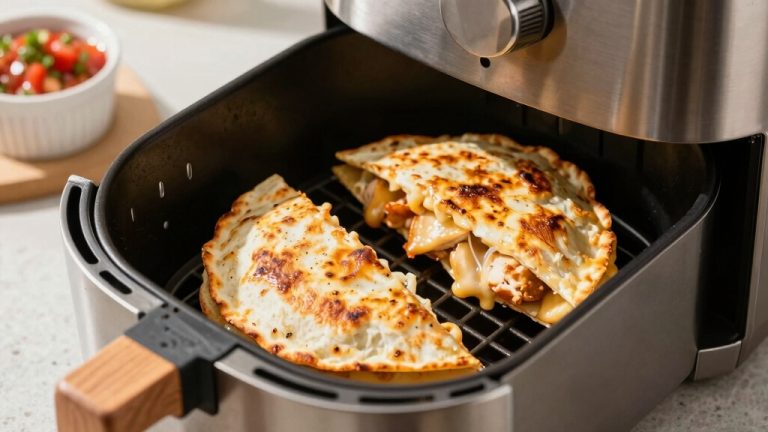
An air fryer cooks faster and uses less energy by circulating hot air in a compact chamber with a fan positioned close to the food. This creates crisp textures on smaller batches.
Convection ovens distribute heat more evenly over a larger space, ideal for bigger portions and delicate pastries. However, they take longer to preheat and consume more power.
If you want to understand how these differences affect your cooking results and kitchen setup, there’s more detail to explore.
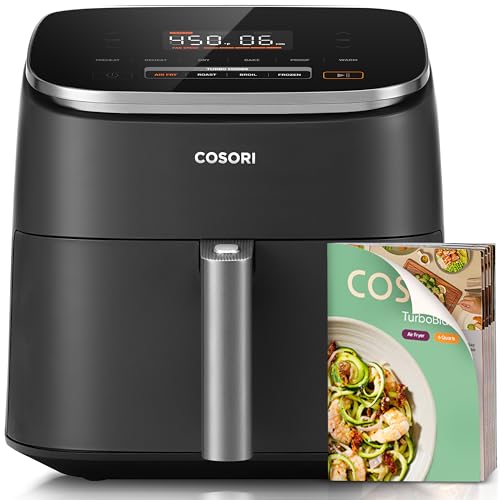
- 𝘼𝙞𝙧 𝙁𝙧𝙮𝙚𝙧 𝙐𝙥𝙜𝙧𝙖𝙙𝙚: Innovative TurboBlaze Technology...
- 𝙃𝙚𝙖𝙩𝙞𝙣𝙜 𝙐𝙥𝙜𝙧𝙖𝙙𝙚: Cosori's unique 5-fan speed system and...
- 𝙋𝙁𝘼𝙎-𝙁𝙧𝙚𝙚 𝘾𝙚𝙧𝙖𝙢𝙞𝙘 𝙐𝙥𝙜𝙧𝙖𝙙𝙚: The...

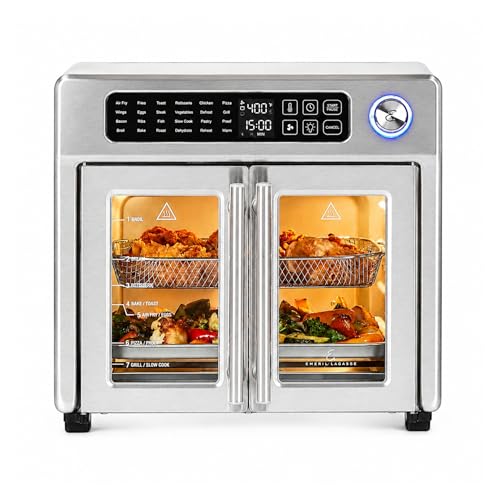
- A VERSATILE AIR FRYER AND MULTI-COOKER COMBO: Elevates practically any meal, from air frying quick...
- PERFECTLY DONE TOAST: Oven turns off automatically when the toast count-down timer ends, no burnt...
- DUAL-SPEED FAN: Golden fried crisping at its finest with 360º superheated air circulation for your...
Key Takeaways
- Air fryers cook 30–40% faster with compact chambers and fans closer to food, while convection ovens have longer preheating and cooking times.
- Air fryers produce crisp exteriors with moist interiors, ideal for small batches, whereas convection ovens ensure even browning over larger volumes.
- Convection ovens offer greater capacity and versatility, accommodating multiple racks and large meals, unlike smaller air fryer baskets.
- Air fryers are more energy-efficient with shorter cycles and lower consumption compared to the larger cavities of convection ovens.
- Air fryers are affordable and compact but require frequent cleaning, while convection ovens cost more, need more space, and have longer durability.
Air Fryer or Convection Which Oven Is Right for You?
| Feature | Air Fryer | Convection Oven |
|---|---|---|
| Cooking Method | Rapid hot air circulation with concentrated airflow for crispiness | Even heat distribution via fan-assisted air circulation |
| Cooking Speed | Generally faster due to compact size and intense airflow | Moderate speed, suitable for larger batches |
| Capacity | Smaller capacity, ideal for 1-4 servings | Larger capacity, better for families and batch cooking |
| Health Benefits | Uses little to no oil, promoting lower fat meals | Requires some oil or fat depending on recipe, but still healthier than deep frying |
| Versatility | Excellent for frying, roasting, and reheating with crisp results | More versatile, supports baking, roasting, broiling, and toasting |
| Size & Counter Space | Compact and lightweight, easy to store | Larger footprint, requires permanent counter or cabinet space |
| Price Range | Generally affordable, with budget and premium models | Can be more expensive, especially larger or multi-function models |
| Ease of Cleaning | Non-stick baskets and trays, often dishwasher-safe | Removable racks and trays, but larger interior can be harder to clean |
How Air Fryers and Convection Ovens Work?

Although both air fryers and convection ovens rely on a heating element combined with a fan to circulate hot air, they differ in how they deliver heat to your food.
Air fryers position the fan closer to the food within a compact chamber, concentrating heat for rapid cooking. Their cooking baskets feature porous holes, increasing surface area exposure to fast-moving air.
Air fryers use a compact design with fans close to food, boosting heat concentration and airflow for quick cooking.
In contrast, convection ovens circulate air through a larger volume, which results in more even but less intense heat distribution.
Some convection ovens include dedicated air fry settings with fans over twice as powerful as standard convection elements, enhancing airflow.
Understanding these design distinctions helps you grasp how each appliance achieves its cooking results through variations in heat intensity and air circulation.
Additionally, many air fryers incorporate EvenCrisp technology to deliver crispy textures with up to 95% less oil, optimizing both health and flavor.
Which Cooks Faster and Uses Less Energy?
The way air fryers and convection ovens circulate heat directly impacts their cooking speed and energy consumption.
Air fryers position fans closer to food in a compact chamber, enabling 30–40% faster cooking than convection ovens by maximizing heat concentration. Their porous baskets expose food to rapid airflow, further accelerating heat transfer.
In contrast, convection ovens distribute air over a larger volume, resulting in longer preheating (10–15 minutes versus 0–3 minutes) and cooking times, which increases energy use.
Air fryers’ smaller heating volumes and shorter cook cycles reduce overall power consumption. While convection ovens use powerful fans for even heat, their larger cavity size diminishes energy efficiency.
Choosing an air fryer typically means faster meals with less energy expenditure due to optimized airflow and reduced thermal mass.
Advanced models often incorporate dual-speed fans or 360º air circulation technology to enhance cooking efficiency and evenness.
Food Texture and Cooking Results Compared
When you cook with an air fryer, you get a distinct advantage in creating crisp exteriors on foods like broccoli, potatoes, and chicken due to its intense, concentrated heat and rapid air circulation.
This design allows air fryers to achieve charred vegetables and crispy frozen items faster while preserving superior interior moisture.
In contrast, convection ovens distribute heat over a larger volume, leading to more even browning but often drier interiors, especially in meats.
Convection ovens excel at delicate pastries, providing consistent surface color and texture but require longer cooking times for crispness.
Air fryer’s porous basket maximizes surface exposure, enhancing crisp texture.
Convection oven’s gentler airflow promotes uniform cooking of large batches.
Air fryers maintain juiciness inside while delivering a crunchy crust outside.
Preheating the air fryer ensures even heat distribution for consistently crispy and golden results.
Air Fryer vs. Convection Oven: Capacity and Versatility
Mastering food texture and cooking outcomes depends not only on heat delivery but also on how much and what type of food you can prepare at once.
Air fryers typically hold 2–6 quarts, making them ideal for 1–3 servings per batch. Their compact design concentrates heat efficiently but limits volume.
In contrast, convection ovens offer markedly greater capacity, accommodating multiple racks and sheet pans simultaneously. This allows you to cook large meals, roasts, and diverse dishes in one cycle.
While air fryers handle approximately 80% of everyday cooking tasks effectively, convection ovens provide superior versatility for multi-item baking and larger portions.
Additionally, full-size convection ovens guarantee more consistent results across extensive cooking volumes than countertop models or air fryers. This makes them better suited for households requiring high-capacity, diverse meal preparation.
It’s important to avoid overcrowding, as maintaining optimal airflow is crucial to achieving even cooking and crispiness, especially in air fryers.
Cost, Space, and Maintenance for Air Fryers and Ovens
Considering budget constraints and kitchen layout is essential when choosing between air fryers and convection ovens. Air fryers generally cost less, starting around $50 to $200, while convection ovens often begin near $800.
Space-wise, air fryers have a compact footprint, ideal for small kitchens or portability. In contrast, convection ovens require significant counter or built-in space.
Maintenance differs: air fryers need frequent cleaning of baskets and fan areas to prevent performance loss. Convection ovens feature durable metal components and can last 10+ years with proper upkeep.
- Air fryers: cost-effective, space-saving, require regular internal cleaning
- Convection ovens: higher upfront cost, larger footprint, long-lasting with periodic maintenance
- Maintenance intensity and appliance longevity vary based on design and usage patterns
Additionally, some air fryers incorporate noise-dampening technology to ensure quieter operation, enhancing usability in small spaces.
Frequently Asked Questions
Can I Use the Same Recipes Interchangeably for Air Fryers and Convection Ovens?
You can use the same recipes for air fryers and convection ovens, but you’ll need to adjust cooking times and temperatures.
Air fryers cook 20–40% faster due to concentrated heat and smaller volume, so reduce time or temperature accordingly.
Watch for crispiness and doneness, as air fryers yield a crisper exterior.
Convection ovens provide more even heat distribution, so they work better for multi-rack cooking and delicate baking without altering recipes drastically.
Are There Specific Foods That Should Never Be Cooked in an Air Fryer?
You should avoid cooking very wet batters, like tempura or pancake batter, in an air fryer. The rapid air circulation can cause uneven cooking and splattering.
Very large roasts or whole turkeys are also unsuitable due to limited basket capacity.
Additionally, leafy greens may blow around and cook unevenly.
Foods requiring slow, moist cooking, such as braises or stews, won’t work well since air fryers rely on dry, high-heat convection.
How Noisy Are Air Fryers Compared to Convection Ovens During Operation?
You’ll find air fryers generally produce a higher-pitched, more concentrated fan noise due to their smaller, compact chambers and powerful fans positioned close to food.
Convection ovens operate with larger, more diffused fans that generate quieter, lower-frequency sounds over a broader space.
While air fryers’ noise might be more noticeable during rapid air circulation, convection ovens run more quietly but for longer periods due to extended cooking and preheating times.
Do Air Fryers Require Special Accessories for Optimal Cooking?
Do you really need special accessories to get the best results from your air fryer?
Technically, you don’t have to, as the standard basket with porous holes efficiently exposes food to rapid air circulation.
However, accessories like silicone mats, baking pans, or racks can optimize cooking by allowing more even heat distribution or enabling multi-layer cooking.
They enhance versatility but aren’t mandatory for standard frying, roasting, or baking tasks.
Can Convection Ovens Handle Dehydrating or Slow-Cooking Tasks Effectively?
Yes, convection ovens can handle dehydrating and slow-cooking tasks effectively. Their larger chamber and adjustable temperature controls allow you to maintain low, consistent heat over extended periods, essential for dehydration and slow cooking.
The even air circulation prevents hot spots, ensuring uniform moisture removal or gradual cooking. However, they require longer preheating times and careful monitoring compared to specialized dehydrators or slow cookers for peak results.
Making the Right Choice: Which Appliance Fits Your Lifestyle?
You’ll find that both air fryers and convection ovens use similar technology: hot air circulation to cook food efficiently.
You’ll notice air fryers cook faster and save energy, while convection ovens offer greater capacity and versatility.
You’ll weigh cost, space, and maintenance, knowing that air fryers fit smaller kitchens but ovens handle larger meals.
You’ll choose based on your priorities, realizing their differences align perfectly with how you cook, what you value, and the results you want.

- AIR CRISP TECHNOLOGY: 400℉ superheated air surrounds food for hot, crispy results with little to...
- 5-IN-1 MULTI-FUNCTION AIR FRYER: Features 5 customizable cooking functions—Air Fry, Air Roast...
- LARGE CAPACITY: The 5-QT nonstick basket and crisper plate fit up to 4 lbs of French fries or 5 lbs...

- VERSATILE COOKING FUNCTIONS: This premium 1800-watt Cuisinart Air Fryer Toaster Oven is equipped...
- SPACIOUS CAPACITY: The Cuisinart Air Fryer Toaster Oven is large enough to toast 6 slices of bread...
- SUPERIOR OPERATION: Equipped with an adjustable temperature dial, 60-minute timer/auto-shutoff, and...
Last update on 2026-10-28 / Affiliate links / Images from Amazon Product Advertising API