
Sourdough Cardamom Buns: Tips From Artisan Bakers
You’ll create complex sourdough cardamom buns by activating a bubbly starter and combining flour, sugar, salt, and fresh cardamom for even spice distribution.
Gradually add warm milk, eggs, and stiff levain, then incorporate softened butter while kneading until the dough passes the windowpane test.
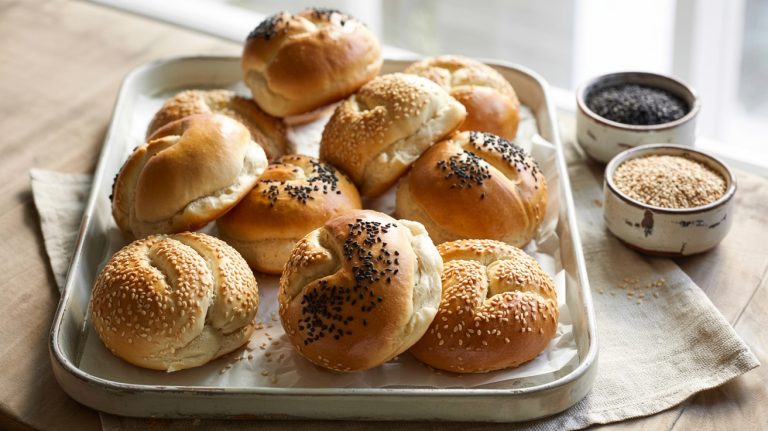
After bulk fermentation at 24–26°C and careful proofing, shape twisted, coiled buns and bake to golden perfection.
Mastering these steps releases nuanced tanginess and floral warmth with richly layered texture.
Key Takeaways
- Sourdough cardamom buns combine natural starter fermentation with cardamom’s floral citrus notes for a nuanced, tangy, and fragrant flavor profile.
- Use a stiff levain activated 7–12 hours ahead to ensure vigorous fermentation and optimal dough rise.
- Mix flour, sugar, salt, and ground cardamom before gradually adding warm milk, eggs, levain, and softened butter for smooth, elastic dough.
- Bulk ferment dough at 24–26°C until volume nearly doubles, then proof shaped buns until puffy and nearly doubled for ideal texture.
- Bake buns at 190–220°C for 10–22 minutes, then brush with sugar syrup for shine and optionally top with pearl sugar or almonds.
Key Ingredients for Soft, Flavorful Sourdough Cardamom Buns
| Ingredient | Quantity | Purpose / Notes |
|---|---|---|
| Flour (All-Purpose or Bread Flour) | 500g | Provides structure and gluten development for elastic dough |
| Sourdough Starter (Bubbly, Active) | 100g | Natural leavening agent; adds tangy complexity and texture |
| Sugar | 75g | Feeds yeast and balances cardamom’s spice with subtle sweetness |
| Salt | 8g | Enhances flavor and regulates fermentation |
| Freshly Ground Cardamom | 10g (approx. 2 tsp) | Delivers distinctive floral and citrusy aroma |
| Warm Milk | 250ml | Hydrates dough and enriches texture |
| Eggs (Lightly Beaten) | 2 large | Improves dough elasticity and richness |
| Softened Butter | 80g | Adds tenderness and buttery mouthfeel |
Why Sourdough Cardamom Buns Are So Special?

The allure of sourdough cardamom buns lies in their unique fusion of fermentation complexity and aromatic spice.
When you combine a naturally leavened sourdough starter with cardamom’s distinctive floral and citrusy notes, you create a dough that balances subtle tanginess and fragrant warmth.
The sourdough fermentation develops nuanced organic acids and layered flavor compounds beyond typical yeast-based doughs.
Sourdough fermentation crafts deep, nuanced organic acids and complex flavor layers beyond conventional yeast doughs.
Cardamom’s essential oils release during mixing and baking, enhancing the bun’s aromatic profile.
This combination yields a tender crumb with a slightly chewy texture and a rich buttery mouthfeel.
The interplay between the slow fermentation and the spice’s volatile compounds elevates the sensory experience.
This distinguishes these buns within Scandinavian baking traditions and makes them an exceptional treat that’s both flavorful and texturally complex.
How to Prepare and Mix Enriched Sourdough Cardamom Dough?
Begin by activating your sourdough starter to guarantee it’s bubbly and vigorous. Ideally, use a stiff levain prepared 7 to 12 hours ahead for peak fermentation.
Combine flour, sugar, salt, and freshly ground cardamom in a mixing bowl, ensuring even distribution.
Warm milk and lightly beat eggs before adding them gradually to the dry ingredients along with the levain. Mix until a shaggy dough forms.
Incorporate softened butter incrementally, kneading continuously to develop gluten and achieve a smooth, elastic, satiny texture.
Use a stand mixer with a dough hook on medium speed for 8-12 minutes, or knead by hand until the dough passes the windowpane test.
The dough should be soft, supple, and slightly tacky but not sticky, ready for fermentation and proofing.
Achieving the right hydration level, typically around 66%, is crucial for optimal gluten development and dough texture in enriched sourdough recipes.
How to Ferment and Proof Sourdough Cardamom Dough?
Once your enriched sourdough cardamom dough is mixed to a smooth, elastic consistency, you’ll want to ferment it until it increases in volume by about 30-40% or roughly doubles, depending on ambient temperature and starter activity.
This initial bulk fermentation usually lasts 2-4 hours at 24-26°C (75-79°F). Cooler environments require longer or a refrigerated overnight rise for flavor development.
For ideal fermentation and proofing:
- Monitor dough volume closely, aiming for a gentle but noticeable rise without overproofing.
- After shaping, proof the buns until puffy and nearly doubled, typically 1-2 hours at room temperature.
- Maintain consistent warmth and humidity to promote steady yeast activity and dough extensibility.
These steps guarantee balanced acidity, enhanced cardamom aroma, and desirable crumb structure.
Controlling dough temperature within the optimal fermentation range is crucial for maximizing yeast and bacterial activity during the process.
How to Shape Classic Twisted and Coiled Sourdough Cardamom Buns?
After your dough has proofed to a puffy, nearly doubled state, you’re ready to shape it into the classic twisted and coiled cardamom buns.
First, gently deflate the dough and roll it out on a lightly floured surface into a large rectangle, approximately 12×18 inches and about ½ inch thick.
Spread an even layer of your cardamom butter filling across the surface.
Cut the dough lengthwise into 2-3 inch-wide strips.
Take each strip, fold it in half lengthwise, then twist the two strands tightly, exposing the filling swirl.
Coil the twisted strip into a spiral, tucking the end underneath to secure.
Place each bun on a parchment-lined sheet, spaced well apart for final proofing.
This method guarantees distinct layers and the traditional Scandinavian swirl.
For best results, maintain a warm, draft-free environment during final proofing to optimize fermentation and gluten development.
Baking and Finishing Soft, Flavorful Sourdough Cardamom Buns
Typically, you’ll bake sourdough cardamom buns at temperatures ranging from 190°C to 220°C (375°F to 425°F), adjusting based on your oven’s characteristics and the desired crust texture.
Aim for a golden-brown crust while preserving a soft crumb inside.
To finish your buns perfectly, follow these steps:
- Bake for 10–22 minutes, monitoring color and internal temperature (around 90°C/195°F) to ascertain doneness.
- Brush with sugar syrup immediately post-bake to enhance sheen and add subtle sweetness.
- Optionally, sprinkle toppings like pearl sugar or chopped almonds before or after baking for texture contrast.
Allow buns to cool briefly on the pan before transferring to a rack to avoid sogginess.
This technique locks in moisture and highlights the aromatic cardamom flavor with a tender, supple crumb. For best results, avoid opening the oven door during baking to maintain consistent heat.
Frequently Asked Questions
Can I Substitute Cardamom With Other Spices for a Different Flavor?
Yes, you can substitute cardamom with other spices, but consider their potency and flavor profile carefully.
Cinnamon, nutmeg, or cloves offer warm, aromatic notes, while ginger adds a sharp, spicy bite.
Use fresh, ground spices for best results and adjust quantities.
Cardamom is quite pungent, so start with smaller amounts to avoid overpowering the dough.
Experiment gradually to maintain balance and preserve the enriched, sweet character you want.
How Long Can Sourdough Cardamom Buns Be Stored Fresh?
Fresh sourdough cardamom buns stay at their peak for about two days at room temperature, like a fleeting whisper of warmth and aroma.
To preserve their soft crumb and nuanced flavors, store them in an airtight container or tightly wrapped in plastic.
For longer storage, freeze them up to two months, then thaw at room temperature.
Avoid refrigeration, as it accelerates staling by disrupting moisture balance and crumb structure.
What Is the Best Way to Reheat Leftover Sourdough Cardamom Buns?
The best way to reheat leftover sourdough cardamom buns is to preheat your oven to 325°F (160°C).
Lightly wrap the buns in aluminum foil to retain moisture and prevent drying.
Heat them for 10-12 minutes until warm throughout.
Avoid microwaving, as it can make the texture gummy.
For a crispier crust, unwrap the foil in the last 2 minutes.
This method preserves softness and aromatic cardamom flavor.
Are Sourdough Cardamom Buns Suitable for Freezing and Later Baking?
Yes, you can freeze sourdough cardamom buns effectively. To maintain texture and flavor, freeze them after shaping but before the final proof or bake fully and freeze once cooled.
Wrap tightly in plastic wrap and place in an airtight container or freezer bag. When ready, thaw at room temperature, then reproof if unbaked or reheat gently if baked. This will preserve their soft, tender crumb and aromatic cardamom notes.
Can I Make Sourdough Cardamom Buns Without Eggs or Dairy?
Think of eggs and dairy as the sun and water in your dough’s garden. They nurture structure and richness.
You can make sourdough cardamom buns without them, but you’ll need precise substitutes like plant-based milk (oat or almond) and a binding agent such as flaxseed gel or aquafaba to replicate moisture and elasticity.
Adjust fat with vegan butter or oil. Expect a slightly altered crumb, but with careful hydration and kneading, you’ll maintain tenderness and flavor.
From Oven to Table: Sharing the Joy of Homemade Cardamom Buns
As you master sourdough cardamom buns, you’ll find that slow fermentation truly enhances flavor complexity and texture, disproving the myth that quick rises suffice.
By carefully mixing enriched dough, controlling proofing times, and shaping precisely, you reveal the unique balance of tangy sourdough and aromatic cardamom.
This methodical process guarantees soft, flavorful buns with a tender crumb and fragrant finish.
It proves that patience and technique trump shortcuts in artisan baking.