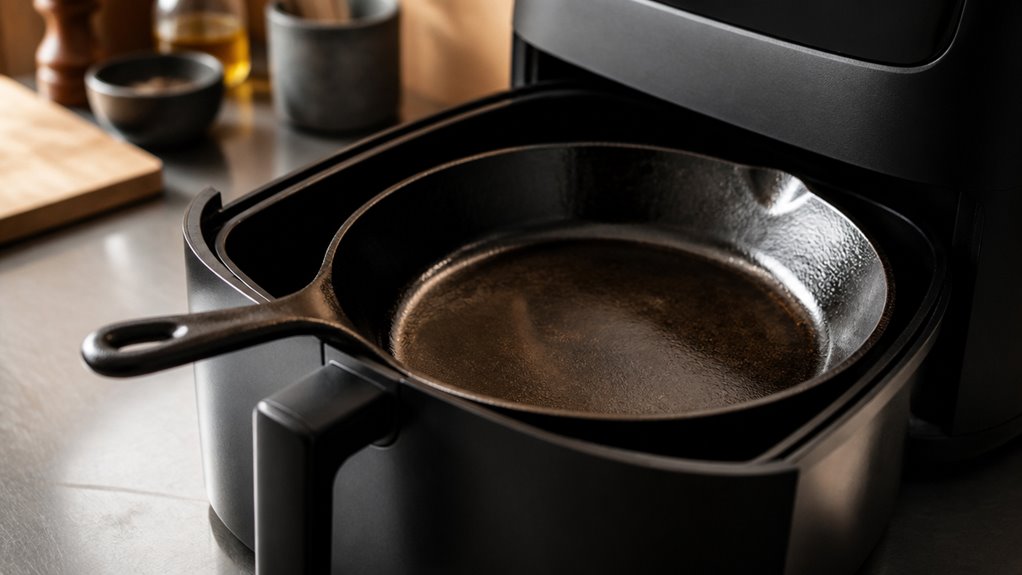
Can You Put Cast Iron in Air Fryer Safely? Expert Tips
You can put cast iron in your air fryer if your model supports its size, weight, and heat tolerance, and you follow manufacturer guidelines closely.
Make sure the pan fits without blocking airflow. The handles should be made of oven-safe metal to avoid damage or hazards.
Keep weight within basket limits to protect your appliance. Cast iron’s heat retention affects cooking dynamics, so handle with care.
Learn how proper fit, weight, and maintenance help you safely use cast iron in your air fryer.
Key Takeaways
- Check your air fryer manual for compatibility and weight limits before using cast iron cookware to avoid warranty or mechanical issues.
- Ensure cast iron fits inside the basket with at least one inch of clearance for proper hot air circulation and even cooking.
- Use cast iron pans with metal, oven-safe handles and avoid plastic or non-heat-resistant coatings to prevent melting or damage.
- Handle cast iron carefully to prevent basket damage, using oven mitts since cast iron retains heat intensely and can cause burns.
- Clean cast iron gently with warm water and a non-metal brush, dry immediately, re-oil, and avoid abrasive scrubbers to maintain seasoning.
Can You Put Cast Iron in an Air Fryer Safely?

You can often put cast iron in an air fryer safely, provided you first consult your appliance’s manual to confirm cookware compatibility and size restrictions.
Check your air fryer manual to ensure your cast iron cookware is compatible and fits properly.
Oven-safe cast iron handles typical air fryer temperatures well, but verify the pan’s maximum temperature rating and the appliance’s weight limits.
Make sure the cast iron fits fully inside the basket or chamber without touching walls or heating elements.
This allows adequate airflow to prevent uneven cooking.
Avoid forcing heavy cast iron cookware into the basket; this can damage the appliance, especially if it has a nonstick coating.
Do not use pans with plastic handles or coatings that aren’t rated for high heat.
Always prioritize manufacturer instructions since compatibility varies by air fryer model and cast iron type.
For best results, ensure your cast iron cookware is oven-safe and allows proper airflow to maintain safe cooking conditions.
Does Your Air Fryer Support Cast Iron?
Hey there! Before you dive in, it’s a good idea to check your air fryer manual. You want to confirm if it supports cast iron cookware and what the weight limits are.
Also, make sure your cast iron pan fits comfortably inside. You don’t want it to block airflow or touch any heating elements. That could lead to some serious issues!
And don’t forget to check the temperature rating on your cast iron. It should match up with your air fryer’s operating range to ensure safe cooking.
Additionally, maintaining at least 4 inches of ventilation clearance around the air fryer during operation is important for safe and efficient performance.
Air Fryer Manual Check
Before placing cast iron cookware in an air fryer, consult the appliance’s manual to confirm compatibility. Not all air fryers are designed to accommodate heavy or dense cookware like cast iron.
The manual specifies whether the basket or cooking chamber supports such materials and provides guidelines on temperature limits, weight capacity, and cookware dimensions. Relying on these manufacturer instructions guarantees safe operation and prevents damage to heating elements or nonstick coatings.
Additionally, the manual may highlight restrictions on cookware materials or shapes that could block airflow or impair cooking efficiency. If the manual lacks clear guidance, avoid using cast iron to prevent voiding warranties or causing mechanical issues.
Prioritize appliance-specific evidence over general assumptions to maintain functionality and safety during air frying. Ensuring that cookware does not obstruct airflow and cooking performance is essential to avoid uneven cooking and potential damage.
Weight And Fit Limits
Assess the weight and fit of your cast iron cookware carefully to make certain your air fryer can handle it safely.
Cast iron’s significant weight can strain or damage the basket if it exceeds appliance limits. Additionally, the pan must fit fully within the cooking chamber without touching heating elements or walls, ensuring unobstructed airflow.
Consider these key points:
The pan should sit flat and stable without forcing it into the basket.
Allow at least one inch of space around the cookware for hot air circulation.
Avoid dragging or dropping the pan to protect the basket’s nonstick coating.
Always consult your air fryer’s manual for specific weight thresholds and approved cookware types before using cast iron. Also, maintain regular cleaning routines and avoid abrasive tools to protect the basket’s non-stick coating and ensure safe use with heavy cookware.
Cookware Temperature Compatibility
Ensuring your air fryer supports the high temperatures cast iron requires is a key factor after confirming fit and weight limits.
Most cast iron cookware tolerates typical air fryer temperatures, usually up to 450°F (232°C). However, you must verify your air fryer’s maximum operating temperature and manual guidelines.
Some models limit heat to protect electronic components or coatings, potentially restricting cast iron use.
Additionally, assess the pan’s oven-safe temperature rating, including handles and any enamel coating, to prevent damage or off-gassing.
Avoid cookware with plastic or low-heat-resistant parts.
If your air fryer manual explicitly permits high-heat, oven-safe cookware, cast iron is generally compatible.
Otherwise, using cast iron risks voiding warranties or damaging the appliance.
Always prioritize appliance-specific instructions over general assumptions to guarantee safe, effective cooking.
The Emeril Air Fryer 360, for example, features an 1800-watt heating system designed for rapid heat-up and consistent cooking that may influence cookware compatibility.
Choosing Cast Iron Cookware That Fits Your Air Fryer
When you’re diving into the world of cast iron cookware for your air fryer, the first step is to measure your pan. You want to ensure it fits snugly inside the air fryer basket. Just make sure it doesn’t touch the heating element or the walls, as that could mess with the airflow.
Also, don’t forget to check the weight limits of your air fryer. Cast iron can be pretty heavy, and you want to avoid putting too much strain on the basket. Balancing the size and weight is super important—not just for your cooking performance, but also to keep your appliance in good shape. So, take your time with those measurements, and you’ll be all set! Maintaining adequate ventilation around your cookware is essential to prevent overheating and ensure safe operation.
Measuring Pan Dimensions
Measuring your air fryer’s internal cooking space accurately is essential when choosing cast iron cookware that fits properly. Use a ruler or tape measure to record the basket’s length, width, and depth. Include clearance space around the pan to ensure hot air can circulate effectively.
Remember, cast iron’s thickness adds to the overall dimensions, so measure the pan’s exterior carefully.
Consider these measurement tips:
Measure from the basket’s bottom to the heating element to avoid contact. Check handle length and shape to prevent obstruction or damage. Account for the pan’s weight distribution to ensure the basket supports it safely.
Precise measurements help you select cookware that fits snugly without crowding, preserving cooking efficiency and appliance safety. Also, be mindful that some air fryer baskets have specific cleaning guidelines that may influence cookware choice and maintenance.
Ensuring Proper Airflow
Because hot air circulation is critical for even cooking in an air fryer, you need to select cast iron cookware that fits without blocking airflow.
Choose a pan that fully sits inside the basket or chamber, leaving clear space around it to allow hot air to circulate freely. Avoid pans that crowd the cooking chamber or touch heating elements and walls.
Restricted airflow impairs heat distribution and cooking performance. If your skillet is oversized, opt for smaller cast iron pieces designed to fit your air fryer’s dimensions.
Always verify the pan doesn’t contact the appliance interior to prevent hotspots or uneven cooking. Prioritize cookware size that maintains unobstructed air movement, ensuring consistent temperature and best results in your air fryer.
Additionally, ensuring your cast iron cookware allows for proper airflow settings can minimize food movement and improve cooking consistency.
Assessing Weight Limits
Although cast iron’s durability makes it appealing for air frying, you must confirm your air fryer’s weight capacity before use. Exceeding this limit risks damaging the basket or impairing the appliance’s mechanics.
Always consult your air fryer manual to find the maximum supported weight, including the cookware and food combined. When selecting cast iron cookware, consider:
- The pan’s empty weight relative to the air fryer’s stated limit
- The additional weight of the food you plan to cook
- The cookware’s base and handle design to avoid stress points on the basket
Set the pan gently to prevent scratches or cracks on the basket’s nonstick coating. Using a pan that fits well within weight limits preserves both your cast iron and air fryer’s longevity. Additionally, ensure proper placement of basket to promote airflow and prevent uneven cooking when using heavier cookware.
Managing Cast Iron Weight and Protecting Your Air Fryer Basket
When using cast iron in your air fryer, you need to take into account the pan’s substantial weight to prevent damage to the basket. Always check your air fryer’s specified weight limits before placing the pan inside.
Set the cast iron down gently to avoid cracking or deforming the basket structure. Avoid dragging the pan across the basket’s nonstick coating, as this can cause scratches and premature wear.
Use only cookware recommended by your appliance manufacturer to maintain warranty and functionality. Make certain the cast iron fits properly without forcing it, which could stress both the basket and pan.
Additionally, regularly inspect the basket for signs of wear and damage to ensure safe cooking and prolong the life of your air fryer.
Safety and Heat Resistance of Cast Iron Handles and Coatings
Inspect the entire cast iron pan, including handles and coatings, before placing it in your air fryer.
Confirm the handles are metal and oven-safe, as plastic or rubber handles can melt or release toxins at high temperatures common in air fryers (up to 400°F/204°C).
Avoid pans with painted or enameled coatings unless the manufacturer confirms heat resistance, since these can degrade or emit fumes when exposed to intense heat.
Metal handles require oven mitts due to rapid heat conduction.
Enameled surfaces must match or exceed the air fryer’s maximum temperature.
Damaged coatings risk chipping and contaminating food.
Always adhere to manufacturer guidelines to guarantee safety and maintain your cookware’s integrity.
How Cast Iron Affects Air Fryer Cooking?
Recognize that cast iron’s substantial mass and heat retention markedly influence air fryer cooking dynamics.
When you use cast iron, its thermal inertia slows temperature changes. This requires longer preheating times to stabilize heat uniformly.
Cast iron’s thermal inertia means longer preheating is essential for even heat distribution.
This affects cooking time and temperature accuracy inside the air fryer chamber. Cast iron’s dense structure may partially obstruct hot air circulation if it occupies too much space.
This can impair convection efficiency and cause uneven cooking. To mitigate this, use smaller pans that fit well, ensuring adequate airflow around the cookware.
Additionally, cast iron’s heat retention maintains steady temperatures during cooking, promoting even browning.
However, it demands careful monitoring to prevent overcooking. Understanding these factors lets you optimize cooking performance and avoid common pitfalls linked to cast iron’s physical properties in air fryer environments.
Handling and Cleaning Cast Iron Safely
Properly handling and cleaning cast iron cookware in an air fryer environment requires careful attention to both safety and maintenance protocols.
You should always use oven mitts to handle the pan, as cast iron retains heat intensely and can cause burns. Avoid placing hot cast iron on heat-sensitive surfaces to prevent damage.
For cleaning, don’t use soap or abrasive scrubbers that strip seasoning. Rinse with warm water and gently scrub with a non-metal brush or sponge.
Use a soft cloth to dry immediately, preventing rust formation. Reapply a thin layer of oil after drying to maintain seasoning.
Store cast iron in a dry place, avoiding moisture accumulation. These steps guarantee your cookware remains safe, durable, and effective for air fryer cooking.
When to Skip Cast Iron and Use Air Fryer Accessories?
While cast iron offers durability and heat retention benefits, there are situations where it’s not the best fit for your air fryer.
If your air fryer manual discourages heavy cookware or restricts basket weight, it’s safer to skip cast iron.
Oversized pans that block airflow reduce cooking efficiency and cause uneven heating.
Rough cast iron surfaces may damage nonstick coatings, shortening appliance lifespan.
Handles made of plastic or materials not rated for high heat pose melting risks.
When cast iron doesn’t fit securely or risks damaging the basket, use manufacturer-approved accessories like silicone liners, perforated pans, or lightweight baking inserts.
These alternatives maintain peak airflow, protect appliance components, and guarantee consistent cooking performance.
Always prioritize appliance-specific guidelines over cookware durability to avoid damage and achieve reliable results.
Frequently Asked Questions
Can Cast Iron Seasoning Improve Air Fryer Cooking Results?
Yes, cast iron seasoning can improve air fryer cooking results by creating a naturally nonstick surface. This reduces food adherence and enhances browning.
This seasoning layer promotes even heat distribution, helping maintain consistent cooking temperatures within the air fryer. However, you must ensure the cast iron is properly seasoned and maintained to prevent flaking or smoke during cooking.
These issues could negatively affect your air fryer’s performance and food quality.
How Do You Prevent Rust on Cast Iron Used in Air Fryers?
You prevent rust by drying your cast iron thoroughly, seasoning it properly, and storing it in a dry place.
After using your cast iron in the air fryer, immediately wipe away moisture, apply a thin layer of oil, and heat it briefly to bond the seasoning.
Avoid soaking or leaving it wet.
Consistently maintain the seasoning layer to create a protective barrier against oxidation and make certain your cast iron stays rust-free and ready for use.
Does Air Fryer Cooking Damage Cast Iron Seasoning Over Time?
Yes, air fryer cooking can gradually affect cast iron seasoning over time due to high, concentrated heat and airflow.
The rapid temperature changes and circulating hot air may cause seasoning to wear unevenly or flake.
To minimize damage, avoid excessive oil buildup, monitor cooking closely, and regularly maintain seasoning by reapplying oil and curing the pan.
Proper care preserves seasoning integrity despite air fryer use.
Can You Use Cast Iron Trivets or Racks Inside an Air Fryer?
About 30% of air fryer users incorporate accessories like trivets or racks to improve cooking efficiency.
You can use cast iron trivets or racks inside an air fryer only if they fit without blocking airflow and the manufacturer approves their use.
Make sure they don’t contact heating elements or damage nonstick coatings.
Because cast iron is heavy, verify your air fryer handles the weight to avoid basket damage and maintain peak cooking performance.
What Are Common Mistakes When Using Cast Iron in Air Fryers?
Common mistakes include using oversized or heavy cast iron that blocks airflow or exceeds your air fryer’s weight limit.
You might neglect checking if the pan fits without touching heating elements or walls, which impairs cooking and risks damage.
Using pans with plastic handles or non-oven-safe coatings leads to melting or degradation.
Also, preheating empty cast iron or ignoring manufacturer guidelines can cause safety hazards and appliance wear.
Always follow your air fryer’s manual.
Choose The Right Cookware For Better Air Fryer Results
Now that you know cast iron can handle air fryer temperatures and offers excellent heat retention, isn’t it worth considering for your next meal?
Just make sure your air fryer supports the weight and size, and protect the basket from scratches.
Remember, cast iron’s durability and even cooking enhance your results, but proper handling and cleaning are essential.
When convenience or weight is a concern, opt for dedicated air fryer accessories instead.