
Dehydrator vs Air Fryer: Which Appliance Suits Your Kitchen Best?
You’ll find air fryers cook quickly with high heat and rapid air circulation, creating crispy exteriors while keeping interiors moist. They are ideal for small batches and fast meals.
Dehydrators use low temperatures over hours to remove moisture, preserving food longer with brittle or chewy textures. They are suited for large batches.
Air fryers consume more power short-term, while dehydrators run longer but more efficiently per batch. Understanding these differences helps optimize your cooking and preservation choices. There’s plenty more to weigh for your needs.
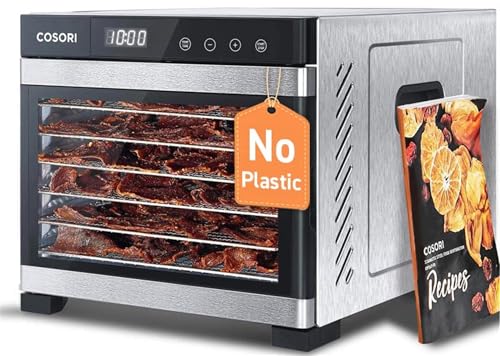
- 𝗠𝗔𝗫𝗜𝗠𝗜𝗭𝗘 𝗘𝐕𝗘𝗥𝗬 𝗕𝗔𝗧𝗖𝗛: 6 stainless steel trays...
- 𝗠𝗢𝗥𝗘 𝗣𝗢𝗪𝗘𝗥𝗙𝗨𝗟 & 𝗘𝗙𝗙𝗜𝗖𝗜𝗘𝗡𝗧: Equipped...
- 𝗦𝗨𝗣𝗘𝗥 𝗤𝗨𝗜𝗘𝗧 𝗢𝗣𝗘𝗥𝗔𝗧𝗜𝗢𝗡: Features an advanced...

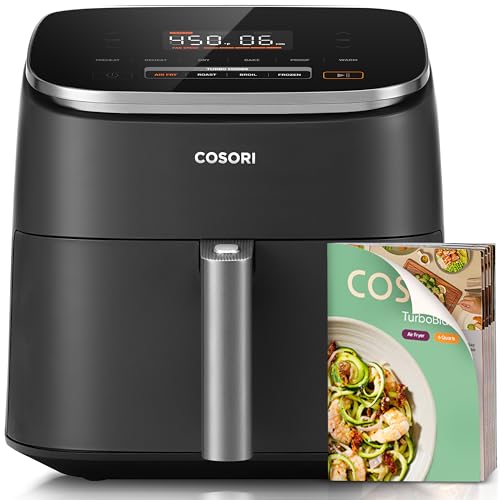
- 𝘼𝙞𝙧 𝙁𝙧𝙮𝙚𝙧 𝙐𝙥𝙜𝙧𝙖𝙙𝙚: Innovative TurboBlaze Technology...
- 𝙃𝙚𝙖𝙩𝙞𝙣𝙜 𝙐𝙥𝙜𝙧𝙖𝙙𝙚: Cosori's unique 5-fan speed system and...
- 𝙋𝙁𝘼𝙎-𝙁𝙧𝙚𝙚 𝘾𝙚𝙧𝙖𝙢𝙞𝙘 𝙐𝙥𝙜𝙧𝙖𝙙𝙚: The...
Key Takeaways
- Air fryers cook quickly with hot air for crispy, moist results, while dehydrators slowly remove moisture to preserve food long-term.
- Dehydrators operate at lower temperatures (95°F–165°F) for hours, whereas air fryers use higher heat (300°F–400°F) for rapid cooking.
- Air fryers handle small batches (up to ~1 pound), while dehydrators accommodate larger quantities across multiple trays.
- Dehydrated foods have a brittle, shelf-stable texture lasting months; air-fried foods remain moist and need refrigeration within days.
- Air fryers use more power briefly, dehydrators use less power but run longer, affecting overall energy efficiency depending on batch size.
Dehydrator Or Air Fryer Which One Is Right for You?
| Feature | Air Fryer | Dehydrator |
|---|---|---|
| Cooking Method | Rapid hot air circulation at high heat (300°F–400°F) for quick cooking and crispiness | Low-temperature air (95°F–165°F) circulating slowly to remove moisture over hours |
| Typical Cooking Time | 10–25 minutes for most foods; jerky in 3–4 hours at lower temps | 4–15 hours or more for drying, including jerky in 6–8 hours |
| Batch Size & Capacity | Small batches, usually 0.5–1 pound; single cooking chamber about 6 liters | Large batches up to 4–6+ pounds; multiple trays, capacity up to 100 liters |
| Energy Consumption | 1400–1700 watts, short duration; efficient for quick meals | 300–800 watts, longer run times; energy use varies with batch size |
| Texture & Flavor | Crispy, moist interior, retains original flavor with minimal oil | Brittle, chewy texture with intensified, concentrated flavors |
| Storage & Shelf Life | Perishable within hours to 1–2 days refrigerated | Months shelf-stable at room temperature with low moisture content |
| Versatility | Multifunctional: frying, baking, grilling, and limited dehydration at low temps | Specialized for drying and preserving; ideal for herbal teas and fruit leathers |
How Air Fryers and Dehydrators Cook Differently?

Although both air fryers and dehydrators use heated air to process food, they do so with fundamentally different mechanisms and objectives.
When you use an air fryer, hot air rapidly circulates around food, cooking it quickly to produce a moist interior with a crispy exterior, mimicking frying with minimal oil.
In contrast, a dehydrator operates by gently circulating low-temperature air over extended periods to extract moisture, preserving food without cooking it.
You’ll notice air fryer food spoils within hours, while dehydrated items become brittle and shelf-stable for months.
Air fryers multitask, frying, baking, and grilling, whereas dehydrators specialize solely in drying.
You can’t substitute one for the other; each device’s design and function are optimized for distinct culinary outcomes.
Many steam air fryers also offer dehydrating capabilities, combining multiple cooking functions in one appliance.
Comparing Temperature Ranges of Air Fryers and Dehydrators
When comparing air fryers and dehydrators, you’ll find their temperature ranges differ markedly to suit their distinct purposes.
Air fryers and dehydrators operate at distinct temperatures tailored to their unique cooking functions.
Air fryers operate at high temperatures, typically between 300°F and 400°F (149°C–204°C). This enables rapid cooking and crisping. Dehydrators function at much lower ranges, usually 95°F to 165°F (35°C–74°C), optimizing slow moisture removal without cooking.
Consider these key differences:
- Air fryers’ high heat promotes quick Maillard reactions. Dehydrators avoid this to preserve nutrients.
- Dehydrators maintain a consistent 135°F–155°F for even drying over hours.
- Air fryers can mimic dehydration at 120°F–140°F but lack uniformity.
- Jerky preparation requires 170°F in air fryers versus 160°F in dehydrators, reflecting their temperature control precision.
These ranges define their functional boundaries and cooking outcomes. Preheating the air fryer to the desired temperature before cooking ensures even heat distribution and optimal texture.
Air Fryers vs Dehydrators: Speed and Time Compared
Because air fryers use high heat and rapid air circulation, they complete cooking tasks markedly faster than dehydrators, which rely on low temperatures and prolonged drying times.
Air fryers cook most foods within 10 to 25 minutes, leveraging temperatures between 300°F and 400°F to rapidly transfer heat.
In contrast, dehydrators operate between 95°F and 165°F, requiring 4 to 15 hours for effective moisture removal.
For example, jerky takes 3–4 hours in an air fryer but doubles to 6–8 hours in a dehydrator.
While air fryers can mimic dehydration at lower settings, drying fruits or vegetables still takes 1 to 6 hours.
The rapid hot-air circulation in air fryers, combined with their smaller cooking chambers, is key to their faster cooking times compared to conventional appliances.
Comparing Batch Sizes and Capacity of Air Fryers and Dehydrators
Speed and time efficiency are important, but capacity often determines which appliance suits your needs better.
When comparing batch sizes, air fryers typically hold about 6 liters and cook small quantities, around 0.5 to 1 pound per batch.
In contrast, dehydrators accommodate large volumes with capacities up to 100 liters and multiple trays, allowing simultaneous processing of 4 to 6 pounds or more.
Consider these key points:
- Air fryers have a single food chamber limiting batch size.
- Dehydrators provide multiple trays for extensive, continuous drying.
- Air fryers suit small families or quick meals.
- Dehydrators excel in large-scale food preservation.
Choosing between the two depends on whether you prioritize small, quick batches or large, prolonged processing.
Additionally, many air fryers feature multiple cooking modes that expand meal options without requiring separate appliances.
Energy Use: What to Expect From Each Device
Although air fryers consume markedly more power per hour, typically between 1400 and 1700 watts, they compensate with shorter cooking times. This makes them generally more energy-efficient for single-batch meals.
Dehydrators run at lower power levels, 300–800 watts, but operate for extended periods. This can lead to comparable or higher total energy use depending on batch size and duration.
| Device | Power Consumption (Watts) | Typical Run Time |
|---|---|---|
| Air Fryer | 1400–1700 | 10–25 minutes |
| Dehydrator | 300–800 | 4–24 hours |
| Energy Use | High per hour | Low per hour, longer run |
Choosing depends on your batch size and frequency. Air fryers suit quick, small meals. Dehydrators excel in large, long-duration drying tasks. Efficient air fryers use precise temperature control and optimized airflow to reduce energy waste while maintaining crisp results.
How Air Fryers and Dehydrators Affect Texture and Flavor?
When you use an air fryer, it preserves the food’s original moisture while creating a crispy, oil-free exterior. This enhances the texture without altering the flavor markedly.
In contrast, dehydrators remove nearly all water content, transforming texture and intensifying flavors through concentration.
Here’s how each affects your food:
- Air fryer crisps the surface, retaining internal juiciness and natural taste.
- Dehydrator produces a brittle, chewy texture with intensified, sometimes altered, flavor profiles.
- Air-fried foods appear plump and moist immediately post-cooking.
- Dehydrated foods shrink visibly, becoming dry and dense, suitable for long-term preservation.
You’ll notice air fryers deliver immediate crispness with fresh flavors.
Dehydrators emphasize extended shelf life and flavor concentration by altering texture and moisture drastically.
Modern air fryers like the Instant Pot Vortex Plus use EvenCrisp technology to achieve crispy results using up to 95% less oil, enhancing both health and flavor.
Storage and Shelf Life: Air Fried vs Dehydrated Food
When you think about air-fried and dehydrated foods, one of the big differences is moisture content. It really matters when it comes to shelf life and how well these foods are preserved.
Air-fried foods tend to keep more moisture, which means they can spoil pretty quickly—often within just a few hours if you don’t pop them in the fridge. On the other hand, dehydrated foods have very little water left in them. This low moisture content allows you to store them for months without needing refrigeration, effectively preventing microbial growth. Proper storage and routine cleaning of appliances like air fryers are essential to prevent grease buildup and maintain food safety, as explained in Routine Cleaning & Prevention.
Moisture Content Impact
Because air fryers cook food quickly while retaining moisture, the resulting products remain perishable and spoil within hours if not consumed or refrigerated.
The moisture content in air-fried food typically stays above 10-15%, creating an environment conducive to microbial growth. In contrast, dehydrators reduce moisture to below 10%, markedly inhibiting spoilage.
Understanding moisture impact helps you manage food safety and storage effectively.
Consider these points:
- Air-fried food retains internal water, leading to a shorter shelf life.
- Dehydrated food’s low moisture content prevents microbial activity, extending usability.
- Moisture levels in air fryer outputs vary with cooking time and temperature.
- Dehydration guarantees uniform dryness, enabling longer preservation without refrigeration.
This difference in moisture fundamentally influences how you store and consume these foods. Additionally, proper air fryer use, such as avoiding overcrowding and ensuring even cooking, can help optimize moisture content and texture for better quality air-fried foods with minimal oil use and enhanced flavor through rapid hot-air circulation.
Longevity And Preservation
Although both air fryers and dehydrators alter food moisture, their impact on longevity and preservation differs markedly.
Air fried foods retain moisture and spoil within hours, requiring immediate consumption or refrigeration. Dehydrated foods, however, undergo extensive moisture removal, enabling storage for months at room temperature without spoilage.
This fundamental difference dictates your choice based on preservation needs.
| Aspect | Air Fryer | Dehydrator |
|---|---|---|
| Moisture Level | Retains moisture, spoils quickly | Removes ~90% moisture, stable long-term |
| Shelf Life | Hours to 1-2 days refrigerated | Several months unrefrigerated |
| Texture | Crispy but moist | Brittle and dry |
| Storage | Refrigeration required | Room temperature storage |
Choose dehydrators for extended preservation; air fryers excel in rapid cooking with short shelf life. However, to prevent mold growth during storage, it is essential that dehydrated foods are thoroughly dried and stored in cool, dry environments to inhibit moisture and microbial activity.
Best Uses for Air Fryers and Dehydrators
Choosing between an air fryer and a dehydrator hinges on your specific cooking goals and food preservation needs. You’ll use an air fryer when you want quick, crispy results with minimal oil and moist interiors.
Dehydrators excel at long-term storage by removing moisture slowly and evenly.
Here’s how you can best utilize each:
- Air fryer: Prepare fried, baked, or grilled meals rapidly, such as fries, chicken wings, or baked goods.
- Air fryer: Make small batches of jerky or vegetables with moderate dehydration.
- Dehydrator: Preserve large quantities of fruits, vegetables, and meats for months.
- Dehydrator: Create brittle, shelf-stable snacks like fruit leathers or jerky with consistent low heat.
Use them based on whether speed or food longevity is your priority. Air fryers often feature 360° hot air circulation technology to ensure even cooking and crispiness quickly.
Choosing Between an Air Fryer and a Dehydrator
Understanding the specific advantages and limitations of air fryers and dehydrators helps you determine which appliance aligns best with your cooking and preservation needs.
If you prioritize rapid cooking with crispy, moist results and shorter run times, an air fryer suits you. It operates at high temperatures (300°F–400°F), handles small batches, and consumes more power per hour but is energy-efficient overall for quick meals.
Conversely, if your focus is on long-term food storage through moisture removal, a dehydrator is ideal. It runs at low temperatures (95°F–165°F), supports large batch sizes with multiple trays, and uses less power hourly despite extended operation times.
Choose the air fryer for immediate cooking and the dehydrator for extensive preservation. Factor batch size, energy use, and texture preferences into your decision.
Tips for Getting the Most Out of Your Air Fryer or Dehydrator
To get the most out of your air fryer or dehydrator, it’s super important to calibrate the temperature settings. This means adjusting them based on what you’re cooking and how you want it to turn out. For example, different foods need different temps to really shine.
If you’re using a dehydrator, take advantage of those multiple trays! They’re perfect for processing larger batches all at once, so you can save time and effort. On the flip side, when you’re using the air fryer, make sure not to overcrowd it. Giving your food enough space is key to achieving even cooking.
Optimizing Temperature Settings
When you adjust temperature settings correctly, you maximize both efficiency and food quality in air fryers and dehydrators.
Precise control over heat guarantees peak moisture removal or cooking without compromising texture or flavor.
Consider these key points:
- Set air fryers between 300°F and 400°F for rapid frying; lower to 120°F–140°F to mimic dehydration.
- Maintain dehydrators at 135°F–155°F for consistent drying without cooking the food.
- Use 160°F in dehydrators and 170°F in air fryers for jerky to balance safety and texture.
- Avoid exceeding recommended ranges to prevent uneven drying or overcooking, which degrades quality and efficiency.
Following these guidelines lets you tailor temperature according to food type and desired outcome effectively.
Maximizing Capacity Use
Optimizing temperature settings sets the stage for efficient cooking and drying. However, maximizing capacity use directly impacts your overall productivity and energy efficiency.
With a dehydrator, utilize multiple trays to process large quantities simultaneously. Ensure even airflow by spacing items uniformly. Avoid overcrowding trays, as this impedes moisture removal and prolongs drying time.
In an air fryer, batch size is limited by a single chamber. Arrange food in a single layer without overlap for consistent heat exposure. Prioritize small, uniform pieces to optimize air circulation and reduce cooking time.
For both appliances, planning batch sizes around their capacity prevents energy waste from repeated cycles. Efficient load management enhances throughput, reduces operational time, and balances energy consumption. This ultimately maximizes your device’s performance.
Frequently Asked Questions
Can I Use an Air Fryer to Rehydrate Dried Foods?
You can’t effectively use an air fryer to rehydrate dried foods because it primarily circulates hot air to cook or crisp, not to add moisture.
Rehydration requires a moist environment or soaking in liquid, which an air fryer doesn’t provide.
Using an air fryer will likely further dry out your food instead of restoring its original texture or moisture content.
For rehydration, you should use water or steam methods instead.
Are There Specific Foods That Should Never Be Dehydrated?
Think of dehydrating like a sculptor chiseling water away to reveal food’s essence.
You shouldn’t dehydrate high-fat items like avocados or dairy. They spoil or turn rancid instead of drying properly.
Also, watery vegetables like cucumbers or lettuce lose texture and flavor, becoming unpalatable.
Foods with high sugar or moisture content can ferment or mold if dried improperly.
Stick to fruits, lean meats, and herbs for safe, effective dehydration.
Can Dehydrators Be Used for Making Herbal Teas?
You can absolutely use dehydrators to make herbal teas by drying fresh herbs efficiently.
Their low, controlled temperatures between 95°F and 165°F preserve delicate oils and flavors critical for tea quality.
Unlike high-heat methods, dehydrators prevent nutrient loss and bitterness, ensuring peak taste and aroma.
Just spread herbs thinly on trays, set the temperature around 135°F, and dry for several hours until crisp.
Store them for long-lasting, flavorful tea infusions.
Is It Safe to Leave a Dehydrator Running Overnight Unattended?
Yes, you can safely leave a dehydrator running overnight unattended if it’s a reputable model with built-in safety features like automatic shutoff and overheat protection.
Make sure you place it on a stable, heat-resistant surface away from flammable materials.
Regularly inspect the appliance for damage and clean it thoroughly.
However, always follow the manufacturer’s guidelines closely, as improper use or faulty units may pose fire risks during extended operation.
Discover How Dehydrator Vs Air Fryer Can Elevate Your Meal Prep?
Choosing between an air fryer and a dehydrator is like picking the right tool from a chef’s arsenal. Each shapes food with distinct precision.
Air fryers deliver rapid, high-heat crisping. Dehydrators slowly coax moisture away for long-lasting preservation.
By understanding their temperature ranges, energy use, and batch capacities, you can tailor your approach to cooking or storage.
Harness these devices wisely, and you’ll unleash culinary efficiency that’s both sharp and sustainable.
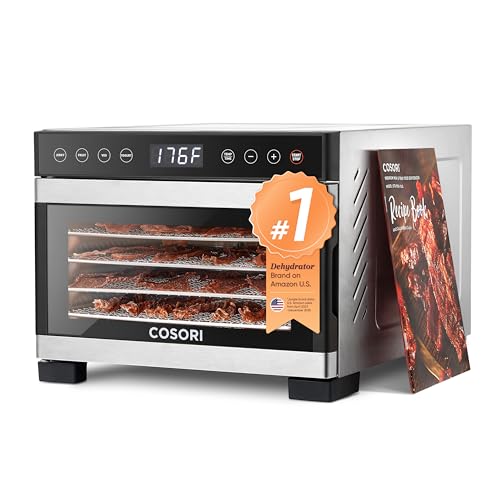
- 𝟭𝟳𝟲 °𝗙 𝗠𝗔𝗫 𝗧𝗘𝗠𝗣𝗘𝗥𝗔𝗧𝗨𝗥𝗘: Adjust the dehydrator...
- 𝗙𝗨𝗟𝗟𝗬 𝗘𝗤𝗨𝗜𝗣𝗣𝗘𝗗: Includes 5 trays, recipe cookbook, mesh...
- 𝗖𝗨𝗦𝗧𝗢𝗠 𝗣𝗥𝗘𝗦𝗘𝗧𝗦: Enjoy 4 user-friendly presets (jerky, fruit...

- AIR CRISP TECHNOLOGY: 400℉ superheated air surrounds food for hot, crispy results with little to...
- 5-IN-1 MULTI-FUNCTION AIR FRYER: Features 5 customizable cooking functions—Air Fry, Air Roast...
- LARGE CAPACITY: The 5-QT nonstick basket and crisper plate fit up to 4 lbs of French fries or 5 lbs...
Last update on 2026-10-28 / Affiliate links / Images from Amazon Product Advertising API