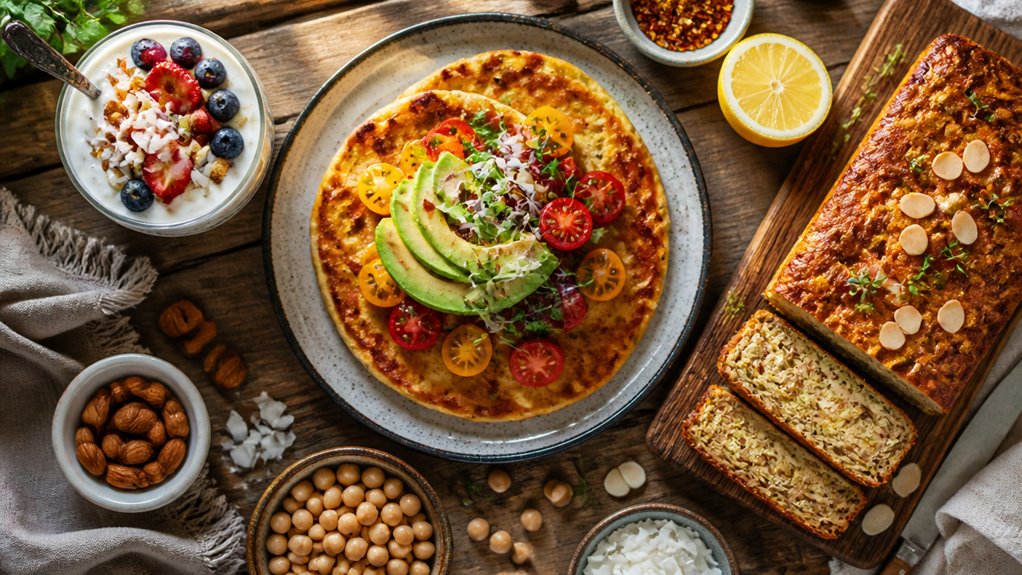
Gluten Egg Dairy Free Recipes Made Simple and Flavorful
You can enjoy gluten, egg, and dairy free recipes by using specialized flour blends like rice, almond, and tapioca with xanthan gum to mimic texture.
Replace eggs with flax or chia gels and applesauce for moisture and binding.
Swap dairy for plant-based milks and oils to maintain richness.
Prevent cross-contamination with dedicated utensils and careful ingredient selection.
With these strategies, you’ll keep your baked goods delicious and safe. Practical tips and recipe ideas help you master allergen-free cooking.
Key Takeaways
- Use gluten-free flour blends (rice, tapioca, almond) with xanthan gum to mimic gluten’s texture and binding in recipes.
- Replace eggs with flaxseed gel, applesauce, or commercial egg replacers to maintain moisture, binding, and leavening.
- Substitute dairy with plant-based milks, oils, and dairy-free yogurts for moisture and richness in baked goods.
- Incorporate fruits, legumes, nuts, and gluten-free grains as safe, nutritious ingredients free from gluten, eggs, and dairy.
- Prevent cross-contamination by using dedicated utensils, clean surfaces, and clearly labeled allergen-free ingredient storage.
Recipe Overview & Cooking Chart
| Recipe Step | Ingredients & Amount | Cook Temp & Time | Chef’s Pro Tip |
|---|---|---|---|
| 1. Preheat And Prepare | Set out gluten-free flour blend, xanthan gum, flaxseed meal, plant-based milk, oil, and dairy-free yogurt. | 350°F (175°C) for most baked recipes; prep takes 10–15 minutes. | Use room-temperature ingredients for smoother mixing and better rise. |
| 2. Mix Dry Ingredients | Combine rice flour, almond flour, tapioca starch, baking powder, salt, and xanthan gum. | Mix for 1–2 minutes until evenly distributed. | Sift the dry mix for a lighter texture and fewer lumps. |
| 3. Make The Egg Replacer | Whisk 1 tbsp ground flaxseed with 3 tbsp water per egg, or use applesauce if preferred. | Rest for 5–10 minutes until gel-like. | Let the mixture thicken fully so it can bind properly. |
| 4. Combine Wet Ingredients | Add plant-based milk, oil, dairy-free yogurt, vanilla, and prepared egg replacer. | Stir for 1–3 minutes until smooth. | Use neutral oil for savory recipes or coconut oil for richer bakes. |
| 5. Blend Wet And Dry | Fold dry ingredients into wet ingredients until just combined. | Do not overmix; batter should rest 5 minutes before baking. | A short rest helps hydrate the flours and improve structure. |
| 6. Bake To Finish | Pour batter into a lined pan, muffin tin, or baking dish. | Bake at 350°F (175°C) for 20–45 minutes, depending on recipe. | Check for golden edges and a toothpick that comes out clean. |
| 7. Cool And Serve | Allow baked goods to cool before slicing or removing from pans. | Cool for 10–20 minutes. | Cooling helps set the crumb and prevents crumbly texture. |
Understanding Gluten, Egg, and Dairy Free Cooking

When you cook gluten, egg, and dairy free, you focus on eliminating specific proteins that can trigger allergies or intolerances, such as gluten found in wheat, barley, and rye, as well as proteins in eggs and milk.
Cooking gluten, egg, and dairy free means avoiding specific allergy-triggering proteins in common ingredients.
You must avoid cross-contamination by using dedicated utensils and checking labels carefully, since gluten and dairy ingredients can hide in processed foods.
Understanding each protein’s role helps: gluten provides structure and elasticity; eggs bind and leaven; dairy adds moisture and fat.
Removing them alters texture and requires thoughtful substitutions. For example, gluten-free flours and egg replacers help maintain consistency.
Recognizing these fundamentals guarantees your recipes are safe, balanced, and enjoyable for those with celiac disease, egg allergy, or lactose intolerance.
Using ingredients like psyllium husk can help mimic gluten’s elasticity and improve the texture of gluten-free baked goods.
Top Naturally Gluten, Egg, and Dairy-Free Ingredients
Many whole foods naturally exclude gluten, eggs, and dairy, making them reliable staples for your recipes. Choosing these ingredients simplifies meal prep and reduces cross-contamination risks for sensitive individuals.
You can focus on nutrient-dense options that support diverse dietary needs without compromising taste or texture. Here are top naturally gluten-, egg-, and dairy-free ingredients to include:
- Fresh fruits and vegetables, rich in fiber and vitamins
- Legumes like beans and lentils, excellent protein sources
- Plain meats and fish, naturally free of these allergens
- Gluten-free grains such as quinoa, rice, and buckwheat
- Nuts and seeds, providing healthy fats and texture
Incorporate these ingredients confidently to build safe, wholesome meals that accommodate multiple dietary restrictions. For baking and cooking, selecting a high-quality gluten-free flour blend can greatly improve texture and flavor while maintaining dietary restrictions.
How to Choose Gluten-Free Flours for Egg- and Dairy-Free Baking?
When you’re picking out gluten-free flours for your egg- and dairy-free baking, it’s super helpful to get to know the unique properties of various flours like rice, almond, and tapioca. Each one has its own vibe, you know?
Now, here’s the cool part: blending these flours in the right ratios can really help mimic that lovely texture and structure that gluten and eggs usually provide. It’s all about finding that sweet spot!
And don’t forget about moisture levels! You’ll want to adjust those carefully to get the right consistency. Too little moisture can lead to dryness or crumbliness, and nobody wants that in their baked goods!
For optimal results, understanding the protein content of your flours can significantly influence the texture and rise of your baked goods.
Types Of Gluten-Free Flours
Although gluten-free flours vary widely in texture and flavor, choosing the right ones is essential for successful egg- and dairy-free baking. Each flour behaves differently, so understanding their properties helps you create recipes with good structure and taste.
Some flours absorb more moisture, while others add density or lightness.
Here are five common types to take into account:
- Rice Flour: Neutral flavor and fine texture, great for light baked goods.
- Almond Flour: Adds moisture and a nutty taste, ideal for dense cakes and cookies.
- Oat Flour: Mild flavor with good binding properties; make certain gluten-free certification.
- Tapioca Starch: Provides chewiness and crispness, excellent for texture balance.
- Buckwheat Flour: Strong, earthy flavor and high in fiber, suited for hearty breads.
Selecting flours based on your recipe’s needs improves texture and flavor without eggs or dairy. Additionally, considering the insulation effectiveness of certain ingredient combinations can help maintain moisture and texture during baking and storage.
Flour Blends And Ratios
Combining different gluten-free flours in the right ratios guarantees better texture, moisture, and structure, especially when baking without eggs or dairy.
You’ll want to blend flours with varying protein, starch, and fiber contents to mimic gluten’s binding and elasticity.
For instance, pairing rice or oat flour with a starch like tapioca or potato starch improves crumb softness and chewiness.
Including a small portion of protein-rich flours such as almond or chickpea flour can enhance structure and nutrient content.
Typically, a mix of 40-60% whole grain flour, 30-50% starch, and 5-10% protein flour works well.
Remember to use a reliable gluten-free flour blend or create your own, adjusting ratios based on recipe type and desired outcome.
This ensures your egg- and dairy-free baked goods turn out tender yet stable.
For best results, consider the protein content of your flours to achieve optimal texture and rise.
Adjusting Texture And Moisture
Choosing the right gluten-free flours goes beyond just mixing ratios. You need to contemplate how each flour affects the texture and moisture of your baked goods, especially without eggs or dairy.
Some flours absorb more liquid, while others contribute to a crumbly or dense result. To adjust texture and moisture effectively, consider these points:
Use oat or sorghum flour for a tender crumb and moderate moisture retention.
Incorporate starches like tapioca or potato starch to improve softness and flexibility.
Almond flour adds richness and moisture but may create a denser texture.
Rice flour tends to be drier, so balance with moist ingredients or additional liquids.
Experiment with xanthan gum or guar gum to mimic gluten’s binding properties and enhance structure.
This approach helps you achieve appealing, moist, and well-textured gluten-, egg-, and dairy-free baked goods. Additionally, using a gluten-free flour blend with xanthan gum can further improve dough elasticity and final texture in your recipes.
Egg Replacement Strategies for Gluten- and Dairy-Free Baking
When you’re baking gluten- and dairy-free, finding the right egg replacement can really make a difference. You can use common substitutes like applesauce, flaxseed meal, or even some commercial egg replacers. These options help maintain the structure of your baked goods.
Now, keep an eye on moisture levels and texture! Eggs play a big role in both of these areas in traditional recipes. So, if you’re swapping them out, it’s important to adjust accordingly.
Also, don’t forget about baking chemistry! Tweaking your leavening agents can ensure that your final product rises nicely and holds together just the way you want it.
In addition, incorporating gluten-free flours can improve the texture and binding in your egg-free recipes.
Common Egg Substitutes
Since eggs provide structure, moisture, and leavening in many baked goods, replacing them in gluten- and dairy-free recipes requires careful selection of substitutes that mimic these functions.
You’ll want ingredients that bind, add moisture, and sometimes help with rising. Here are common egg substitutes that work well in these recipes:
- Applesauce: Adds moisture and mild sweetness; use 1/4 cup per egg.
- Mashed banana: Provides moisture and binding; use 1/4 cup per egg.
- Ground flaxseed or chia gel: Mix 1 tablespoon ground seeds with 3 tablespoons water; effective binder.
- Commercial egg replacers: Formulated to mimic eggs’ structure and leavening.
- Silken tofu: Adds moisture and density; use 1/4 cup pureed per egg.
Choose substitutes based on the recipe’s texture and flavor requirements for best results. For example, incorporating ground chia or flax seeds can enhance binding and texture, especially in sourdough discard recipes.
Texture and Moisture Tips
Although replacing eggs in gluten- and dairy-free baking can be challenging, understanding how different substitutes affect texture and moisture helps you achieve better results.
For example, flaxseed or chia gels add moisture and binding properties, creating a tender crumb. Applesauce and mashed bananas contribute moisture but may soften structure, so balance is key.
Commercial egg replacers often provide reliable structure without excess wetness. Since gluten and dairy also influence texture, you’ll want to adjust liquid ratios carefully to prevent dryness or sogginess.
Incorporating oils or dairy-free yogurt can improve moisture retention. Testing small batches lets you fine-tune ingredient amounts, ensuring your baked goods maintain a pleasant mouthfeel and hold together well.
Additionally, using sourdough discard as an egg substitute can add tangy flavor and improve moisture, while contributing beneficial probiotics to your recipes.
Baking Chemistry Adjustments
Mastering egg replacement requires understanding the chemical roles eggs play in baking, especially within gluten- and dairy-free recipes. Eggs provide structure, moisture, leavening, and binding.
Replacing them means choosing substitutes that mimic these functions. You’ll want to select replacements based on the recipe’s needs, whether it’s binding crumbly dough or adding lift in cakes.
Here are five effective egg replacement strategies:
Use flaxseed meal or chia gel as binders and moisture enhancers.
Substitute mashed banana or applesauce for moisture and mild sweetness.
Employ commercial egg replacers formulated for texture and rise.
Incorporate baking soda and vinegar to improve leavening.
Adjust liquid ratios to maintain batter consistency without eggs.
These adjustments help you create reliable gluten- and dairy-free baked goods with desirable texture and flavor. Additionally, incorporating high-protein flours can enhance the nutritional profile while supporting structure in egg-free baking.
Dairy Substitutes That Work Well in Gluten- and Egg-Free Cooking
When you remove dairy from gluten- and egg-free recipes, choosing the right substitutes is crucial to maintain texture, moisture, and flavor.
Plant-based milks like almond, oat, and coconut offer diverse fat contents and flavors that influence the final product. For butter replacements, plant-based margarines or neutral oils provide the necessary fat without dairy proteins. This ensures tenderness and richness.
Dairy-free yogurts can add creaminess and moisture, especially in baked goods.
| Substitute | Best Use |
|---|---|
| Almond Milk | Smoothies, baking, sauces |
| Coconut Oil | Baking, sautéing, roasting |
| Dairy-Free Yogurt | Moisture in cakes, dressings |
Selecting these alternatives thoughtfully helps you achieve balanced, satisfying gluten- and egg-free dishes without compromising quality.
Tips to Avoid Cross-Contamination in Gluten-, Egg-, and Dairy-Free Kitchens
In kitchens handling gluten, egg, and dairy-free diets, preventing cross-contamination demands strict organization and vigilance. You must recognize that even tiny traces of these allergens can trigger reactions, so keeping ingredients and tools separate is essential.
Always clean surfaces thoroughly after preparing allergen-containing foods. Label storage containers clearly and use dedicated utensils, cutting boards, and cookware for each allergen-free category. When buying packaged foods, read labels carefully to avoid hidden sources of gluten, egg, or dairy.
Use separate prep areas and equipment for gluten, egg, and dairy-free foods. Wash hands thoroughly before handling allergen-free ingredients. Store allergen-free flours and substitutes in sealed, labeled containers.
Avoid shared condiments or spreads that may contain allergens. Educate all kitchen users on allergen risks and safe handling procedures.
Common Challenges and How to Fix Gluten-, Egg-, and Dairy-Free Recipes
Keeping your kitchen free from cross-contamination sets the stage, but creating gluten-, egg-, and dairy-free recipes comes with its own set of challenges.
You’ll notice texture and structure often change since gluten provides elasticity, eggs bind moisture, and dairy adds richness.
To fix this, use gluten-free flour blends for better crumb and structure.
Replace eggs with flaxseed meal or commercial egg replacers to maintain moisture and binding.
Swap dairy with plant-based milks or oils to preserve fat content without compromising flavor.
Also, test ingredient combinations since some substitutes alter browning and cooking times.
Simple Recipes You Can Make Gluten-, Egg-, and Dairy-Free
You can create a variety of simple, delicious meals without gluten, eggs, or dairy by focusing on naturally safe ingredients and smart substitutions.
Start with whole foods like fruits, vegetables, legumes, and gluten-free grains such as quinoa or rice.
Emphasize whole foods like fruits, veggies, legumes, and gluten-free grains for wholesome, safe meals.
Replace eggs with flaxseed meal or applesauce for binding in baking. Use plant-based milks like almond or oat milk instead of dairy.
Opt for gluten-free flours like rice or almond flour to maintain texture in recipes.
- Quinoa salad with fresh vegetables and lemon dressing
- Stir-fried rice noodles with tofu and mixed veggies
- Baked sweet potato with black beans and avocado
- Smoothie with coconut milk, banana, and berries
- Chickpea flour pancakes with maple syrup
These options guarantee nutrition, taste, and safety for your dietary needs.
Where to Find Reliable Gluten-, Egg-, and Dairy-Free Ingredient Brands?
When sourcing ingredients for gluten-, egg-, and dairy-free cooking, choosing trusted brands makes a significant difference in safety and quality.
Look for companies that certify their products through reputable third-party organizations like the Gluten-Free Certification Organization (GFCO) or those bearing the Certified Vegan label for egg and dairy avoidance.
You’ll want to prioritize brands that provide transparent ingredient lists and allergen statements to minimize cross-contamination risks.
Specialty health food stores and online retailers often carry reliable options, including gluten-free flours, egg replacers, and plant-based dairy alternatives.
Reading reviews and checking for certifications helps guarantee you select brands that consistently meet strict allergen controls.
Frequently Asked Questions
How Do Gluten, Egg, and Dairy Allergies Differ in Symptoms?
You’ll notice gluten allergies, like celiac disease, cause digestive issues, fatigue, and sometimes skin rashes.
Egg allergies often trigger immediate immune responses, hives, swelling, or even anaphylaxis, especially in children.
Dairy allergies or intolerances usually cause digestive discomfort like bloating, cramps, or diarrhea.
True dairy allergy can also involve skin and respiratory symptoms.
Each allergy affects you differently because your immune system reacts to specific proteins in these foods.
Can Gluten, Egg, and Dairy-Free Diets Support Athletes’ Nutritional Needs?
You absolutely can fuel peak athletic performance on gluten, egg, and dairy-free diets. It’s not a nutritional nightmare.
By focusing on whole foods like lean meats, fish, quinoa, fruits, and vegetables, you’ll get essential proteins, carbs, and fats.
Just be mindful to replace typical allergens with nutrient-rich substitutes, ensuring you meet your energy and recovery needs.
Thoughtful planning and label vigilance keep your diet balanced and performance strong.
Are Gluten, Egg, and Dairy-Free Products More Expensive Overall?
Yes, you’ll generally find gluten-, egg-, and dairy-free products more expensive overall.
Specialty ingredients and alternative flours often cost more due to limited production and sourcing.
Plus, you might spend extra on separate utensils to avoid cross-contamination.
However, focusing on whole foods like fruits, vegetables, and naturally free grains can help manage costs.
Being mindful of ingredient labels and shopping smart can also reduce expenses when following these diets.
How Does Gluten, Egg, and Dairy-Free Eating Impact Gut Health?
About 1 in 100 people worldwide have celiac disease, making gut health essential when avoiding gluten, eggs, and dairy.
When you eliminate these triggers, your gut lining can heal, reducing inflammation and improving digestion.
However, you need to replace these foods thoughtfully to maintain fiber and nutrients that support a healthy microbiome.
Without careful planning, you might risk nutrient deficiencies or gut imbalance.
Focus on whole, diverse foods to promote gut wellness.
What Are Common Hidden Sources of Gluten, Egg, and Dairy in Dining Out?
When dining out, you’ll often find hidden gluten in sauces, dressings, marinades, and fried foods coated with flour.
Eggs can sneak into baked goods, mayonnaise, and salad dressings.
Dairy hides in creamy sauces, butter used for cooking, and cheese in unexpected dishes.
Always ask about ingredients and cross-contact risks, as kitchens may use shared utensils or surfaces, increasing contamination chances.
Clear communication with restaurant staff is essential to stay safe.
Make Gluten Egg Dairy Free Recipes Part Of Your Routine
Steering gluten, egg, and dairy-free cooking is like tending a delicate garden. Each ingredient you choose nurtures vibrant, safe meals.
By understanding substitutes and avoiding cross-contamination, you cultivate health and flavor without compromise.
With the right flours, replacements, and brands, you’ll transform challenges into opportunities. Create dishes that nourish both body and soul.
Embrace this mindful approach and watch your kitchen blossom with inclusive, delicious possibilities every day.