How Often Should I Clean My Air Fryer: Weekly Care Tips
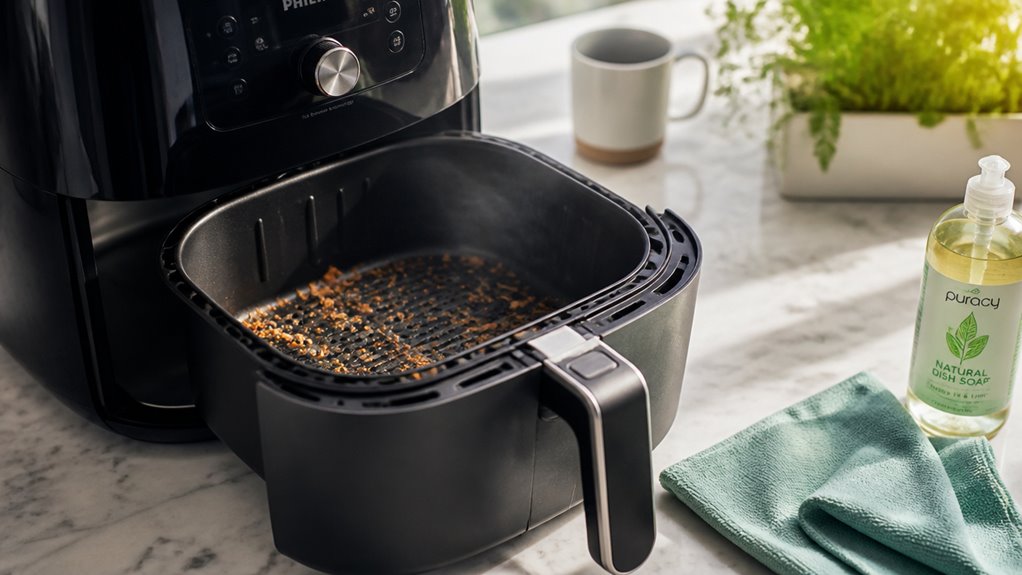
You should clean your air fryer basket after every use to prevent grease buildup and stuck food.
Wipe the interior every few uses and do a monthly deep clean, including the heating element and vents, to avoid smoke and odors.
Increase cleaning frequency when cooking greasy or heavy foods. Always dry parts thoroughly before reassembling to prevent mold.
Proper maintenance preserves cooking performance and appliance lifespan. Keep going to understand how food types and cleaning methods impact your routine.
Key Takeaways
- Clean the air fryer basket and tray after every use to prevent grease buildup and stuck-on food.
- Wipe the interior cavity every few uses and more often when cooking greasy or sticky foods.
- Perform a monthly deep clean including the heating element and vents for frequent or heavy users.
- Increase cleaning frequency when cooking greasy or high-fat foods to avoid residue hardening and odors.
- Dry all parts completely before reassembling to prevent moisture-related odors or mold growth.
How Often Should You Clean Your Air Fryer Basket?

You should clean your air fryer basket after every use to prevent grease buildup and stuck-on food.
Clean your air fryer basket after each use to avoid grease buildup and stubborn food residue.
As soon as the unit cools, wipe away crumbs and residue to avoid hardened deposits that complicate cleaning.
If your basket is dishwasher-safe, place it on the top rack according to the manufacturer’s guidelines.
For heavily soiled baskets, soak them in warm, soapy water before scrubbing with a soft sponge or brush to protect the nonstick coating.
Always dry all parts completely before reassembling to prevent moisture-related odors or mold growth.
Frequent cleaning maintains peak air circulation, ensuring efficient cooking performance and prolonging the appliance’s lifespan.
Neglecting regular basket cleaning can lead to smoke generation, unpleasant odors, and potential damage to the air fryer’s components.
Wipe the heating element with a damp cloth only when unplugged and cooled to maintain safe and effective operation heating element cleaning.
How and When Should You Wipe Your Air Fryer Interior?
Regularly wiping the air fryer interior helps prevent grease buildup and food residue from accumulating in hard-to-reach areas.
After every few uses, once the basket is removed and the unit has cooled, use a damp cloth or soft sponge with mild soap to wipe the interior cavity thoroughly.
Focus on corners, drawer housing, and edges where debris tends to collect. Avoid abrasive cleaners that can damage the nonstick coating.
For heavy or greasy cooking, increase wiping frequency to after each use to prevent residue hardening.
Make sure the interior is dry before reassembling to avoid moisture-related issues.
Periodically inspect for stubborn buildup that could cause smoke or odors, addressing it promptly with gentle cleaning methods to maintain peak performance and hygiene.
Avoiding the use of aerosol cooking sprays helps prevent residue buildup that can degrade the non-stick coating and reduce air fryer efficiency.
How to Clean Your Air Fryer’s Exterior?
When cleaning your air fryer’s exterior, focus on removing dust, grease, and fingerprints that accumulate during use.
First, unplug the unit and make certain it’s completely cooled.
Always unplug your air fryer and ensure it has fully cooled before cleaning.
Use a soft, damp cloth with mild dish soap to wipe down the outer surfaces, avoiding abrasive cleaners that can damage finishes.
Pay attention to the control panel, handle, and vents, wiping gently to prevent moisture intrusion.
For stubborn spots, a soft brush or microfiber cloth works well.
Avoid soaking the exterior or letting water enter the vents or control areas, as this can harm electrical components.
Clean the exterior every few uses to maintain appearance and hygiene and increase frequency if you notice visible residue or grease buildup.
This routine keeps your air fryer looking professional and functioning safely.
Additionally, regular inspection and proper care prevent physical damage over time and ensure your appliance’s longevity.
Why Regular Cleaning Stops Smoke and Odors?
Although smoke and odors might seem like minor nuisances, they often signal grease buildup and food residue inside your air fryer.
When leftover fats and crumbs accumulate, they carbonize under high heat, producing smoke and unpleasant smells.
By cleaning the basket, tray, and interior cavity after each use, you prevent grease from reaching this combustion point.
Wiping down the unit while still warm helps remove residue before it hardens, reducing smoke risk.
Additionally, removing loose debris between batch cooks minimizes burnt particles that cause odors.
Regular attention to these areas maintains airflow and heat distribution, ensuring your air fryer operates efficiently without smoke interference.
Ultimately, consistent cleaning stops odor-causing buildup, protecting both appliance performance and your kitchen environment.
Scheduling monthly deep cleaning helps eliminate hidden residue that can cause persistent smoke and odors.
Why Weekly Deep Cleaning Protects Your Air Fryer?
Cleaning your air fryer mightn’t be the most exciting chore, but trust me, it’s worth it. By giving it a deep clean every week, you’re keeping smoke and those stubborn lingering odors at bay.
It’s amazing how quickly hidden grease and buildup can accumulate!
Plus, regular cleaning helps your air fryer perform at its best. When you keep it clean, you ensure even heat distribution, which means better cooking results and flavors that shine through.
Nobody wants their fries tasting like last week’s chicken, right?
And let’s not forget about those tricky hard-to-reach spots. Addressing them regularly not only keeps your air fryer fresh but also helps it last longer and work reliably.
For best maintenance, always unplug and cool your appliance before cleaning, and wash baskets and trays with warm, soapy water to remove manufacturing residues and buildup in line with recommended cleaning routines.
Preventing Smoke And Odors
Since grease and food residue accumulate quickly in your air fryer’s interior and heating elements, skipping weekly deep cleaning increases the risk of smoke and unpleasant odors during cooking.
Residual oils and burnt food particles can ignite or smolder, producing smoke that affects flavor and air quality. By thoroughly degreasing the basket, drawer housing, and vent openings weekly, you minimize buildup that traps odors and promotes combustion.
Use mild soap and a damp cloth to clean coated surfaces gently, avoiding abrasive materials that could damage the nonstick finish. Regular removal of charred residue from hard-to-reach areas prevents lingering smells and smoke generation.
Maintaining this schedule guarantees your air fryer stays odor-free and operates safely without emitting off-flavors caused by accumulated grime or grease. Additionally, regular cleaning supports air fryer performance and extends the lifespan of your appliance.
Maintaining Optimal Cooking Performance
Maintaining your air fryer’s performance hinges on consistent weekly deep cleaning. This prevents grease and residue buildup that can degrade heating efficiency and cooking results.
By thoroughly cleaning interior walls, drawer housing, and vent openings, you eliminate hidden grime that restricts airflow and causes uneven heat distribution. Weekly degreasing reduces the risk of smoke and off-flavors by removing accumulated fats that carbonize during cooking.
Additionally, inspecting hard-to-reach areas helps you catch early signs of residue buildup, preserving the appliance’s lifespan. Use mild soap and a damp cloth to protect nonstick coatings while ensuring thorough cleanliness.
Neglecting weekly deep cleans allows grease to harden, impairing the heating element’s function and compromising food quality. Regular maintenance guarantees consistent peak cooking performance and extends your air fryer’s service life. Always ensure the appliance is unplugged and completely cooled before cleaning the heating element to avoid damage and ensure safety during maintenance, as outlined in the maintenance and cleaning guidelines.
When and How Should You Clean the Heating Element?
Although the heating element in your air fryer is tucked away, it requires regular cleaning to guarantee peak performance and prevent residue buildup. You should clean it at least once a month or more frequently if you notice oil splatter or charred residue.
Follow these steps to clean it safely and effectively:
Unplug and let the air fryer cool completely before accessing the heating element. Use a soft brush or cloth lightly dampened with mild soapy water to remove grease and debris; avoid soaking the element.
Inspect the element for any stubborn buildup and gently scrub with a non-abrasive brush, taking care not to damage the coils.
Regular maintenance of the heating element helps prevent smoke and off-flavors. It also ensures even heat distribution during cooking.
Using silicone-coated parchment paper liners can help minimize residue buildup on the heating element by preventing food from sticking and splattering.
How Different Foods Affect Air Fryer Cleaning Frequency?
You know, if you’re cooking up a lot of greasy foods in your air fryer, you’ll probably find yourself cleaning it more often.
Those greasy meals can leave behind quite a bit of residue, which isn’t great for the appliance.
On the flip side, if you stick to dry foods, you can actually go longer between cleanings.
Less buildup means less hassle for you!
But, let’s talk about sticky sauces for a second.
They can be a real pain! Those stubborn deposits need to be dealt with right away to avoid any damage or funky odors.
It’s definitely worth the extra effort to keep your air fryer in tip-top shape!
For best results, be sure to regularly inspect and clean the heating element to remove any residue and maintain optimal performance.
Greasy Foods Increase Cleaning
Greasy foods typically cause more residue buildup in your air fryer, requiring you to clean it more frequently than when cooking dry or low-fat items. The excess oil and fat accumulate on the basket, tray, and interior walls, increasing the risk of smoke and unpleasant odors. To maintain peak performance, you’ll need to adjust your cleaning routine accordingly.
Consider these points when cooking greasy foods:
Clean the basket and removable parts after every use to prevent stubborn grease buildup. Wipe the interior cavity and drawer housing more often, as grease tends to collect in hard-to-reach areas. Perform weekly deep cleans focusing on degreasing vent openings and heating elements to avoid smoke and residue accumulation.
Regular maintenance guarantees your air fryer operates safely and efficiently despite frequent greasy cooking. Avoid using generic aerosol sprays as they can leave sticky residue that complicates cleaning and damages the nonstick surface, impacting your air fryer’s longevity and performance cooking spray risks.
Dry Foods Require Less
While greasy foods demand more frequent cleaning due to their high oil content, dry foods generally cause less residue buildup in your air fryer.
When cooking dry items like chips, nuts, or dehydrated snacks, you’ll notice minimal oil splatter or grease deposits inside the basket and cooking chamber.
This reduces the frequency of deep cleans and helps maintain nonstick surfaces longer. However, you should still clean the basket, tray, and removable inserts after each use to remove crumbs and prevent small residue from accumulating.
Wiping the interior cavity every few uses is usually sufficient unless you spot visible debris. Even with dry foods, regularly inspect vents and drawer edges to avoid unnoticed buildup that can impair airflow or cause odors.
Proper maintenance prolongs your air fryer’s performance and hygiene.
Sticky Sauces Cause Buildup
Sticky sauces tend to cling to your air fryer’s basket and cooking surfaces, increasing residue buildup and complicating cleaning. These sticky residues often require more immediate and thorough cleaning to prevent hard-to-remove deposits.
You should clean your air fryer basket and tray after every use when cooking with sauces to avoid residue hardening. Consider these points:
Sticky sauces can caramelize or burn, adhering tightly to nonstick surfaces. Residue buildup in vents or drawer edges may cause smoke or odors. Frequent soaking and gentle scrubbing prevent damage to coated surfaces.
To maintain peak performance, wipe crumbs and sauce residue promptly after cooling. Follow manufacturer guidelines for soaking and dishwasher use to protect your air fryer’s finish while ensuring thorough cleaning after each sticky-sauce meal.
The Best Tools and Methods for Cleaning Your Air Fryer
Regularly using the right tools and methods will help you maintain your air fryer’s performance and longevity. Always unplug and allow it to cool before cleaning.
Use warm water, mild dish soap, and a soft sponge to clean removable parts like the basket and tray. Avoid abrasive pads or harsh cleaners to preserve nonstick coatings.
For stubborn debris, a soft brush or toothbrush works well in tight areas. Wipe the interior cavity and exterior with a damp cloth, avoiding soaking electrical components.
Clean the heating element carefully with a dry brush or cloth to remove residue without moisture. Follow manufacturer guidelines for dishwasher-safe parts and cleaning frequency.
This precise approach prevents buildup, protects coatings, and ensures safe, efficient operation of your air fryer.
Cleaning Mistakes to Avoid With Your Air Fryer
When it comes to cleaning your air fryer, you definitely want to avoid using abrasive cleaners or scouring pads. They can really mess up that nonstick coating and, trust me, that just shortens the lifespan of your appliance.
Also, don’t forget about the heating element! It’s super important to treat it gently. So, no soaking or harsh scrubbing, okay? Doing so could really impact how well it works.
If you ignore these tips, you might find yourself facing performance issues or even some costly repairs down the line.
Using Abrasive Cleaners
Steer clear of abrasive cleaners when maintaining your air fryer, as they can damage the nonstick coatings on removable parts and interior surfaces. Using harsh scrubbing pads or strong chemical cleaners risks scratching these delicate finishes, reducing their effectiveness and lifespan.
Instead, opt for gentler cleaning methods to preserve your appliance.
To protect your air fryer, follow these guidelines:
Use a soft sponge or cloth with mild dish soap for cleaning baskets and trays.
Avoid steel wool, scouring pads, or harsh powders on any coated surface.
Employ a soft brush or toothbrush for stuck-on debris in tight spots.
Ignoring Heating Element
Although it’s easy to overlook, cleaning your air fryer is essential for maintaining its performance and safety.
Residue like oil splatter and food particles can accumulate, reducing heat efficiency and potentially causing smoke or unpleasant odors.
You should inspect it at least once a month, or more frequently if you cook greasy or high-fat foods.
To clean, first unplug and allow your air fryer to cool completely.
Then, gently wipe with a soft, damp cloth or a soft brush to remove any buildup.
Avoid soaking or using abrasive materials, as these can damage the appliance.
Regular maintenance prevents overheating and extends its lifespan.
How to Adjust Air Fryer Cleaning for Your Usage?
Regularly adjusting your air fryer cleaning routine based on how often and what types of foods you cook guarantees peak performance and longevity.
If you use your air fryer heavily or cook greasy foods, increase cleaning frequency to prevent buildup and odors. Light users can extend intervals between deep cleans but should still clean baskets and trays after each use.
Consider these adjustments:
For high-fat foods, clean the basket and interior after every use to avoid smoke and residue.
Wipe the exterior and interior cavity every few uses to remove loose debris and grease.
Schedule monthly deep cleans, including the heating element and vents, for frequent or daily use.
Tailoring your cleaning approach helps maintain efficiency and prevents damage over time.
Frequently Asked Questions
Can I Use Vinegar or Baking Soda to Clean My Air Fryer?
Yes, you can use vinegar or baking soda to clean your air fryer, but do so cautiously.
Use a mild vinegar solution or a baking soda paste to target stubborn grease or residue.
Avoid applying these directly on nonstick coatings or heating elements.
Always unplug and cool the unit first.
After cleaning, thoroughly rinse and dry all parts to prevent damage or odors.
Stick to gentle scrubbing tools to protect surfaces and maintain performance.
How Do I Prevent Electrical Damage During Air Fryer Cleaning?
To prevent electrical damage during air fryer cleaning, always unplug the unit and let it cool completely before you start.
Avoid immersing the main body or control panel in water. Use a damp cloth with mild soap to wipe these areas gently.
Keep moisture away from vents and the heating element, cleaning them carefully with a dry or lightly dampened soft brush.
Never use abrasive cleaners or excessive water near electrical components.
Is It Safe to Clean My Air Fryer With a Dishwasher?
Yes, you can clean some air fryer parts in the dishwasher, but only if the manufacturer approves it.
Typically, removable baskets and trays are dishwasher-safe on the top rack, which avoids high heat damage.
However, avoid putting the main unit or heating element in the dishwasher.
Always check your manual first to prevent warping or coating damage.
For stubborn residue, soak parts in warm soapy water before scrubbing gently by hand.
How Do I Remove Stubborn Burnt Smells From My Air Fryer?
To remove stubborn burnt smells, start by unplugging and cooling your air fryer.
Clean all removable parts with warm, soapy water, soaking if needed.
Wipe the interior with a mixture of equal parts water and white vinegar to neutralize odors.
Use a soft brush for crevices and let the unit air out fully before reassembly.
Avoid harsh chemicals that can damage coatings or leave residues, ensuring odor-free, safe operation.
Can I Use Air Fryer Liners or Parchment Paper to Reduce Cleaning?
You can absolutely use air fryer liners or parchment paper to ease your cleaning routine.
These liners act as gentle guardians, catching drips and crumbs before they cling to your basket.
Just make sure the liner is perforated to maintain airflow and never cover the entire basket, which could disrupt cooking.
Using liners reduces residue but doesn’t replace regular cleaning of your air fryer’s core components to keep it operating efficiently and safely.
Build A Cleaning Habit That Protects Every Meal
You might think cleaning an air fryer is just a chore, but it’s actually your best defense against smoke, odors, and wear.
While wiping the interior regularly keeps things fresh, deep cleaning weekly preserves its performance and lifespan.
Different foods demand different care, so adjusting your routine is key.
Neglecting these steps risks damage, yet consistent maintenance guarantees your air fryer stays efficient and safe.
It’s a small effort for lasting benefits.