
Does Air Fryer Add Calories? Tips for Healthier Cooking
You won’t gain calories from the air fryer itself. It cooks by circulating hot air without adding energy or fat.
You only add calories when you use oil, which is much less than deep frying, typically a teaspoon versus a tablespoon.
This means you can enjoy crispy, flavorful food with far fewer calories and fat.
However, some foods won’t lose calories just by air frying. Keep exploring to understand how this cooking method truly affects nutrition.
Key Takeaways
- Air fryers do not add calories themselves; they cook food using hot air without injecting energy or fat.
- Using minimal oil in air frying significantly lowers added-calorie content compared to deep frying.
- Air-fried foods retain flavor and crispness with 70–80% fewer calories from fat than deep-fried versions.
- Pre-fried or heavily processed foods retain their original high calorie and fat content despite air frying.
- Adding oil during air frying increases calories, potentially negating the method’s calorie reduction benefits.
Oil Use and Calorie Impact: How Different Cooking Methods Compare
| Cooking Method | Oil Quantity Used | Approximate Calories Added | Calorie Reduction Compared to Deep Frying | Additional Notes |
|---|---|---|---|---|
| Deep Frying | 1 tbsp (14g) | ~120 calories | Baseline (0%) | Food is fully submerged in oil, leading to high fat absorption. |
| Air Frying | 1 tsp (4.5g) | ~42 calories | Up to 65% fewer calories | Uses hot air circulation with minimal oil, preserving crispness. |
| No Oil Cooking | 0 | 0 calories | 100% calorie reduction | Cooking without added fat, suitable for steaming or baking. |
| Oven Baking | Varies | Moderate | Varies based on oil use and recipe | Generally healthier than deep frying, but oil quantity affects calories. |
How Air Fryers Work and Affect Calories?

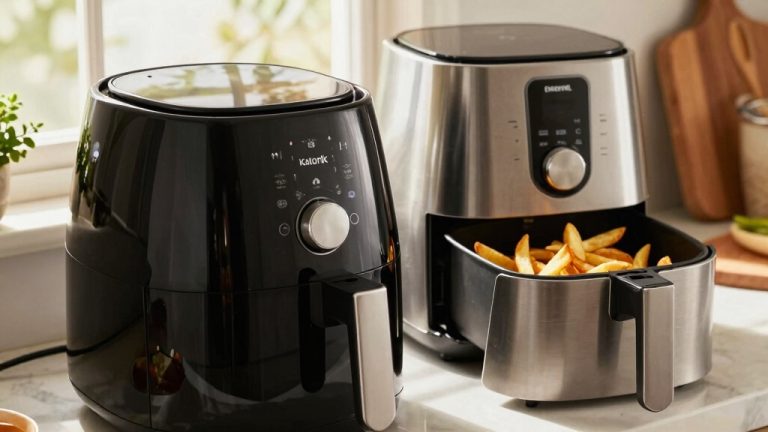
Understanding how air fryers work helps clarify their impact on calories. The device contains only a heating element and a fan, circulating superheated air between 175–200°C to cook food.
It acts like a high-speed convection oven, replicating frying texture without injecting energy or physically removing fat from ingredients. The air fryer doesn’t burn off or extract existing fat; instead, fat either remains in the food, drips into the tray, or oxidizes.
Because no chemical or caloric alteration occurs during cooking, the appliance itself adds zero calories. The key takeaway is that the air fryer influences calories only by the cooking method—air circulation—not by changing the inherent caloric content of the food you prepare.
Similar to how consistent pressure is crucial for whipped cream chargers to maintain quality, precise air circulation in air fryers ensures even cooking without adding calories.
How Air Fryer Oil Use Reduces Calories?
Using substantially less oil is the main way air fryers reduce calories in your meals. Unlike deep frying, which requires about 1 tablespoon of oil, air frying needs only 1 teaspoon.
This drastic oil reduction directly lowers the calorie content, since oil adds significant calories. For example, air-fried foods retain their flavor and crispness with far fewer added fats.
To maintain the best taste and ensure safety, it is important to avoid spraying oil directly onto electrical parts during cleaning.
| Cooking Method | Oil Used | Approximate Calories Added |
|---|---|---|
| Deep Frying | 1 tbsp (14g) | 120 calories |
| Air Frying | 1 tsp (4.5g) | 42 calories |
| No Oil Cooking | 0 | 0 calories |
| Oven Baking | Varies | Moderate |
Why Air Fryers Cut Calories Compared to Deep Frying?
The significant reduction in oil use with air fryers directly leads to fewer calories in your meals compared to deep frying.
Since air fryers require only about a teaspoon of oil, your food absorbs far less fat, cutting the calorie content dramatically. Here’s why:
- Deep frying submerges food in oil, adding significant calories, while air frying uses minimal oil.
- Air-fried meals can reduce calorie intake by 70–80% compared to deep-fried counterparts.
- Fat content in air-fried foods is substantially lower, helping you control overall calorie consumption.
- The air fryer’s hot air circulation crisps food without saturating it with oil, preserving texture but reducing added calories.
Additionally, the rapid hot-air circulation in air fryers not only speeds cooking but also enhances crispiness without the need for excess oil.
How Air Frying Affects Food Calories and Fat?
Although air frying doesn’t change the inherent calories in your food, it markedly impacts the fat content by requiring much less oil than traditional frying methods.
Since air fryers use hot air circulation to cook food, you only need about a teaspoon of oil. This is significantly less than deep frying, which often uses a tablespoon or more.
This reduction in oil lowers the fat absorbed by the food, cutting calories from fat by up to 70–80%. For example, a 3-ounce air-fried chicken breast contains roughly half the fat and calories compared to its deep-fried counterpart.
However, the calories naturally present in the food remain unchanged. Air frying doesn’t remove fat but minimizes added fat, making your meals leaner without altering their basic nutritional profile.
Many modern air fryers also feature precise temperature control, which helps cook food evenly while preserving its nutritional value.
Limitations: When Air Frying Doesn’t Cut Calories?
Even when you cook with an air fryer, your meal’s calorie content doesn’t automatically drop if you rely on pre-fried or heavily processed frozen foods.
These items often retain high fat and calorie levels despite air frying. To understand when air frying doesn’t cut calories, consider these points:
- Pre-fried frozen foods like French fries already contain absorbed oil, keeping calories high.
- Air frying chicken wings or similar items won’t reduce inherent fats if they’re pre-fried.
- Adding oil during air frying increases calorie content, negating potential reductions.
- High-fat foods remain calorie-dense regardless of cooking method, so air frying doesn’t make them healthier by default.
You need to choose fresh, minimally processed ingredients and limit added fats for air frying to effectively reduce calories. However, be mindful that excess oil can also create cooking issues such as increased steam and pressure inside the basket.
Frequently Asked Questions
Can Air Frying Affect the Texture of Different Foods?
Yes, air frying can affect the texture of different foods. You’ll notice a crispy exterior similar to deep frying but with less oil, thanks to hot air circulating rapidly around the food.
This method creates a crunchy surface while keeping the inside moist. However, some foods might become drier due to moisture loss.
How Does Cooking Time Vary Between Air Frying and Deep Frying?
Like trading a race car for a steady train, air frying usually takes longer than deep frying.
You’ll find deep frying cooks food quickly, often in minutes, due to full oil submersion at high heat.
Air frying circulates hot air around food, requiring more time to achieve crispiness, typically 20–30% longer.
However, air frying offers safer, less messy cooking with less oil, making the extra minutes a worthwhile trade-off.
Are Certain Oils Better Suited for Air Frying?
Yes, certain oils work better for air frying due to their high smoke points and neutral flavors.
You’ll want oils like avocado, canola, grapeseed, or light olive oil because they can handle the high heat (around 375°F to 400°F) without breaking down or producing harmful compounds.
Avoid unrefined oils or those with low smoke points like extra virgin olive oil or butter, which can burn and create off-flavors during air frying.
Does Air Frying Preserve More Nutrients Than Other Cooking Methods?
Yes, air frying generally preserves more nutrients compared to deep frying or boiling because it uses less oil and shorter cooking times, reducing nutrient loss.
You’ll retain more vitamins like vitamin C and B-complex, which are sensitive to heat and water.
However, some nutrient degradation still occurs due to heat exposure.
Can Air Fryers Be Used for Baking or Roasting Besides Frying?
You can definitely use an air fryer for baking, roasting, and frying.
It circulates hot air evenly, making it great for roasting vegetables, baking small cakes or muffins, and crisping meats.
Studies show air fryers maintain texture and flavor while reducing cooking time compared to traditional ovens.
Just adjust temperature and timing, and you’ll get versatile, healthy dishes without sacrificing quality or convenience.
Make Smarter Choices: Does Air Fryer Add Calories or Reduce Them?
Think of air frying like choosing a bicycle over a gas-guzzling car.
Both get you to the same destination: crispy, tasty food.
But the bike, or air fryer, uses far less fuel.
This means trimming unnecessary calories.
While air frying generally reduces fat and calories, it’s not a magic fix if you overload on oil or high-calorie ingredients.
By understanding how it works, you can confidently make healthier choices without sacrificing flavor or satisfaction.