What Is an Emulsion in Baking & How It Works?
In baking, an emulsion forms when you disperse tiny droplets of oil into water or vice versa, creating a stable mixture that improves texture, moisture retention, and shelf life.
You achieve this by using emulsifiers like lecithin or mono- and diglycerides, which reduce surface tension and prevent droplet coalescence.
Emulsions also enhance dough elasticity and air incorporation, essential for volume and crumb structure.
Understanding these principles reveals how emulsions optimize baking performance and product quality.
Key Takeaways
- An emulsion is a stable mixture of two immiscible liquids, typically oil and water, used to evenly distribute ingredients in baking.
- Oil-in-water emulsions are common in cake batters and icings, where oil droplets disperse in a water-based phase.
- Emulsifiers like lecithin and egg proteins reduce surface tension and create protective films around droplets to prevent separation.
- Emulsions improve batter aeration, dough machinability, and gas retention, enhancing texture, volume, and crumb structure in baked goods.
- Proper mixing and ingredient balance stabilize emulsions, ensuring consistent texture, moisture retention, and extended shelf life in baked products.
Common Emulsion Types Used in Baking
| Emulsion Type | Oil Phase | Water Phase | Common Emulsifier | Typical Applications | Key Benefits |
|---|---|---|---|---|---|
| Oil-in-Water (O/W) | Vegetable oil, butter oil | Water, milk, egg whites | Lecithin, mono-diglycerides | Cake batters, icings, custards | Enhanced aeration, uniform texture, moisture retention |
| Water-in-Oil (W/O) | Butter fat, shortening | Water droplets, milk solids | Lecithin, citric acid esters | Butter, margarine, pie crusts | Spreadability, flaky texture, shelf stability |
| Complex (W/O/W) | Mixed oils | Multiple water phases | Combination emulsifiers | Specialty pastries, layered cakes | Advanced texture control, superior mouthfeel |
| Egg-Based | Yolk lipids | Egg white proteins | Natural lecithin from yolks | Mayonnaise, hollandaise, enriched breads | Natural stabilization, rich flavor, golden color |
| Dairy Emulsion | Milk fat | Milk proteins, whey | Casein, whey proteins | Cream-based frostings, soft breads | Creamy texture, protein reinforcement, tenderness |
Definition and Basic Concept of Emulsion
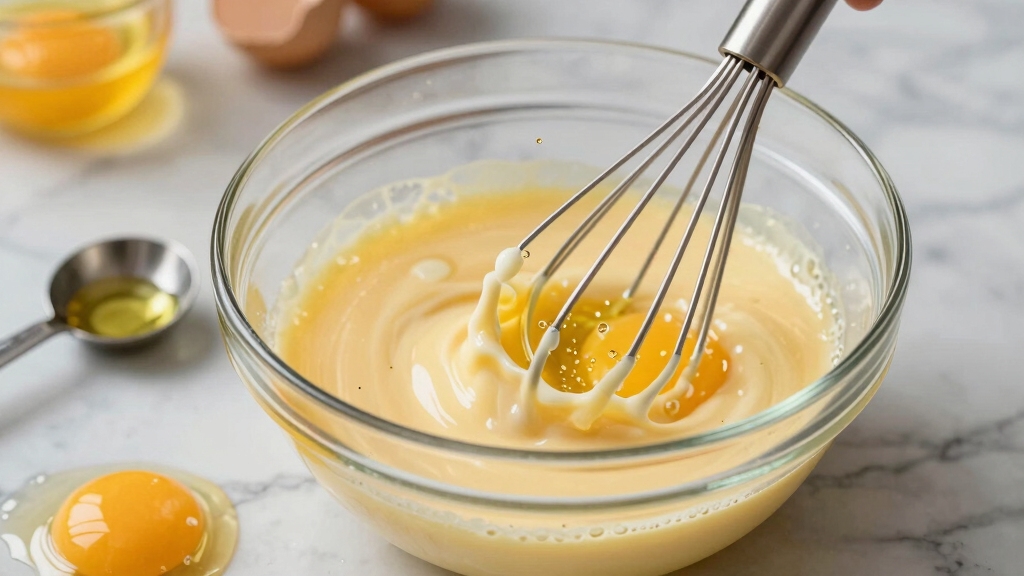
Although oil and water naturally separate, you can combine them into a stable mixture called an emulsion. This plays a crucial role in baking.
An emulsion consists of two immiscible liquids, typically oil and water, where one is finely dispersed as droplets within the other. You create these droplets by applying physical force like whisking or blending, breaking one liquid into small particles suspended in the continuous phase.
Similar to how Krusteaz Sourdough Bread Mix uses natural ingredients to maintain quality, emulsions rely on proper techniques to achieve stability.
In baking, emulsions often serve as water-based flavor systems, ensuring uniform distribution and retention of flavors throughout the product. These droplets typically range from 10 nanometers to 100 micrometers in diameter. Bakery emulsions are designed to retain flavor under high heat, unlike alcohol-based extracts.
Role and Function of Emulsifiers in Baking
When you incorporate emulsifiers into your baking process, they actively enhance dough properties by interacting with gluten proteins to increase elasticity and strength. Many commercial dough enhancers contain emulsifiers combined with other ingredients such as ascorbic acid to improve overall dough quality and shelf life.
Emulsifiers promote gluten cross-linking, boosting dough resilience and machinability while reducing stickiness. They stabilize emulsions within batters, improving air incorporation and foam stability, which results in lighter, fluffier products. Moreover, emulsifiers reduce surface tension of liquid components, creating a homogeneous dough that enhances elasticity and gas retention.
Additionally, emulsifiers inhibit starch retrogradation, extending shelf life by maintaining moisture and softness. This shelf life extension is a key benefit noted in professional dough improvers that keep bread fresh for over a week.
Key functions include:
- Enhancing dough elasticity and gas retention for improved volume and oven spring.
- Stabilizing water-oil mixtures to prevent phase separation and improve batter aeration.
- Delaying staling by forming complexes with starch components, preserving crumb softness.
Types and Stability of Emulsions
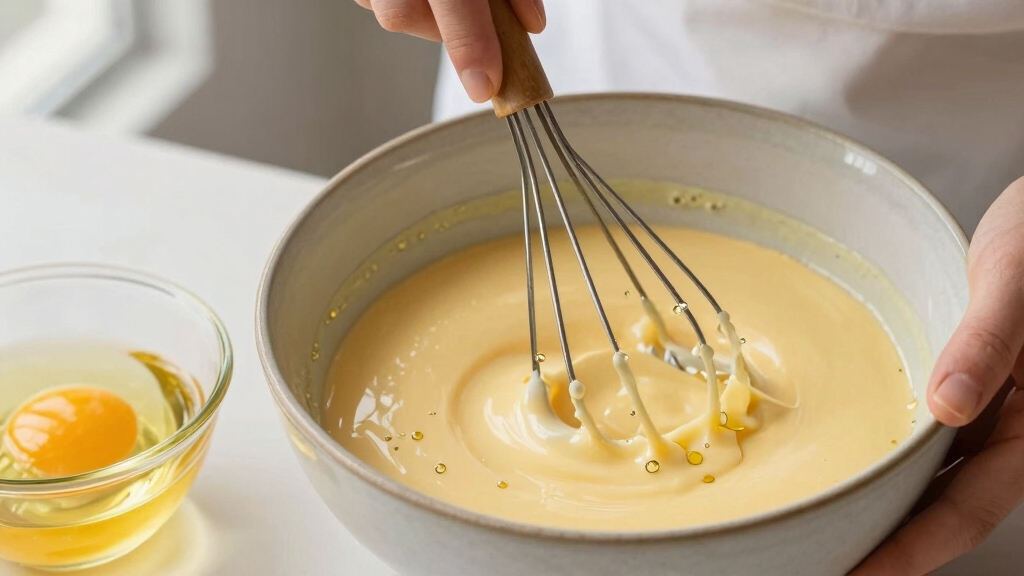
Understanding the specific types of emulsions used in baking helps you optimize product texture and stability. Oil-in-water (O/W) emulsions disperse oil droplets in water and are typical in cake batters and icings.
Emulsifiers are food additives that help mix substances that typically separate, such as oil and water. Including high-protein flours in emulsified doughs can also affect the final bread texture and nutritional profile.
Water-in-oil (W/O) emulsions suspend water droplets in fat, common in butter and certain doughs. Complex emulsions, like water-in-oil-in-water, allow advanced control over texture.
Emulsion stability hinges on the hydrophilic-lipophilic balance (HLB) of emulsifiers; values above 10 favor O/W, while values below 10 favor W/O. Mechanical homogenization reduces droplet size, enhancing stability, while viscosity modifiers like gums prevent phase separation.
Temperature fluctuations, pH, and ionic strength also impact stability. Bakery emulsions are engineered for heat stability to withstand baking temperatures without flavor loss or phase breakdown. This ensures consistent performance and shelf life.
Benefits of Emulsions in Baked Goods
Emulsions consistently enhance baked goods by improving texture, extending shelf life, and optimizing dough handling. When you use emulsions, you gain several advantages vital for quality and efficiency:
Emulsions improve baked goods by enhancing texture, extending shelf life, and optimizing dough handling for superior quality.
Softer crumb structure with stabilized gluten networks results in tender, uniform textures that retain moisture longer. Proper moisture maintenance is essential to prevent drying out and ensure product quality.
Inhibition of starch retrogradation delays staling and maintains freshness during storage.
Improved dough machinability reduces stickiness and increases elasticity, allowing consistent hydration and better gas retention for superior volume.
These benefits translate to products that not only feel and taste fresher but also withstand processing stress better. Emulsifiers often work best in combinations, providing synergistic effects that enhance dough conditioning and extend shelf life effectively.
Common Applications of Emulsions in Baking

Across various baked goods, emulsions play a critical role in stabilizing mixtures, enhancing texture, and improving processing efficiency.
In cake batters, emulsifiers like mono- and diglycerides promote uniform oil-water dispersion, improving aeration and crumb uniformity. They also enable fat reduction without compromising tenderness.
Their functionality relies on the balance of lipophilic and hydrophilic moieties that allow stable emulsions. Precise ingredient measurements, often achieved with a digital scale, are essential to maintain this balance and optimize batter quality.
In bread, emulsions strengthen gluten networks and optimize gas retention, enhancing volume and shelf life through dough conditioners such as DATEM and SSL.
Margarine and shortenings rely on emulsifiers like lecithin and citric acid esters to maintain water-in-oil stability, which is vital for texture and spreadability.
Eggs naturally provide lecithin, stabilizing emulsions that improve volume, crumb structure, and shelf life.
Additionally, emulsifiers stabilize air cells in aerated batters, supporting foam integrity and delaying staling, thereby preserving softness and overall product quality.
Scientific Principles Behind Emulsification
Although emulsions appear simple, their stability hinges on complex molecular interactions involving amphiphilic emulsifiers that orient at oil-water interfaces.
Emulsion stability relies on complex molecular interactions of amphiphilic emulsifiers at oil-water boundaries.
You rely on these molecules, with hydrophilic heads and hydrophobic tails, to reduce interfacial tension and stabilize dispersed oil droplets. Maintaining an optimal balance of these emulsifiers can significantly enhance the kinetic stability of the emulsion.
Proteins and lecithin from eggs act as natural emulsifiers, forming protective films that prevent droplet coalescence and enhance viscosity. The viscosity of the continuous phase, often provided by the egg yolk, also plays a crucial role in limiting droplet movement and coalescence, thereby improving overall emulsion stability continuous phase viscosity.
The emulsion’s kinetic stability depends on droplet size, distribution, and the strength of this interfacial layer.
Consider these critical factors:
- Amphiphilic emulsifiers align at interfaces, minimizing tension and creating a protective barrier.
- Uniformly small droplets reduce merging and improve emulsion longevity.
- Proteins form mechanical films that stabilize air bubbles, impacting texture and volume in baked goods.
Understanding these principles helps you control emulsion stability scientifically.
Techniques for Creating Stable Emulsions
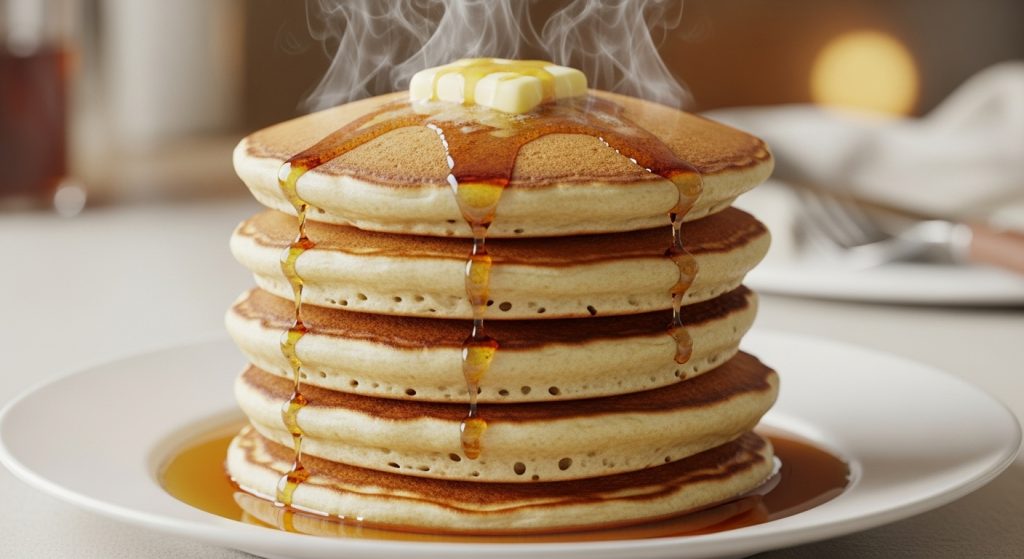
Mastering the stability of emulsions requires more than understanding molecular interactions; it demands precise control over preparation methods. You need vigorous yet controlled mixing to disperse one phase into another, producing fine droplets that enhance stability.
Incorporate the oil phase slowly into the water phase to improve droplet dispersion. Use mechanical tools like whiskers or homogenizers to achieve uniform droplet size, avoiding excessive high-speed blending that risks overheating and breaking the emulsion.
Keep all ingredients at room temperature for even mixing, and regulate temperature carefully. Gentle heating may be necessary, but excessive heat destabilizes emulsions. Temperature control is similarly crucial when preparing dairy-based products like cultured cream.
In bakery emulsions, the presence of emulsifier ingredients such as gums or modified starches helps stabilize the oil droplets within the water phase. After formation, cooling can set the emulsion, improving viscosity and texture. Through these targeted techniques, you maintain emulsion integrity essential for consistent baking results.
Ingredients That Enhance Emulsion Performance
When you break down the components that boost emulsion performance in baking, you’ll find a range of specialized emulsifiers and proteins designed to improve stability, texture, and shelf life.
Emulsifiers like mono- and diglycerides prevent phase separation, while lecithin enhances mixing and volume in batters.
Proteins such as egg white and whey concentrate stabilize foams and emulsions by surrounding oil droplets, improving dough viscoelasticity and freeze-thaw resilience.
Additionally, gums like pectin and agar contribute to structural integrity and mouthfeel, extending product shelf life.
Key ingredients include:
- Egg yolk and pea protein, which increase viscosity and physically stabilize emulsions.
- Pectin and agar, natural gums that prevent ingredient separation.
- Propylene glycol esters and polyglycerol polyricinoleate for enhanced texture and stability.
Using filtered water instead of chlorinated tap water can further improve emulsion quality by preventing interference with yeast and bacterial activity during fermentation, a principle similar to maintaining a healthy sourdough starter filtered water.
Frequently Asked Questions
Can Emulsions Affect the Shelf Life of Baked Products?
Yes, emulsions markedly extend the shelf life of baked products. They stabilize dough by interacting with starch and proteins, reducing starch retrogradation and crumb firming.
This keeps moisture locked in, slowing staling and maintaining softness. Emulsifiers also improve dough aeration and gluten strength, enhancing volume and texture retention.
What Common Baking Mistakes Disrupt Emulsion Formation?
Imagine your batter as a delicate dance of molecules.
Common baking mistakes like using butter that’s too warm or eggs straight from the fridge can throw off the rhythm, breaking emulsion formation.
Overmixing or adding fats too quickly disrupts molecular bonding, causing separation.
Incorrect leavening amounts or uneven incorporation create unstable air pockets.
Neglecting the precise timing and compatibility of emulsifiers sabotages the emulsion’s structure, leading to texture flaws and collapse.
How Do Emulsions Influence Gluten Development in Dough?
Emulsions influence gluten development by evenly distributing fats and liquids around glutenin and gliadin proteins, enhancing gluten network formation.
You’ll notice improved dough extensibility and elasticity, as emulsifiers reduce surface tension between flour proteins and water.
This promotes better hydration and gluten interaction, resulting in stronger dough structure with increased gas retention.
Ultimately, emulsions help you produce dough with superior volume, texture, and stability during fermentation and baking.
Are Emulsions Safe for People With Food Allergies?
You’ll find emulsions generally safe, but caution’s wise if you have allergies.
Some emulsifiers might hide traces of allergens like soy or eggs, though these tend to be minimal.
Synthetic ones like polysorbate 80 could raise concerns in sensitive individuals due to gut inflammation evidence in animals.
Always check labels meticulously, as formulations change.
Companies often control cross-contact risks, but staying informed is your best defense against unexpected allergic reactions.
Can Emulsions Be Used in Gluten-Free Baking Recipes?
Yes, you can use emulsions in gluten-free baking recipes effectively. They’re inherently gluten-free and enhance flavor stability under heat, vital for gluten-free products.
Just make certain you select emulsions labeled gluten-free to avoid cross-contamination. Emulsions improve moisture retention and texture when combined with emulsifiers and hydrocolloids like xanthan gum, which compensate for gluten’s structural role.
This synergy helps you achieve better dough elasticity, flavor, and shelf life in gluten-free baked goods.
Start Creating Stable Emulsions in Every Recipe
You might think baking is just mixing ingredients, but without emulsions, your batter would separate and textures would suffer.
Emulsions create harmony between oil and water phases, ensuring stability and uniformity.
By mastering emulsifiers and techniques, you control crumb structure and moisture retention, transforming basic mixtures into consistent, high-quality baked goods.
Understanding these scientific principles lets you elevate your baking from simple to sophisticated precision every time.