
How to Convert a Recipe to Sourdough: Foolproof Technique
To convert a recipe to sourdough, replace commercial yeast with 15–20% mature starter based on total flour weight.
Adjust the recipe by subtracting the starter’s flour and water from your original ingredients to maintain dough hydration.
Expect longer bulk fermentation and proofing times, monitoring dough rise and texture closely.
Use precise measurements and a well-fed starter for consistent results.
If you want to refine your method and timing further, there’s more to explore on adapting your technique effectively.
Key Takeaways
- Replace commercial yeast with 15–20% of total flour weight in sourdough starter, removing yeast entirely from the recipe.
- Calculate starter hydration to adjust flour and water amounts accurately, maintaining the recipe’s intended dough consistency.
- Extend bulk fermentation and proofing times, monitoring dough volume and texture to prevent under- or over-fermentation.
- Use a mature, active starter and convert recipe measurements to grams for precise ingredient adjustments.
- Reduce flour and water in the recipe proportionally to compensate for the flour and water in the starter added.
Sourdough Starter to Yeast Conversion Guide
| Ingredient Type | Original Amount | Sourdough Replacement | Key Adjustments |
|---|---|---|---|
| Active Dry Yeast | 1 packet (7g / 2¼ tsp) | 100g mature starter (100% hydration) | Subtract 50g flour + 50g water from recipe |
| Instant Yeast | 1.25-1.5 tsp | 100g active starter | Reduce flour by 50g, water by 50g |
| Fresh Yeast | 12-15g | 100g bubbly starter | Adjust recipe’s total hydration accordingly |
| Bulk Fermentation | 1-2 hours (with yeast) | 4-7 hours at room temp | Monitor for 50-100% volume increase |
| Final Proof | 30-60 minutes | 1-4 hours warm OR 10-16 hours cold | Check dough texture and rise carefully |
| Starter Percentage | N/A (yeast recipes) | 15-20% of total flour weight | Use well-fed starter at peak activity |
About Sourdough Starter and Hydration
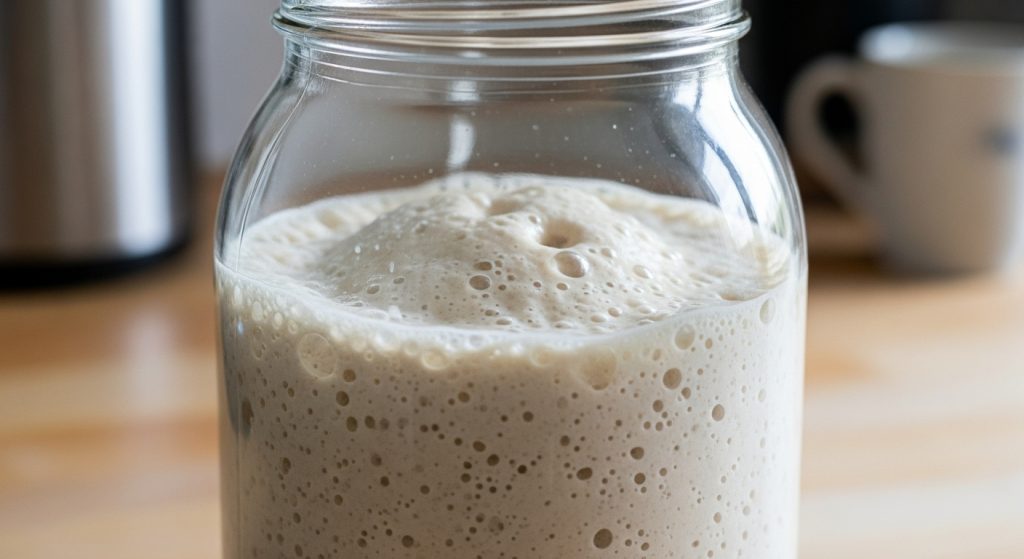
When you convert a recipe to sourdough, understanding your starter’s hydration level is essential because it directly influences fermentation behavior and bread characteristics.
Starters typically range from stiff (50-65% hydration) to regular (100%) and liquid types (90-100% or higher). Stiff starters contain less water, promoting higher yeast activity but lower bacterial activity. This results in less acidity and a firmer texture.
Regular starters balance yeast and bacteria, providing reliable fermentation across flour types. The specific microbial composition can vary depending on the flour used, which in turn affects the flavor profile of your bread. Maintaining a consistent feeding schedule is crucial to keep your starter healthy and active for best results.
Liquid starters, with higher water content, favor bacterial activity, accelerating acidity development and producing a looser consistency.
Recognizing these differences helps you anticipate fermentation speed, rise, and sourness in your bread.
Additionally, hydration impacts starter ripeness indicators. Stiff starters show dome collapse, while liquid starters display bubbles and looseness at peak activity.
Calculating Ingredient Adjustments When Adding Starter
Since sourdough starter contains both flour and water, you must adjust the original recipe’s ingredient amounts to maintain the intended dough hydration and balance.
First, identify your starter’s hydration to calculate its flour and water content accurately. Then, subtract these amounts from the recipe’s flour and water to compensate for the starter addition. Using machines with adjustable dough thickness settings can help maintain consistent dough texture when adapting recipes.
Knowing the leaven hydration percentage is crucial to match the dough’s hydration for consistency.
Use the ratio method to simplify calculations:
- Sum the starter’s parts (starter, flour, water) to find total parts.
- Divide your desired leaven weight by total parts to get one part’s weight.
- Multiply each component by one part’s weight and subtract from recipe ingredients.
This precise adjustment guarantees your dough maintains the correct hydration and structure after incorporating your sourdough starter.
Replacing Commercial Yeast With Sourdough Starter
Although commercial yeast and sourdough starter function differently, you can replace yeast in any recipe by calculating the appropriate starter amount based on the total flour weight. Typically, starter should be 15–20% of the flour weight. This conversion requires some patience and willingness to adapt, as fermentation times vary significantly when using sourdough.
Remove commercial yeast entirely, add the calculated starter, and adjust flour and water amounts accordingly since starter contains both. Using a robust sourdough starter can enhance flavor and improve the final dough quality.
| Yeast Type | Starter Equivalent |
|---|---|
| 1 packet (5-7 g) | 100 g starter |
| 12-15 g fresh yeast | 100 g starter |
| 1.25-1.5 tsp instant yeast | 100 g starter |
Modifying Fermentation and Proofing Times for Sourdough
Adjusting fermentation and proofing times is essential to accommodate the slower and more variable activity of sourdough starter compared to commercial yeast.
You’ll need to carefully balance bulk fermentation and proofing to optimize dough strength and gas retention. Typically, bulk fermentation ranges from 4 to 7 hours at room temperature, aiming for a 50–100% volume increase.
Proper timing ensures optimal dough structure and flavor development, which is critical during bulk fermentation optimal dough structure. High temperatures can accelerate fermentation, leading to overproofing risks if not monitored carefully.
Proofing can last 1–4 hours warm or 10–16 hours refrigerated.
Remember:
- Lengthening bulk fermentation shortens proofing time to prevent overproofing.
- Short bulk fermentation demands longer proofing, risking slack dough if too short.
- Adjust times seasonally or by starter activity, adding or subtracting about 30 minutes during bulk fermentation.
Monitor dough texture and volume closely; under- or over-fermentation markedly impacts crumb structure and oven spring.
Tips for Successful Recipe Conversion and Baking
When converting a yeast-based recipe to sourdough, you’ll need to carefully substitute ingredients and modify the process to maintain dough balance and achieve ideal fermentation.
Replace one packet of commercial yeast with ½ cup (about 100g) of 100% hydration starter, subtracting equal weights of flour and water from the original recipe.
Swap one packet of yeast for ½ cup (100g) of 100% hydration starter, reducing flour and water accordingly.
Convert all measurements to grams for precision. Expect initial dough texture differences; adjust flour or water incrementally to match the desired consistency, considering flour absorption and starter hydration.
Use a mature, well-fed starter at roughly 15–20% of total flour weight to ensure reliable fermentation.
Sourdough fermentation also improves digestibility by breaking down gluten, which can benefit those with grain sensitivities.
Modify sugar, fat, and leavening agents slightly to accommodate sourdough acidity.
Follow sourdough-specific mixing, bulk fermentation, shaping, and proofing steps, monitoring dough behavior closely for optimal rise and flavor development through longer fermentation times.
Frequently Asked Questions
Can Sourdough Starter Be Frozen or Refrigerated Before Use in Recipes?
Yes, you can freeze or refrigerate sourdough starter before using it in recipes.
Refrigeration slows activity but keeps the starter viable with weekly feedings.
Freezing preserves it longer, up to 12 months, if frozen in portions and thawed properly.
After thawing or refrigeration, you should feed and let the starter ferment until bubbly to restore full activity.
This ensures your starter remains healthy and effective for baking.
How Does Sourdough Starter Affect the Nutritional Content of Baked Goods?
Sourdough starter enhances baked goods nutritionally by lowering glycemic index and improving blood sugar control through organic acid production.
It pre-digests gluten and reduces anti-nutrients like phytic acid, boosting mineral absorption (iron, magnesium, zinc).
The fermentation process increases fiber and polyphenol bioavailability, supporting gut health.
Additionally, sourdough can promote satiety, stabilizing energy release and reducing hunger.
This makes your baked goods healthier and easier to digest compared to yeast-leavened alternatives.
What Type of Flour Is Best for Maintaining a Sourdough Starter?
If you want a strong sourdough starter, use a blend of 50% wholemeal (like rye or whole wheat) and 50% bread or all-purpose flour.
This combo balances microbial diversity and feeding energy, boosting fermentation and gluten development.
Whole grain flours supply crucial nutrients and microbes, while bread flour provides protein for structure.
Unbleached flour is essential to avoid inhibiting microbial growth.
Adjust blends to maintain starter health and vigor consistently.
How Do I Know When My Sourdough Starter Is Active Enough to Use?
You know your sourdough starter is active enough when it consistently doubles or triples in volume within 4-6 hours after feeding.
Check for abundant bubbles on the surface and sides, a domed top shape, and a pleasant sour-sweet aroma.
The float test can confirm readiness: a spoonful should float in water.
Avoid using it if it still rises or deflates, as that means it’s not fully mature yet.
Can Sourdough Starter Be Used in Non-Bread Recipes Like Pancakes or Muffins?
Yes, you can use sourdough starter in non-bread recipes like pancakes and muffins.
Studies show sourdough fermentation can increase nutrient bioavailability by up to 30%, enhancing digestibility.
When incorporating starter, balance its hydration and acidity by adjusting liquids and adding baking soda or powder for proper rise.
The starter adds tangy complexity and moisture retention, improving texture and flavor in pancakes, muffins, and other baked goods beyond traditional bread.
Start Your Sourdough Recipe Conversion Journey Successfully
Converting a recipe to sourdough is like steering a well-charted map with new landmarks. You’ll adjust hydration, tweak fermentation, and replace commercial yeast with your living starter.
By understanding these variables, you harness the natural power of wild yeast, transforming your dough into something uniquely flavorful and textured.
With precise calculations and patience, you’ll master this ancient craft, turning every bake into a timeless journey of fermentation and flavor development.