Can You Put Water in Air Fryer? Safe Use Tips
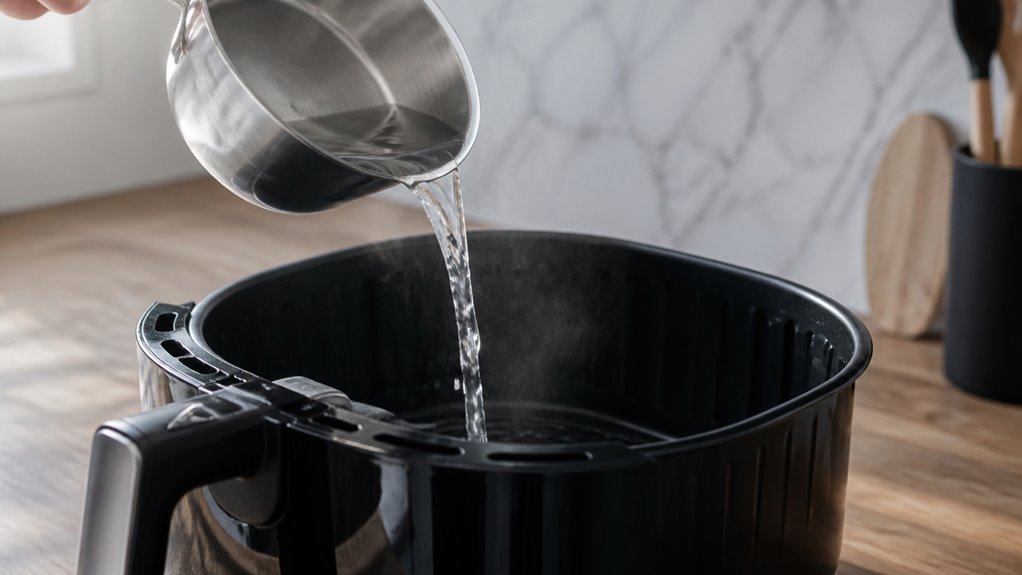
You can put a small amount of water in your air fryer only if the manual says it’s safe and you follow their exact instructions.
Usually, adding water in the removable drawer reduces smoke from fatty foods without touching the heating element or fan, which is essential for safety.
Overfilling or pouring water directly inside risks damage and hazards.
Using water properly can improve your cooking experience. There’s more to understand about timing, amounts, and maintenance for safe use.
Key Takeaways
- Only add water if the air fryer manual explicitly permits it, and follow model-specific guidelines strictly.
- Use small amounts of water (a few tablespoons or up to 50 ml) placed in a removable drawer below the basket to reduce smoke.
- Never pour water directly into the cooking chamber, heating element, or electrical parts to avoid damage and hazards.
- Adding water beyond manufacturer instructions can cause short circuits, corrosion, fire risks, and void warranties.
- Proper cleaning after using water prevents grease buildup, odors, and maintains appliance safety and longevity.
Is It Safe to Put Water in an Air Fryer?

While some air fryer models allow a small amount of water in the removable bottom drawer to help reduce smoke from fatty drippings, you should only add water if your appliance’s manual explicitly permits it.
You must keep water below the basket or crisper plate to prevent food from sitting in liquid. Avoid overfilling, as water reaching the heating element or electrical parts creates safety hazards.
Keep water below the basket to avoid food soaking and prevent safety risks from electrical contact.
The safe water quantity varies by model; some experts suggest a few tablespoons, while others recommend up to 50 ml. Always follow your manufacturer’s instructions.
Proper use guarantees safety and maintains your air fryer’s performance.
Certain steam air fryers feature integrated water reservoirs designed specifically for steam delivery, ensuring safe and effective moisture control without risk to the heating elements.
When and Why to Add Water to Your Air Fryer Drawer?
If your air fryer’s manual permits adding water to the removable drawer, doing so can help reduce smoke caused by fat drippings when cooking fatty foods.
This approach isn’t a general cooking requirement but a targeted way to manage grease-related smoke.
When adding water, keep these points in mind:
- Use only a small amount of water, ensuring it stays below the basket and away from electrical components.
- Add water only if your model’s instructions explicitly allow it.
- Avoid letting water touch the heating element or fan to prevent damage or hazards.
- Employ this method primarily for fatty foods prone to producing smoke from grease drippings.
Following these guidelines helps you safely minimize smoke while preserving your air fryer’s functionality. Chamber sealers, unlike vacuum sealers, are designed to handle liquids efficiently without spills, demonstrating the importance of proper liquid handling in kitchen appliances.
How Much Water Is Safe to Use in an Air Fryer?
Hey there! When it comes to using water in your air fryer, the first thing you should do is check your model’s manual. Trust me, different models have different recommendations, so it’s super important to get the specifics for yours.
Generally speaking, it’s safe to use just a few tablespoons or up to about 50 ml of water. You’ll want to place it in the removable drawer below the basket.
Just a heads up, though—make sure you don’t go over the amount your particular model allows. Too much water can lead to damage or even safety issues, and we definitely want to avoid that!
Also, keeping your air fryer basket clean and dry after use is key to maintaining optimal performance and preventing corrosion.
Recommended Water Amounts
Because air fryer models vary substantially, there’s no universal safe amount of water to use. Always consult your appliance’s manual before adding any liquid.
Generally, if your model allows water, keep it minimal and well below the basket or crisper plate to avoid contact with food or electrical components.
Here are key guidelines to follow:
- Use only the quantity specified in the manual, often just a few tablespoons or up to 50 ml.
- Add water exclusively to the removable bottom drawer or designated reservoir, never inside the cooking chamber.
- Make certain water doesn’t reach the heating element, fan, or food basket.
- Avoid overfilling to prevent splashing, which can cause safety hazards.
Adhering to these measures helps maintain safe operation and prolong your air fryer’s lifespan. Proper preheat practices also help maintain even heat distribution and prevent moisture buildup inside the cooking chamber.
Model-Specific Guidelines
Knowing the general guidelines for water use in air fryers sets the foundation. The safest approach depends heavily on your specific model.
Always consult your air fryer’s manual before adding water. Some models allow a small amount—typically a few tablespoons or up to 50 ml—in the removable drawer beneath the basket to help reduce smoke from grease.
Never overfill or let water touch the basket, heating element, or electrical parts. If your model includes a steam function, check whether it requires a separate water reservoir.
Avoid pouring water directly into the cooking chamber or appliance body. When in doubt, follow the manufacturer’s instructions precisely to prevent damage or hazards.
Using water safely hinges on adhering to these model-specific limitations and recommendations.
Some air fryers, like the Our Place Wonder Oven, feature a steam infusion function designed specifically to restore moisture to leftovers and baked goods using a small amount of water.
Is Water Touching the Heating Element or Fan Dangerous?
When water comes into contact with the heating element or fan inside an air fryer, it poses significant safety risks including electrical shock and appliance damage. You should never allow water to reach these components, as it can cause short circuits or corrosion.
Water contacting the heating element or fan in an air fryer risks electrical shock and damage.
To prevent accidents:
- Always keep water below the basket and away from the heating element and fan.
- Avoid overfilling the drawer or reservoir to prevent splashing onto electrical parts.
- Follow your model’s manual strictly regarding water use and placement.
- Never pour water directly into the main appliance body or onto the heating element.
Advanced air fryers often use convection technology with sensitive electrical components that can be damaged by moisture, emphasizing the importance of keeping water away from internal parts.
How Water Helps Reduce Smoke in an Air Fryer?
Although air fryers aren’t designed to handle liquids extensively, adding a small amount of water to the removable drawer beneath the basket can help reduce smoke caused by fat drippings.
When fatty foods release grease, the water catches these drippings, preventing them from burning on the heating element or tray, which often produces smoke.
You must keep the water shallow and ensure it doesn’t reach the basket or heating components.
Always check your air fryer’s manual before adding water, as recommendations vary by model.
This technique is meant only to minimize smoke from fatty foods, not as a general cooking method.
Proper cleaning and removing excess grease remain essential to prevent smoke and maintain appliance safety.
Establishing a regular cleaning routine helps prevent grease buildup, which is key to reducing smoke and odors.
Why Never Boil or Cook With Water in an Air Fryer?
Because air fryers rely on circulating hot air rather than liquid heat, you shouldn’t boil or cook foods submerged in water inside them. Doing so risks damaging the appliance and creating safety hazards.
Here’s why you must avoid boiling or cooking with water in your air fryer:
- Water can splash onto electrical components, causing short circuits or shocks.
- Air fryers aren’t designed to heat liquids directly, so boiling water may harm the heating element.
- Cooking submerged foods prevents proper air circulation, leading to uneven cooking and possible appliance malfunction.
- Adding water beyond manufacturer guidelines can void warranties and increase fire risks.
Stick to dry or minimally moist cooking methods to preserve your air fryer’s functionality and safety. Using air fryer liners can help maintain proper airflow and simplify cleanup without introducing liquid risks.
How to Clean Your Air Fryer After Using Water?
Keeping your air fryer clean after using water is essential to maintain its performance and safety.
First, unplug the appliance and let it cool completely before cleaning.
Remove the basket and tray, then wash them with warm, soapy water.
Ensure you dry them thoroughly before reinstalling.
Avoid pouring water into the main unit or the cooking chamber to prevent damage to electrical components.
Instead, wipe the interior and exterior with a damp cloth.
If you used water in a removable drawer, empty and clean it carefully, making sure no residue remains.
Always follow your model’s manual for specific cleaning instructions.
Proper maintenance after using water helps prevent odors, grease buildup, and potential malfunctions.
This ensures your air fryer stays in peak condition.
For models with a self-cleaning function, using this feature can simplify the cleaning process and enhance appliance longevity by reducing manual scrubbing of the glass cooking bowl.
Frequently Asked Questions
Can I Use Other Liquids Besides Water in My Air Fryer?
You should avoid using liquids other than water in your air fryer unless the manual explicitly permits it.
Adding oils, sauces, or other liquids can damage the appliance or create hazards.
If your model allows water in a designated drawer or reservoir, stick to that recommendation.
Always follow your air fryer’s instructions to guarantee safety and maintain performance.
When in doubt, use dry methods or manufacturer-approved accessories instead.
Does Adding Water Affect Cooking Time or Food Texture?
Adding water can slightly affect cooking time and food texture by introducing steam, which may soften the exterior and reduce crispiness.
However, this effect varies depending on your air fryer model and the water amount. Using water beneath the basket, as some manuals suggest, can control smoke from grease without majorly changing cooking outcomes.
Always follow your model’s instructions to avoid unwanted texture changes or safety issues.
How Do I Prevent Water From Causing Rust in My Air Fryer?
To prevent rust in your air fryer, always dry removable baskets and trays thoroughly after cleaning.
Avoid leaving water in the drawer or reservoir.
Never pour water directly into the main appliance.
After wiping the interior with a damp cloth, let it air dry completely before reassembling.
Store the air fryer in a dry place.
Regular cleaning and proper drying help maintain metal surfaces and prevent rust formation effectively.
Can Water Be Used to Steam Vegetables in an Air Fryer?
About 50 ml of water is often cited as a safe maximum for steaming in some air fryer models.
However, you should check your manual first. You can steam vegetables if your air fryer has a designated steam function or separate reservoir.
Avoid adding water directly to the cooking basket; it must stay below food and away from heating elements.
Always follow your model’s instructions to guarantee safety and the best results.
What Should I Do if Water Accidentally Spills Inside the Air Fryer?
If water spills inside your air fryer, unplug it immediately and let it cool completely.
Avoid turning it on while wet to prevent electrical hazards.
Carefully wipe excess moisture with a dry cloth, especially near electrical components and the heating element.
Allow the interior to air dry thoroughly before using it again.
Check the manual for any specific drying or safety instructions to make certain your appliance remains safe and functional.
Protect Your Air Fryer With Smart Water Use
You might wonder if adding water to your air fryer is a safe shortcut, but it’s a delicate balance.
While a small amount of water can reduce smoke and catch drips, too much risks damage or danger.
Think of your air fryer as a precise machine, not a pot to boil liquid.
Use water wisely, clean thoroughly, and your air fryer will keep cooking perfectly.
In this kitchen, precision is power.