
Is Air Fryer Better Than Microwave: Speed, Texture, And Cost
If you want fast reheating and moisture retention, a microwave’s your go-to. It heats food quickly without crisping.
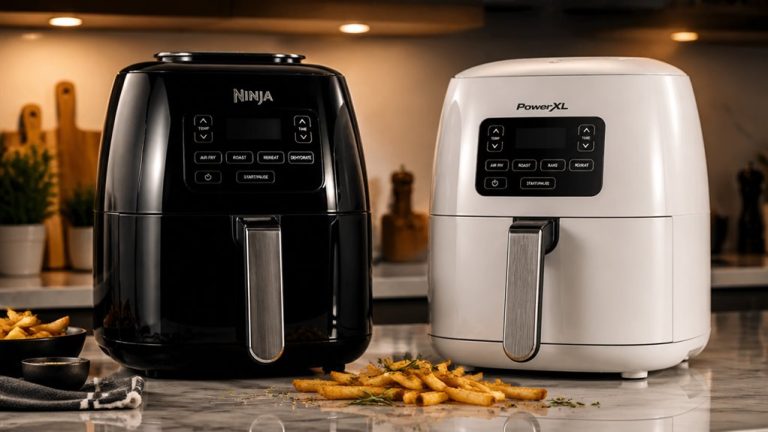
But if you prefer crispy, browned textures like fries or reheated pizza, an air fryer excels. It circulates hot air to roast and crisp surfaces.
Air fryers take longer and use more energy but enhance texture, while microwaves save time and power. Knowing when to use each helps you optimize your meals. You’ll find more on their differences ahead.
Key Takeaways
- Air fryers produce crisp, browned textures ideal for fries and roasted foods, unlike microwaves which do not brown or crisp.
- Microwaves heat food faster and retain moisture, making them better for soups, reheating, and defrosting.
- Air fryers require preheating and longer cooking times, while microwaves offer quick, no-preheat convenience.
- Microwaves use less electricity for short tasks; air fryers consume more but can be more efficient than conventional ovens for small portions.
- Neither appliance fully replaces the other; choose air fryer for texture and microwave for speed and moisture retention.
Comparison of Convenience between Air Fryer and Microwave
| Comparison Factor | Air Fryer | Microwave | Winner / Recommendation |
|---|---|---|---|
| Cooking Speed | Takes longer and often needs preheating | Heats food in 1–5 minutes for most tasks | Microwave for fast reheating |
| Texture | Creates crispy, browned surfaces | Leaves food soft and moist | Air Fryer for crunch and browning |
| Best Food Types | Fries, pizza, chicken, roasted vegetables | Soups, oatmeal, leftovers, steamed foods | Depends on the meal |
| Energy Use | Uses more electricity per session | Uses less electricity for short tasks | Microwave for efficiency |
| Moisture Retention | Can dry food out slightly while crisping | Helps retain moisture well | Microwave for moist dishes |
| Convenience | Better for texture-focused cooking | Better for quick, no-fuss reheating | Microwave for everyday speed |
How Air Fryers and Microwaves Work Differently?

Although both air fryers and microwaves cook food using heat, they operate through fundamentally different mechanisms that affect cooking results and times.
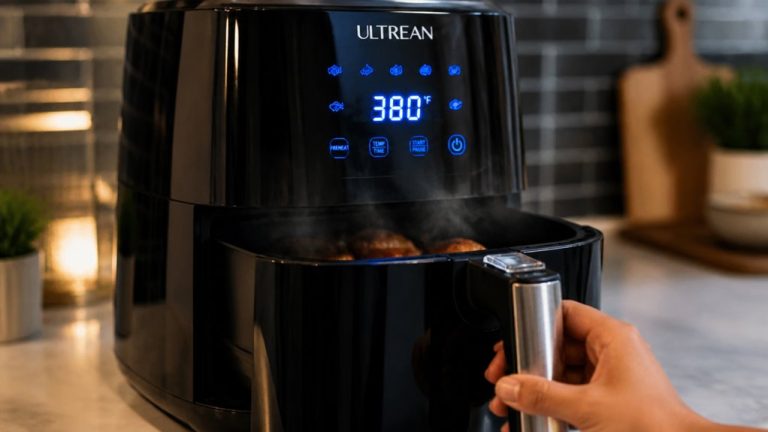
Air fryers circulate hot air rapidly around the food, mimicking convection ovens, which crisps and browns surfaces. This makes them ideal when you want texture, such as for fries or roasted vegetables.
Air fryers quickly circulate hot air, creating crispy, browned textures perfect for fries and roasted veggies.
Microwaves, on the other hand, use electromagnetic waves to agitate water molecules inside food, heating it quickly but without browning. This means microwaves excel with moisture-rich foods like soups and steamed vegetables.
While air fryers generally take longer and require space for airflow, they deliver a distinct crispness. Microwaves prioritize speed and moisture retention but can leave textures soft or soggy.
Understanding these differences helps you choose the right appliance for specific cooking needs. Because air fryers use electric heating elements and fans to circulate hot air, they inherently consume more electricity than microwaves during longer cooking times.
Speed and Convenience: Which Reheats Food Faster?
Now that you understand how air fryers and microwaves cook food differently, it’s important to take into account how these methods affect reheating speed and convenience.
Microwaves typically reheat food faster, usually within 1–5 minutes, making them ideal for quick meals or defrosting. Air fryers take longer, often 10–25 minutes including preheating, but they offer benefits when crispness is desired.
Consider these points:
Microwaves heat rapidly without preheating but may leave some foods soggy. Air fryers require preheating and space for airflow, extending total time.
Neither appliance is universally faster; your choice depends on whether speed or texture matters more.
Additionally, choosing a compact and multifunctional appliance like the Ninja Air Fryer Toaster Oven can help reduce countertop clutter while enhancing cooking efficiency.
Air Fryers vs. Microwaves: Effects on Food Texture and Taste
When you reheat or cook food in an air fryer, the appliance circulates hot air that crisps and browns the surface. This creates textures similar to those from a convection oven.
As a result, you get a crunchier exterior, which works well for fries, roasted vegetables, and leftovers like pizza, restoring a freshly cooked feel. In contrast, microwaves heat food rapidly by agitating water molecules but don’t brown or crisp.
This often leaves textures softer or soggier. Microwaves excel with moisture-rich dishes such as soups and steamed vegetables, preserving their tenderness.
If you prioritize crispness and a roasted taste, the air fryer outperforms the microwave. However, if you want fast, even heating without altering moisture content, the microwave delivers a reliable, softer result.
Your choice depends on whether texture or speed matters more. For best results with crispy foods like quesadillas, preheating the air fryer to about 350°F is recommended to ensure even cooking and a crispy finish, highlighting the advantage of preheat recommendation.
Energy Use and Costs: Which Appliance Is Cheaper to Run?
Understanding how air fryers and microwaves affect food texture and taste is only part of choosing between them. Energy use and operating costs also play a significant role.
Microwaves generally consume less electricity for short tasks due to their rapid heating, using about 0.025–0.035 kWh per session. Air fryers take longer and use more power, with examples around 0.54 kWh for frying fries.
However, compared to conventional ovens, air fryers can be more energy-efficient for small portions. Your actual cost depends on cooking time, appliance wattage, and local electricity rates.
Microwaves excel at quick, low-energy reheating. Air fryers may cost more per use but save energy versus ovens. Energy efficiency varies widely with food type and cooking duration.
Some advanced air fryers, like the Ninja DualZone, achieve faster cooking with more stable temperatures, which can improve energy efficiency despite longer cooking times.
When to Choose an Air Fryer or Microwave for Everyday Cooking?
Although both air fryers and microwaves offer convenient cooking options, you’ll want to select the appliance based on your specific needs and the type of food you’re preparing.
Use a microwave when speed and moisture retention matter. Think soups, oatmeal, or quickly reheating leftovers. Microwaves excel at fast defrosting and cooking moisture-rich dishes without drying them out.
On the other hand, choose an air fryer when crispness and browning are priorities. This is ideal for fries, roasted vegetables, or reheated pizza. Air fryers take longer but create textures that microwaves can’t replicate.
For vegetables, microwaving preserves nutrients with minimal water. Air frying, however, offers a roasted finish.
Some air fryers, like the Cosori TurboBlaze, use advanced heat circulation technology to deliver crispier results more quickly.
Ultimately, neither replaces the other. Having both lets you match cooking methods to your meal’s texture and timing needs.
Frequently Asked Questions
Do Air Fryers or Microwaves Affect Nutrient Retention Differently?
You’ll find that nutrient retention varies with both air fryers and microwaves, depending on the food and cooking method.
Microwaving veggies quickly with little water helps preserve vitamin C better than boiling, while air frying uses minimal oil, reducing fat intake.
Neither is categorically healthier; the key is controlling time, temperature, and moisture.
Can Air Frying Increase Acrylamide Levels in Foods?
Yes, air frying can increase acrylamide levels in foods, especially starchy ones like potatoes, due to high-temperature cooking.
Acrylamide forms during browning, but soaking potatoes before air frying can reduce it.
While air frying uses less oil than deep-frying, it still creates some acrylamide.
To minimize risks, avoid excessive browning and follow specific cooking guidelines.
Compared to microwaving, which doesn’t brown food, air frying poses a higher acrylamide risk.
How Do Food Safety Concerns Differ Between Air Fryers and Microwaves?
You need to watch for uneven heating with microwaves, stirring and letting food stand to avoid cold spots that can harbor bacteria.
Air fryers circulate hot air well, but you must ensure even cooking and check internal temperatures, especially for thick foods.
Using a food thermometer helps in both appliances.
Also, microwaves require microwave-safe containers, while air fryers don’t.
Following instructions carefully minimizes food safety risks in either method.
Are There Specific Containers I Should Avoid Using in Microwaves?
You should avoid using metal containers or aluminum foil in microwaves because they can cause sparks or fires.
Also, stay away from non-microwave-safe plastics that might melt or release harmful chemicals.
Glass and ceramic containers marked microwave-safe are your best bet.
Paper towels and wax paper are usually fine, but avoid recycled paper products with inks.
Always check for a microwave-safe label to keep your food safe and prevent damage to your microwave.
Does Preheating an Air Fryer Impact Cooking Results?
Yes, preheating an air fryer does impact cooking results.
When you preheat, you help the air fryer reach the ideal temperature. This allows food to cook evenly and develop a crisp, browned surface faster.
Without preheating, cooking times may lengthen, and texture might be less consistent.
Unlike microwaves, which heat food quickly without preheating, air fryers rely on hot circulating air. So, preheating enhances both texture and efficiency.
Find the Best Fit for Reheating and Cooking
Choosing between an air fryer and a microwave is like picking a paintbrush for your culinary canvas. Each shapes your food differently.
If you crave speed and convenience, the microwave zips ahead. But for crispy texture and rich flavor, the air fryer sizzles with flair.
Consider energy costs and your cooking style to decide which tool fits your kitchen rhythm. Ultimately, both have their place, turning everyday meals into tasty triumphs.