Can You Use Coconut Oil in Air Fryer Without Smoking?
You can use coconut oil in your air fryer safely, but selecting the right type and temperature is key.
Refined coconut oil is best for air frying above 350°F due to its higher smoke point (around 400–450°F). This prevents smoking and off-flavors.
Unrefined oil suits lower temps (below 350°F) but risks smoke and a strong coconut aroma.
Applying a light, even coat helps crisp food without burning.
To optimize results and avoid issues, understanding these factors is essential.
Key Takeaways
- Refined coconut oil is ideal for air fryers due to its high smoke point (400–450°F) and neutral flavor, preventing smoke and off-flavors.
- Unrefined coconut oil should be used only below 350°F to avoid smoking, off-flavors, and strong coconut aroma overpowering savory dishes.
- Apply a light, even coat of coconut oil using a spray or brush to optimize crisping and minimize smoking risks.
- Regularly clean the air fryer basket to prevent grease buildup, which can cause smoke and odors during cooking.
- Monitor air fryer temperatures closely, keeping them below 400°F to maintain oil quality and avoid thermal degradation.
Can You Use Coconut Oil in an Air Fryer Safely?

While you can use coconut oil in an air fryer, choosing the right type is vital for safety and cooking quality. Refined coconut oil is preferable because it tolerates higher temperatures typical in air frying. This reduces the risk of oil breakdown and smoke.
Unrefined coconut oil has a lower heat tolerance. Using it at high air fryer temperatures can cause smoking and off-flavors. Additionally, unrefined coconut oil imparts a strong coconut aroma, which may not suit all dishes.
To guarantee safe use, match the coconut oil type with your cooking temperature and recipe needs. Applying a thin layer rather than excess oil further minimizes smoke risk while maintaining crispiness. This evidence-based approach optimizes both safety and flavor in your air-fried meals.
Because smoke point is key, monitoring your air fryer temperature helps prevent thermal degradation and preserves oil quality.
What Does Smoke Point Mean for Coconut Oil in Air Fryers?
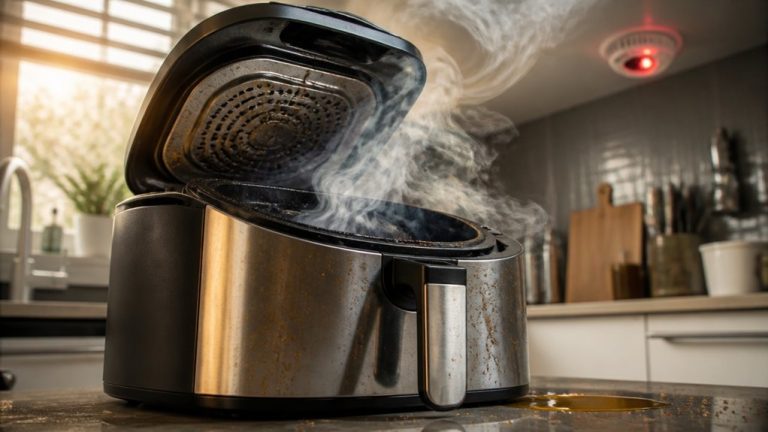
When you’re using coconut oil in an air fryer, it’s really important to know about its smoke point. This is basically the temperature at which the oil starts to break down and produce smoke.
If you’re using refined coconut oil, you’re in luck! It can handle higher heat, around 400–450°F, which works great for most air-frying temperatures.
On the other hand, if you opt for unrefined coconut oil, be cautious. Its smoke point is lower, hovering around 350°F, and it can start to smoke at typical air fryer settings.
Keeping your cooking temperature within the oil’s smoke point is key; it helps prevent any off-flavors and keeps the quality of your cooking intact. So, just a little awareness goes a long way in ensuring delicious results!
For best results, it’s also recommended to lightly spray oil to promote even browning and crisping when air frying.
Smoke Point Defined
Understanding smoke point is essential for using coconut oil effectively in your air fryer.
The smoke point marks the temperature at which oil begins to visibly smoke and chemically degrade, producing off-flavors and harmful compounds.
Refined coconut oil has a smoke point of about 400–450°F (204–232°C), while unrefined coconut oil smokes at approximately 350°F (177°C).
Since air fryers often operate at high temperatures, exceeding an oil’s smoke point can cause unwanted smoke and taste alterations.
Choosing the right type of coconut oil means matching its smoke point to your cooking temperature.
Refined coconut oil’s higher smoke point makes it a safer, more stable option for typical air-fryer heat levels.
Unrefined oil demands lower temperatures to avoid breakdown and ensure food quality.
Because air fryers cook faster and at intense heat with rapid hot-air circulation, it is especially important to consider the smoke point when choosing oils.
Impact On Cooking
Choosing the right coconut oil based on its smoke point directly influences your air fryer’s cooking performance and the final quality of your food.
Refined coconut oil, with a smoke point around 400–450°F (204–232°C), suits most air-fryer recipes. It prevents smoke and breakdown at typical cooking temperatures.
Using unrefined coconut oil, which smokes around 350°F (177°C), risks off-flavors and burnt aromas if your air fryer exceeds this temperature.
This breakdown affects taste and can compromise food texture by creating uneven cooking or unwanted bitterness.
To optimize results, apply a light, even coat of refined coconut oil, especially for roasting or crisping.
Respecting the smoke point guarantees your food cooks cleanly without smoke. This preserves desired flavors and the efficient crisping that defines air-fried dishes.
For best results and maintenance, regular cleaning to prevent grease buildup will help avoid smoke and odors during cooking.
Which Coconut Oil Is Best for Air Fryers: Refined or Unrefined?
Consider refined coconut oil your go-to option for air frying due to its higher smoke point of around 400–450°F (204–232°C). This aligns well with typical air-fryer temperatures.
This higher smoke point means it withstands heat without breaking down or smoking, preserving food quality and flavor. In contrast, unrefined coconut oil has a lower smoke point near 350°F (177°C), making it less suitable for the higher heat settings common in air frying.
Additionally, unrefined oil’s strong coconut aroma can overpower savory dishes, while refined oil offers a milder, neutral flavor profile. For most air fryer recipes, refined coconut oil provides better heat tolerance and flavor neutrality.
This ensures peak cooking performance and reduces the risk of smoke or off-flavors during air frying sessions. When choosing oils for air frying, it’s important to consider the smoke point stability to maintain safety and flavor.
How to Apply Coconut Oil for Crispy Air Fryer Cooking?
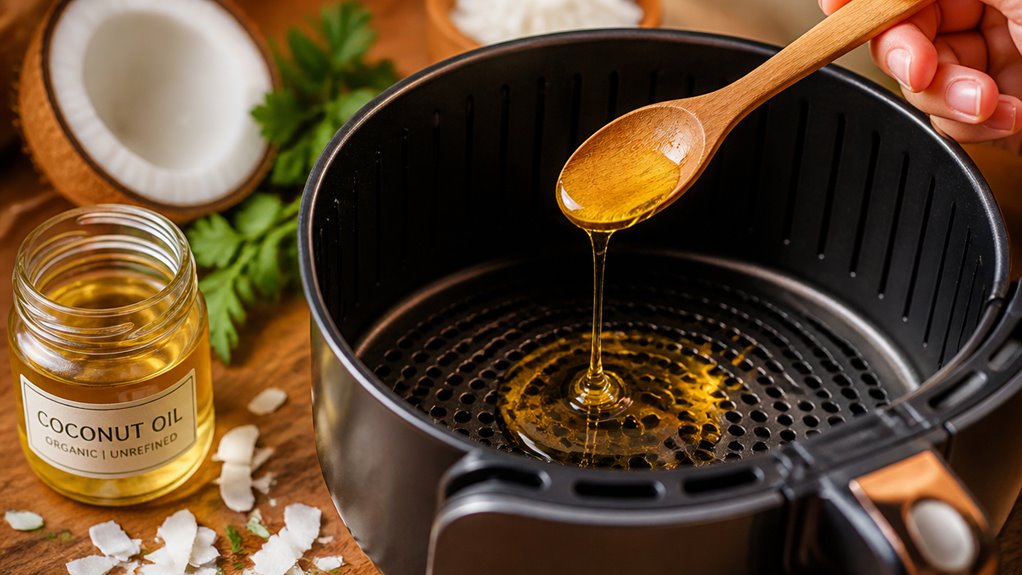
To get those crispy results you’re after, start by applying a light, even coating of refined coconut oil. You can use a spray bottle or a brush for this—just make sure you don’t go overboard with the oil, as too much can block the airflow in your air fryer.
Also, keep an eye on your air fryer temperature. You’ll want to stay below 400°F, which is the smoke point for refined coconut oil. This helps avoid any smoking or off-flavors that could ruin your dish. By being mindful of how much oil you use and the temperature you cook at, you’ll hit that perfect crunch without sacrificing flavor or safety!
For best results, consider preheating the air fryer to stabilize temperature and enhance crispness before cooking.
Light Coating Techniques
When you coat your food lightly with coconut oil before air frying, you optimize crispiness while minimizing smoke and off-flavors.
Applying a thin, even layer guarantees the oil reaches the food’s surface without pooling, which can cause uneven cooking or smoking.
Use a spray bottle or brush refined coconut oil onto your ingredients to control the amount precisely; less is more.
This method capitalizes on the air fryer’s hot air circulation, which crisps food efficiently with minimal oil.
Avoid pouring oil directly into the basket, as it risks excess oil buildup and smoke.
Light coating also preserves the oil’s integrity by preventing it from reaching its smoke point prematurely, especially important for unrefined varieties with lower heat tolerance.
This technique balances flavor, texture, and safety effectively.
For optimal results, consider using liners designed for air circulation to maintain even heat distribution while cooking.
Optimal Oil Temperature
Although air fryers generate intense heat, maintaining the oil temperature below its smoke point is essential for achieving crispy, flavorful results without unpleasant smoke or burnt flavors.
Refined coconut oil, with a smoke point around 400–450°F (204–232°C), suits most air-fryer recipes. Unrefined coconut oil (smoke point ~350°F/177°C) demands lower temperatures to avoid breakdown.
To optimize your coconut oil use in the air fryer:
- Use refined coconut oil for temperatures above 350°F.
- Keep unrefined coconut oil below 350°F to prevent smoking.
- Apply a light, even coat rather than pooling oil.
- Monitor air fryer temperature settings carefully.
- Employ an oil sprayer for precise distribution.
This approach minimizes off-flavors and guarantees crispiness without compromising safety or taste. Choosing an air fryer with safe temperature controls helps maintain optimal heat levels to protect oil quality during cooking.
Best Cooking Temperatures for Coconut Oil in Air Fryers
Typically, refined coconut oil performs best in air fryers heated between 350°F and 400°F. This range stays within its smoke point of 400–450°F, preventing breakdown and off-flavors.
When you keep the temperature below refined coconut oil’s upper smoke threshold, you reduce the risk of smoking and maintain oil stability. This ensures clean cooking.
Maintaining temperatures below refined coconut oil’s smoke point prevents smoking and keeps cooking clean and stable.
Conversely, unrefined coconut oil has a lower smoke point near 350°F. You should only use it at or below this temperature to avoid degradation and unpleasant flavors.
For air frying applications requiring temperatures above 375°F, refined coconut oil is a safer choice. Applying a light coat of oil also helps, as excessive amounts can promote smoking even within the ideal temperature range.
Staying mindful of these limits optimizes cooking performance and food quality.
How Coconut Oil Affects Flavor in Air Fryer Recipes?
Choosing the right type of coconut oil not only affects cooking performance but also markedly influences the flavor profile of your air-fried dishes.
When you use unrefined coconut oil, expect a distinct coconut aroma and taste. This can complement desserts but may overpower savory foods.
Refined coconut oil offers a neutral flavor, making it more versatile for various recipes.
Consider these points about how coconut oil affects flavor:
Unrefined oil imparts noticeable coconut notes.
Refined oil maintains the original food flavors.
Strong coconut flavor may clash with spices or herbs.
Heat can intensify coconut oil’s aroma.
Light oil application minimizes flavor impact.
Understanding these factors helps you tailor your dishes’ taste precisely.
Using coconut oil in combination with steam air fryer technology can help retain moisture while achieving a crispy texture, enhancing overall dish quality through steam delivery systems.
Common Coconut Oil Issues and Fixes
You’ll often encounter a few common issues when using coconut oil in an air fryer, but understanding their causes can help you address them effectively.
One frequent problem is smoking, especially with unrefined coconut oil, which has a lower smoke point (~350°F). To fix this, keep air fryer temperatures below 350°F or switch to refined coconut oil, which handles up to 450°F.
Another issue is the strong coconut aroma from unrefined oil, which can overpower savory dishes; using refined coconut oil mitigates this.
Solidification of coconut oil at cooler temperatures can make application tricky. Using an oil sprayer or warming the oil slightly before use solves this.
Finally, apply coconut oil sparingly to prevent excess smoking and guarantee even crisping.
To maintain your air fryer’s performance and prevent residue buildup from oils, it is important to perform regular cleaning of the basket after use.
Frequently Asked Questions
Can Coconut Oil Replace Other Oils in Air Fryer Recipes?
Yes, you can replace other oils with coconut oil in air fryer recipes, but choose refined coconut oil for higher heat cooking due to its 400–450°F smoke point.
It offers a mild flavor and handles roasting or crisping well.
Avoid unrefined coconut oil for high temperatures because it smokes around 350°F, risking burnt taste.
Use light oil coatings to prevent smoking and guarantee even crisping without overpowering flavors.
How Should Coconut Oil Be Stored to Prevent Solidifying?
Think of coconut oil like a winter coat. It solidifies when it gets cold.
To keep it liquid and easy to use, store coconut oil at room temperature, ideally between 70°F and 75°F (21°C to 24°C).
Avoid refrigerating it, since cooler temps cause solidification. If it does harden, simply warm the jar in warm water to return it to liquid form.
This ensures smooth, consistent application for your cooking needs.
Does Coconut Oil Affect the Air Fryer’s Warranty or Maintenance?
Using coconut oil in your air fryer won’t typically void its warranty or increase maintenance needs, provided you use it properly.
Avoid pouring excess oil into the basket; instead, lightly coat food to prevent oil buildup.
Refined coconut oil’s higher smoke point reduces residue and smoke, minimizing cleaning.
Overusing oil or causing smoke can leave deposits that may require extra cleaning but won’t damage the appliance or affect warranty coverage.
Can Coconut Oil Be Mixed With Other Oils for Air Frying?
Yes, you can mix coconut oil with other oils for air frying.
Combining refined coconut oil with oils that have higher smoke points, like avocado or grapeseed oil, can improve heat tolerance and balance flavor.
This blend helps prevent smoking and off-flavors while maintaining crispiness.
Just make certain the overall smoke point matches your cooking temperature and apply the oil lightly for best results without overwhelming the dish or risking burnt residue.
Is Coconut Oil Safe for Air Frying Frozen Foods?
Oh, sure, why not coat your frozen fries in tropical sunshine and risk a smoky kitchen?
Seriously, you can safely air fry frozen foods with refined coconut oil, thanks to its high smoke point (around 400–450°F).
Just avoid unrefined oil when cranking temps over 350°F to prevent smoking and off-flavors.
Lightly coat your frozen items, keep temps in check, and you’ll enjoy crisp, tasty results without the burnt coconut drama.
Choose The Right Coconut Oil For Better Air Frying
Using coconut oil in your air fryer is like adding a secret ingredient that enhances both texture and flavor, as long as you respect its smoke point and choose the right type.
Refined coconut oil offers stability at higher temperatures, while unrefined provides a richer taste but lower heat tolerance.
Applying it properly guarantees crispiness without burning. By understanding these factors, you’ll optimize your air frying results with coconut oil safely and deliciously.