Can You Put Coffee Filters in an Air Fryer for Easy Cleanup?
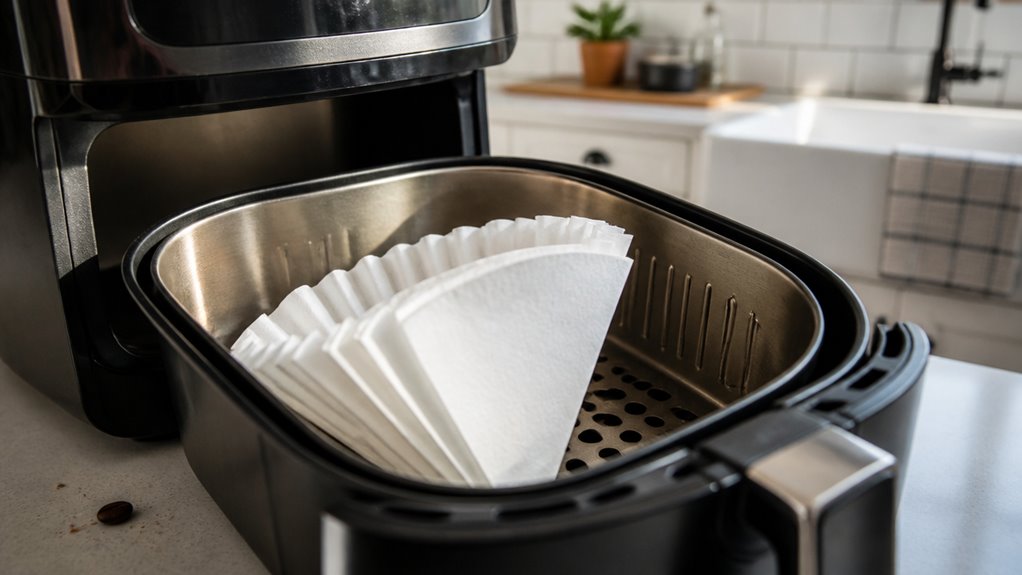
You can use coffee filters in an air fryer, but only with caution.
Make sure the filter lies flat and stays pinned under light, dry foods. Never use it at temperatures above 350°F or during preheating.
Avoid greasy or heavy items that increase fire risk. Stop cooking immediately if you notice smoke or scorching smells.
Because filters can block airflow or catch fire, it’s important to understand when and how they’re safe. Explore safer alternatives for best results.
Key Takeaways
- Coffee filters can block airflow in an air fryer, reducing cooking efficiency and causing uneven heating.
- Thin coffee filters may shift or catch fire if they contact heating elements or strong airflow lifts them.
- Using coffee filters is only safe for small, dry, lightly oily foods weighted down to prevent movement.
- Never preheat the air fryer with just a coffee filter inside, and avoid temperatures above 350°F.
- Safer alternatives include perforated parchment or silicone liners designed specifically for air fryer use.
Risks of Using Coffee Filters in Air Fryers

While it might seem convenient, using coffee filters in your air fryer carries significant risks you should consider carefully.
Coffee filters are thin paper products that can easily catch fire, especially if they touch the heating element or move around inside the basket.
Coffee filters are thin and flammable, posing a fire risk if they contact the heating element or shift inside the basket.
The strong airflow inside the fryer may lift an empty filter, turning it into a fire hazard.
These risks increase when the filter absorbs oil or grease, heating up faster and becoming more flammable.
Many sources advise against using coffee filters altogether because they aren’t designed for high heat or strong airflow conditions.
To keep your cooking safe, avoid any loose paper that can shift during use.
It can block air circulation and potentially ignite, putting your kitchen and safety at risk.
For safer cooking, it’s best to use air fryer baskets with non-toxic ceramic coatings designed to withstand high temperatures without risk.
When Coffee Filters Can Be Used Safely?
Despite the risks, coffee filters can be used safely in an air fryer under very specific conditions.
You should use them only for small, dry, or lightly oily foods, ensuring the filter lies flat and is fully weighted down by the food.
Avoid any loose edges that could lift in the airflow, and place the filter after adding food to keep it pinned in place.
Use a deeper air fryer basket to prevent contact with heating elements and keep cooking times short to limit heat exposure.
Never preheat with just a paper filter inside, and stop cooking immediately if you notice smoke or a scorching smell.
After use, it is important to clean the basket promptly to prevent residue buildup and maintain optimal performance.
How Cooking Time and Temperature Affect Coffee Filter Safety?
When using coffee filters in an air fryer, it’s really important to be careful with high heat. Those thin paper filters can catch fire if they’re exposed to extreme temperatures for too long.
So, to keep things safe, it’s a good idea to stick to shorter cooking times. This way, you limit the filter’s exposure to that intense heat and airflow.
Also, understanding how temperature and cooking duration work together is crucial for safety. It’s all about finding that sweet spot where you can enjoy your food without worrying about any mishaps.
Additionally, ensuring proper air fryer maintenance can help prevent any unexpected issues during cooking.
Impact of High Heat
Because coffee filters are thin and flammable, high cooking temperatures and extended cooking times greatly increase the risk of ignition inside an air fryer.
You should be cautious when using them at temperatures above 350°F, as the paper can dry out quickly and catch fire.
Longer cooking durations amplify this danger, especially if the filter isn’t weighed down or shifts during the process.
High heat can also cause the filter to come into contact with the heating element or airflow, further raising fire risks.
To minimize hazards, only attempt very short, low-temperature cooking if you must use a coffee filter.
Otherwise, it’s safer to avoid them and opt for liners designed specifically to handle air fryer heat and airflow without compromising safety.
Many air fryers feature dual heating elements and powerful convection fans that increase cooking efficiency but also intensify heat exposure, making the use of flammable materials like coffee filters even riskier.
Role of Short Cooking
When cooking times are short and temperatures remain low, coffee filters pose a markedly lower fire risk in an air fryer.
You reduce prolonged exposure to heat and airflow, which lessens the chance of the paper igniting or moving into contact with the heating element.
Still, you must make sure the filter lies flat and stays pinned under the food to prevent it from lifting or shifting.
Avoid cooking greasy or heavy foods, as oil absorption can increase fire hazards even during brief cooking.
Deeper baskets help keep the filter away from hot components.
Despite these precautions, coffee filters aren’t designed for this use, so only attempt it under strict supervision and minimal heat.
For most cases, safer alternatives like parchment or silicone liners are wiser choices.
Additionally, using materials with proven surface compatibility can help avoid damage to your air fryer and reduce risks.
How Air Fryer Design Influences Coffee Filter Use?
When it comes to using coffee filters in your air fryer, the depth of the basket is super important for safety. You definitely want to avoid any chance of the filter touching the heating element. If you have a shallow basket, there’s a higher risk of that happening, which can lead to issues like the paper igniting or airflow problems. Choosing an air fryer with precise temperature control can also help prevent overheating and reduce the risk of fire.
Basket Depth Impact
Although coffee filters might seem like a convenient liner, the depth of your air fryer basket plays a crucial role in determining their safety and effectiveness. A deeper basket can reduce the chance of the filter contacting hot components, lowering fire risk.
Conversely, shallow baskets increase exposure, making filters more vulnerable to shifting or ignition.
When using coffee filters, consider these points carefully:
- Make sure the basket is deep enough so the filter lies flat and stays pinned under the food.
- Avoid using filters in baskets where airflow might lift or move the paper.
- Use filters only with light, dry foods in deeper baskets to minimize heat exposure.
Additionally, selecting liners that maintain air circulation is essential to preserving cooking efficiency and safety when using any liner material.
Heating Element Exposure
Because the heating element sits close to the basket’s top in many air fryer models, you need to be extra careful with coffee filters. These thin paper filters risk igniting if they touch the heating element or lift into the airflow.
Since air circulates rapidly, any loose edge can quickly make contact with hot surfaces, increasing fire hazards. You should never place a coffee filter alone without food weighing it down to keep it flat and stable.
Shallow baskets worsen the risk because filters sit nearer to the heating element. To use coffee filters safely, only consider low-heat, short-duration cooking with heavy, non-greasy foods that hold the filter firmly in place.
Otherwise, it’s safer to avoid paper filters and opt for purpose-made liners designed to withstand direct heat and airflow.
Additionally, always ensure that the air fryer’s ventilation system is not blocked by any accessories to maintain safe airflow and prevent overheating.
Best Foods to Cook With Coffee Filters in Air Fryers
You’ll typically find that coffee filters work best with small, dry, and lightly oily foods that weigh down the filter and keep it flat during cooking. This helps reduce the risk of the filter shifting or catching fire due to airflow or contact with heating elements.
When using coffee filters, focus on foods that won’t release excess grease or moisture. Here are three suitable options:
- Lightly toasted nuts or seeds, which provide enough weight to keep the filter stable.
- Small, dry snacks like kale chips or dehydrated vegetable crisps.
- Reheating small portions of baked goods, such as cookies or crackers, where minimal oil is present.
Always monitor cooking closely and avoid greasy or wet foods to prevent safety hazards. For easier cleanup while cooking similar foods, consider using disposable parchment liners designed specifically for air fryers to catch crumbs and reduce scrubbing.
Common Fire and Airflow Issues From Coffee Filters
When using coffee filters in an air fryer, fire hazards and airflow disruptions pose significant risks that you need to manage carefully.
Coffee filters are thin and flammable, especially if they touch the heating element or lift into the airflow. This can quickly cause ignition. Additionally, filters can block air circulation, leading to uneven cooking or overheating.
You must make sure the filter stays flat and pinned under food to reduce these dangers.
Proper preheating and avoiding foil during the cooking cycle help maintain even heat distribution and reduce fire risks.
| Issue Type | Cause | Effect |
|---|---|---|
| Fire Hazard | Filter contacts heating element | Potential ignition, smoke |
| Airflow Block | Filter blocks air vents | Uneven cooking, hot spots |
| Filter Movement | Lightweight filter shifts | Fire risk, airflow disruption |
| Oil Absorption | Greasy foods soak filter | Increased heat, higher fire risk |
Safer Alternatives to Coffee Filters for Air Fryers
Although coffee filters might seem convenient, safer alternatives exist that better withstand the heat and airflow inside an air fryer.
To protect your device and food, consider these options designed for high temperatures and proper air circulation:
- Parchment Paper Liners: Specifically made for air fryers, these withstand heat and often come perforated to maintain airflow. This reduces fire risk.
- Silicone Liners: Reusable and heat-resistant, silicone mats provide a stable base that won’t shift or ignite. They make cleanup easier and safer.
- Purpose-Made Air Fryer Liners: Designed by manufacturers, these liners meet temperature requirements and fit baskets perfectly. This prevents movement and contact with heating elements.
Using these alternatives helps you avoid fire hazards and ensures even cooking without disrupting the fryer’s airflow system.
Best Practices for Using Paper Liners in Air Fryers
When you’re using paper liners, like coffee filters, in your air fryer, it’s a good idea to lay them flat and make sure they’re secured under the food. This helps prevent any shifting during cooking.
Also, try to keep your cooking times short and avoid using really high temperatures. This not only helps with getting the best results but also minimizes heat exposure, which reduces the risk of fire.
And don’t forget to keep an eye on that liner! It’s important to monitor it closely to ensure it stays in place and doesn’t come into contact with the heating element.
Proper Placement Techniques
Since air fryers rely on strong airflow for even cooking, you should always place paper liners flat and secure them under the food to prevent shifting.
Loose liners can lift with the air movement, risking contact with the heating element or blocking airflow, which affects cooking quality and safety.
Follow these key placement techniques:
- Lay the liner flat with no folds or edges sticking up to avoid airflow disruption and fire hazards.
- Position the liner only after adding food, so the weight pins it firmly in place.
- Make sure the basket is deep enough to keep the liner away from heating elements, reducing ignition risk.
Heat Exposure Limits
Because paper liners like coffee filters are thin and flammable, you need to strictly limit their exposure to high heat in your air fryer.
Avoid using them at temperatures above 350°F. Never run the air fryer empty with just a paper liner inside, as this increases fire risk.
Use coffee filters only for short cooking times and with foods that fully cover and weigh down the liner to minimize airflow catching it.
Monitor closely during the first minutes. If you notice any smoke or scorching smells, stop immediately.
Remember, the heat and strong airflow in an air fryer can cause the paper to lift or touch heating elements, which is dangerous.
When in doubt, opt for liners designed to withstand high heat safely.
Securing Liners Under Food
Secure your paper liner firmly under the food to prevent it from shifting or lifting during cooking.
This step is vital to reduce the risk of the liner moving into the fan or heating element, which can cause fire hazards.
Here’s what you should do:
- Place the food first, then insert the paper liner to make certain it lies flat and stays pinned down.
- Avoid loose edges or folds in the liner that airflow might lift.
- Use only small, heavy foods that can fully weigh down the liner, preventing it from fluttering.
Avoiding Fire and Airflow Problems With Coffee Filters
Although coffee filters might seem like a convenient liner for your air fryer, you need to carefully manage their position and weight to prevent fire hazards and airflow disruption.
Keep the filter flat and fully pinned under food to avoid it lifting into the heating element or fan. Avoid lightweight or oily foods that increase the risk of ignition. Monitor cooking closely and stop immediately if smoke or a burning smell appears.
| Risk Factor | Prevention Tip | Reason |
|---|---|---|
| Filter movement | Pin under heavy food | Prevents contact with heat |
| Fire hazard | Avoid oily foods | Paper absorbs oil, heats |
| Airflow blockage | Use flat, perforated liners | Maintains circulation |
| Basket depth | Use deeper baskets | Reduces filter-to-element contact |
| Cooking time | Keep short | Limits heat exposure |
When to Skip Coffee Filters and Choose Purpose-Made Liners?
Managing coffee filters carefully can reduce some risks, but there are clear situations when choosing purpose-made liners is a safer and more effective option.
You should skip coffee filters and opt for designated liners when:
- Cooking greasy or oily foods, as filters absorb oil and increase fire risk.
- Using high temperatures or long cooking times, which can cause paper ignition.
- Your air fryer basket is shallow or airflow is strong, risking paper displacement and contact with heating elements.
Purpose-made liners, such as perforated parchment or silicone mats, are designed to withstand heat and maintain proper airflow.
They reduce fire hazards and ensure even cooking without shifting inside the basket.
Using these alternatives helps you avoid the potential dangers of coffee filters, keeping your air fryer safe and efficient.
Frequently Asked Questions
Can Coffee Filters Affect the Taste of Food Cooked in an Air Fryer?
Coffee filters typically won’t affect the taste of food cooked in your air fryer since they’re made from neutral, odorless paper.
However, if they scorch or burn due to high heat or improper placement, they can impart an unpleasant burnt or smoky flavor.
To avoid this, make sure the filter stays flat and weighted down by food, and watch for any smoke.
Using purpose-made liners is a safer bet to keep flavors clean.
Are There Specific Brands of Coffee Filters Better for Air Fryer Use?
When it comes to coffee filters for air fryer use, there’s no magic bullet brand that stands out.
You’ll want to choose thicker, unbleached filters to minimize fire risk.
But remember, even the best filter isn’t designed for this purpose.
It’s better to play it safe and avoid coffee filters altogether.
Instead, opt for liners made specifically for air fryers.
They’re built to handle heat and airflow without jumping out of the frying pan into the fire.
How Do Coffee Filters Compare to Aluminum Foil in Air Fryer Cooking?
Coffee filters are less durable and more flammable than aluminum foil in an air fryer.
Foil withstands higher heat, blocks airflow less when properly perforated, and manages grease better.
However, if you use foil, you must avoid covering the basket holes or blocking airflow.
Coffee filters risk catching fire if not fully weighted down.
Can Coffee Filters Be Reused in an Air Fryer?
You shouldn’t reuse coffee filters in an air fryer.
Once used, they absorb oils and moisture, which increase fire risk and reduce heat resistance.
Reusing also weakens the paper, making it more likely to tear or shift during cooking.
This disrupts airflow and safety.
For safer, consistent results, switch to purpose-made air fryer liners or silicone mats.
These options handle heat and moisture better without posing these hazards.
Do Coffee Filters Impact the Cleanup Process After Air Frying?
You might find coffee filters reduce grease buildup, simplify wiping, and catch crumbs, easing cleanup.
However, they can shift, block airflow, or burn, creating extra mess or odors. You’ll need to check carefully during cooking to avoid scorching.
Using filters demands caution; otherwise, cleanup might get harder, not easier.
For safer, more consistent cleanup, you’d do better with purpose-made liners designed for air fryers.
Ready to Air Fry Smarter? Pick the Right Liner
When using coffee filters in your air fryer, remember that “better safe than sorry” truly applies.
While they can work for light, low-temperature cooking, their thin material risks tearing or even fire if misused.
Always consider your air fryer’s design and cooking settings carefully.
For safer results, opt for purpose-made liners or parchment paper.
By following best practices and knowing when to skip coffee filters, you’ll protect your appliance and enjoy your meals without worry.