
How to Use Silicone Tray in Air Fryer for Crispy, Healthy Meals?
To use a silicone tray in your air fryer, select one that fits snugly inside the basket and matches its shape to avoid airflow blockage or instability.
Choose a perforated tray to maintain peak hot air circulation and arrange food in a single, spaced layer for even cooking.
Expect a slight increase in cook time due to silicone’s heat transfer properties.
Avoid overcrowding and make certain tray walls keep food from touching heating elements.
For detailed tips on maximizing performance and care, keep exploring this guide.
Key Takeaways
- Measure your air fryer basket and choose a silicone tray shape that fits snugly without blocking airflow.
- Use perforated silicone trays to maintain hot air circulation and prevent soggy food.
- Arrange food in a single layer with adequate spacing to ensure even cooking and crisping.
- Adjust cooking time by 5-10% depending on tray thickness and food portion size.
- Preheat the air fryer, avoid overcrowding, and clean the tray gently after use for best results.
What Is a Silicone Tray and Why Use It in Your Air Fryer?
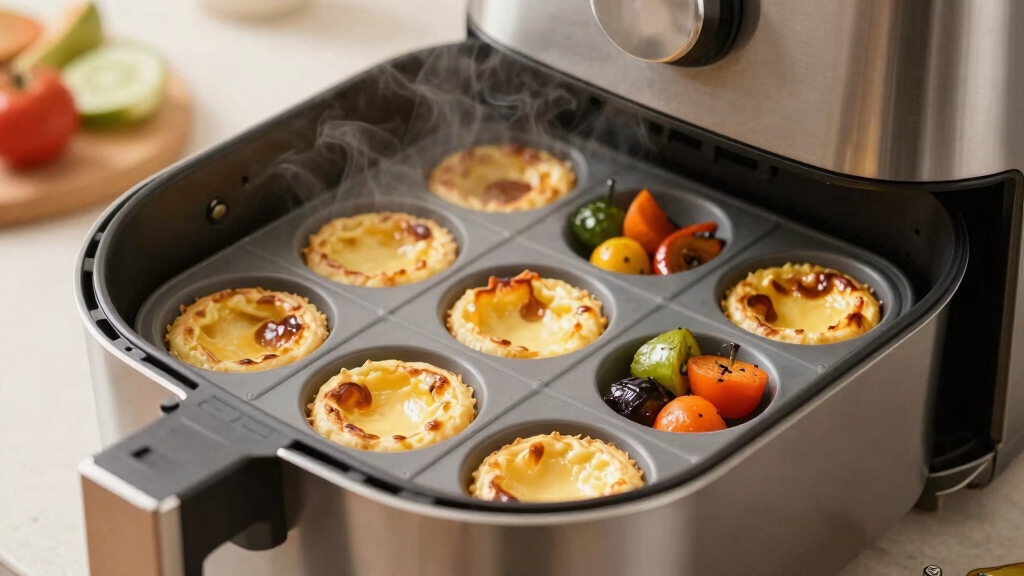
When you slip a silicone tray into your air fryer, you’re adding a reusable, heat-resistant layer designed to fit snugly inside the basket.
Made from food-grade silicone, these trays are flexible, nonstick, and withstand high temperatures without warping.
They come in round, square, or rectangular shapes tailored to match your air fryer’s basket dimensions.
Many feature perforated bases or walls to maintain ideal airflow, essential for even cooking.
Using a silicone tray reduces food sticking directly to the basket, simplifying cleanup and protecting the appliance’s surface.
This insert provides an effective barrier between food and the metal basket, enhancing durability and hygiene.
Its design guarantees compatibility with various air fryer models, except for some paddle-style units where liner use isn’t recommended.
Silicone trays complement the 360° airflow design of air fryer baskets to ensure food cooks evenly and crisply.
How to Choose the Right Silicone Tray for Your Air Fryer?
When you’re picking out a silicone tray for your air fryer, the first thing to consider is the fit.
You really want it to snugly fit inside the air fryer basket without blocking airflow or making things feel cramped. Trust me, a good fit is key!
Now, let’s talk about perforations.
Trays with holes are a smart choice because they help hot air circulate properly while your food cooks. This ensures everything gets that delicious, crispy texture we all love.
Oh, and don’t forget to check the wall height!
You definitely want to make sure your food isn’t touching those heating elements. Keeping them separate helps the fryer work its magic without any hiccups in performance.
Also, choosing a tray made of food-grade silicone ensures safety and durability during cooking.
Tray Size Compatibility
Although selecting a silicone tray might seem straightforward, guaranteeing proper size compatibility with your air fryer is vital for peak cooking performance.
You need a tray that fits comfortably inside the basket without crowding food or blocking hot air circulation. Measure your air fryer basket’s diameter and depth before purchasing a tray to avoid mismatches.
The tray’s shape, whether round, square, or rectangular, should match your basket’s design to maximize contact and stability. Also, check the tray’s wall height; it must allow food placement without touching heating elements to prevent burning.
Keep in mind that some air fryers with paddle-style baskets may not accommodate trays well. Selecting a correctly sized silicone tray guarantees even cooking, prevents overcrowding, and maintains optimal airflow for consistent results.
Using trays that promote proper airflow is essential to avoid uneven cooking and soggy spots.
Perforation and Airflow
In selecting a silicone tray for your air fryer, prioritizing perforation is essential to guarantee ideal airflow around the food.
Perforated trays allow hot air to circulate evenly, promoting consistent cooking and crisping. You should look for trays with numerous small holes distributed across the base and, if possible, the sides to prevent air stagnation.
Avoid solid silicone trays, as they can block airflow, leading to uneven heat distribution and soggy results. The perforation size matters too: too large, and smaller food items might slip through; too small, and airflow may be restricted.
Choose a tray designed specifically for air fryer use, ensuring hole placement aligns with your model’s air circulation pattern. This precision improves cooking efficiency and food texture markedly.
Additionally, trays with 360-degree convection technology enhance cooking by ensuring heat is evenly distributed around the food for crisp perfection.
Wall Height Considerations
When selecting a silicone tray, consider the wall height carefully to guarantee safe clearance from the air fryer’s heating elements.
Too tall walls risk contacting the heating element, causing melting or damage. Conversely, excessively low walls may allow food to spill or reduce containment, impacting cooking consistency.
Aim for a tray with walls high enough to hold your food securely but low enough to maintain a safe distance, typically at least one inch below the heating element.
Also, verify compatibility with your air fryer model, as some designs position heating elements closer to the basket.
Proper wall height ensures unobstructed airflow around the food, preserving even heat distribution. Balancing these factors helps you maximize safety, cooking efficiency, and tray durability during air frying.
Using a silicone tray with perforations or mesh design can further improve airflow and promote even browning while protecting the basket.
How to Arrange Food on a Silicone Tray for Best Results?
When you’re using a silicone tray, it’s super important to arrange your food in a single layer. This helps ensure that heat is distributed evenly, which is key for getting that perfect cook.
Try not to overcrowd the tray. When you pile everything on top of each other, it can block hot air from circulating properly. This can lead to some parts cooking faster than others, and nobody wants that!
Using a tray with a mesh-friendly design can help promote better airflow and crisping results.
Single Layer Placement
Lay out your food in a single layer on the silicone tray to guarantee even hot air circulation and consistent cooking. Each item should have direct exposure to the airflow, preventing uneven heat distribution and undercooking.
Avoid stacking or overlapping pieces, as this traps moisture and hinders crisping. Use trays with perforated bases to maximize ventilation beneath the food. Make certain food items are spaced adequately, allowing hot air to reach all surfaces.
This arrangement helps maintain texture and promotes uniform browning. When placing irregularly shaped foods, orient them to expose the largest surface area to air.
Single-layer placement also facilitates easier flipping or shaking midway through cooking, enhancing results. This method optimizes your air fryer’s efficiency while leveraging the silicone tray’s nonstick and heat-resistant properties. Choosing silicone trays with wide temperature ranges ensures safe use across different cooking appliances including air fryers and ovens.
Avoid Overcrowding Foods
Although it might be tempting to fill the silicone tray to capacity, overcrowding foods restricts hot air circulation and compromises cooking efficiency.
You should arrange food in a single layer with adequate spacing to guarantee even heat distribution around each piece.
Silicone trays with perforated bases help maintain airflow, but stacking or tightly packing food blocks hot air, leading to uneven cooking and reduced crispness.
Avoid placing items directly against the tray walls or overlapping them, as this traps moisture and extends cooking times.
If you have more food than fits comfortably, cook in batches to maintain optimal airflow and temperature consistency.
This approach prevents soggy or undercooked areas and maximizes the silicone tray’s nonstick benefits for reliable, uniform results.
For best results, use an air fryer model featuring AirCrisp® technology to ensure even hot air circulation and crisp textures with less fat.
Adjust Cooking Time When Using a Silicone Tray
Since silicone trays create a slight barrier between your food and the air fryer’s heating elements, you’ll need to adjust cooking times to achieve the best results. Typically, increase cooking time by 5-10% to compensate for reduced direct heat contact.
Keep in mind that thicker silicone or non-perforated trays may require longer times. Always monitor food halfway through and shake or turn it to ensure even cooking.
Using a silicone tray can also influence the air fryer’s temperature control effectiveness, so adjustments help maintain optimal cooking performance.
| Tray Type | Time Adjustment | Notes |
|---|---|---|
| Thin, perforated | +5% | Maintains airflow |
| Thick, solid | +10% | Slower heat transfer |
| Small portions | +5% | Less thermal mass |
| Large portions | +10% | More food absorbs heat |
| Dense foods | +10% | Retains moisture |
Adjust times precisely to avoid under- or overcooking.
Best Foods for Silicone Trays in the Air Fryer
Adjusting cooking times guarantees even results, but selecting the right foods for silicone trays can further optimize your air fryer performance.
Vegetables cut into uniform sizes cook efficiently on silicone trays, ensuring consistent heat exposure. Meats and seafood also work well, provided you space them to maintain airflow.
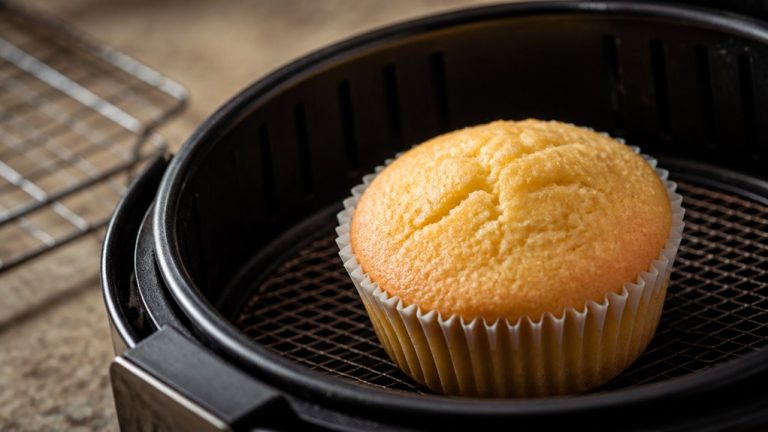
Silicone trays excel with breaded snacks like nuggets and fries, as their nonstick surface prevents sticking and aids in even browning. You can also use silicone molds or trays for baked items such as muffins or egg bites, benefiting from easy food release.
However, avoid overly wet batters or cheese-heavy dishes that may pool and affect cooking uniformity. Choosing foods compatible with silicone trays helps you leverage their heat resistance and nonstick properties for reliable, hassle-free cooking.
For best results, ensure your air fryer is properly preheated to promote even heat distribution throughout the cooking process.
Maximize Airflow and Crispiness Using Silicone Trays
When you want to maximize airflow and crispiness using silicone trays, selecting a perforated design is essential. The holes allow hot air to circulate evenly around your food, preventing sogginess.
Place food in a single layer, avoiding overcrowding to maintain ideal airflow. Adjust cooking time slightly, as silicone reduces direct heat contact. Turn or shake food halfway through cooking to promote even browning.
| Factor | Recommendation | Effect |
|---|---|---|
| Tray Type | Perforated silicone | Enhanced air circulation |
| Food Arrangement | Single layer, spaced out | Uniform cooking, crisp texture |
| Cooking Method | Shake/turn mid-cycle | Even browning |
| Cook Time | Slightly increased | Compensate for reduced heat |
Common Silicone Tray Mistakes to Avoid
Although silicone trays offer convenience and versatility in air frying, users often make avoidable errors that compromise performance and results.
One common mistake is overcrowding the tray, which restricts hot air circulation and leads to uneven cooking.
Overcrowding silicone trays blocks hot air flow, causing uneven cooking and disappointing results.
You should also avoid using trays that are too large or small for your air fryer basket, as improper sizing can block airflow or cause instability.
Another error is neglecting to preheat the air fryer, which impacts crispness and cooking time.
Additionally, ignoring the need to adjust cooking times when using silicone trays can result in undercooked or soggy food.
Finally, placing food too close to heating elements may cause melting or warping of the tray.
Prevent these mistakes to maximize your air fryer’s efficiency and prolong the tray’s lifespan.
How to Clean and Care for Your Silicone Tray?
Avoiding common mistakes like overcrowding and improper sizing helps maintain your silicone tray’s integrity. Proper cleaning and care will extend its usability even further.
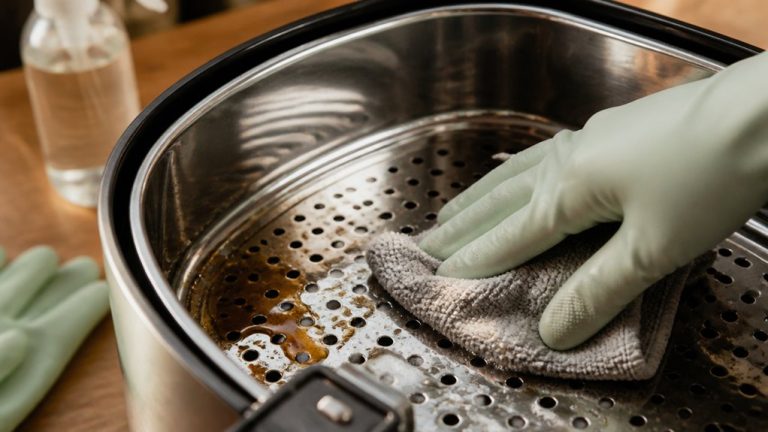
Always let the tray cool completely before cleaning to prevent warping or damage. Start by wiping away excess oil or food debris with a soft cloth or paper towel.
You can hand wash the tray with warm, soapy water using a nonabrasive sponge to protect the silicone’s surface. Most trays are dishwasher safe, but check manufacturer guidelines to confirm.
Avoid harsh detergents or scouring pads, which degrade the material over time. Store the tray flat or loosely rolled to preserve its shape.
Regular, gentle cleaning prevents odor retention and maintains the tray’s nonstick properties for consistent air fryer performance.
Frequently Asked Questions
Can I Use Silicone Trays in Convection Ovens?
Yes, you can use silicone trays in convection ovens as long as they’re rated for the oven’s temperature range.
Silicone is heat-resistant and flexible, making it ideal for baking and roasting.
Just make sure the tray fits comfortably without blocking airflow and avoid contact with heating elements.
Use trays with perforations for better circulation.
Always check the manufacturer’s temperature limits to prevent warping or damage during convection cooking.
Are Silicone Trays Safe for Microwave Use?
Yes, silicone trays are safe for microwave use as long as they’re labeled food-grade and microwave-safe.
Their heat-resistant, flexible properties handle microwave heat without melting or releasing harmful chemicals.
Avoid trays with metal parts or coatings. Always check manufacturer guidelines to confirm microwave compatibility.
Using silicone trays correctly prevents warping and guarantees even heating.
This makes them a practical choice for reheating or cooking in the microwave safely and efficiently.
How Long Do Silicone Trays Typically Last?
Silicone trays typically last between 2 to 5 years with regular use, though some users report even longer durability.
Their lifespan depends on factors like heat exposure, cleaning methods, and frequency of use.
You’ll want to avoid extreme temperatures beyond their rating and harsh scrubbing to preserve integrity.
Proper care, like hand washing and avoiding sharp tools, helps maintain flexibility and nonstick properties.
This ensures your tray works reliably over time.
Can Silicone Trays Withstand Temperatures Above 450°F?
Silicone trays typically withstand temperatures up to around 450°F safely.
Beyond this, their structural integrity can degrade, risking melting or warping.
If your recipe requires higher temperatures, check the manufacturer’s specifications carefully.
Using trays above their rated heat limit compromises safety and performance, so avoid exceeding 450°F unless explicitly stated.
Always let the tray cool gradually after exposure to high heat to maintain durability and prevent damage.
Do Silicone Trays Affect the Taste of Food?
Silicone trays don’t affect the taste of your food since they’re made from food-grade, inert materials that don’t leach flavors or odors.
You can trust they won’t impart any off-tastes during cooking, even at high temperatures.
However, make sure you clean the tray thoroughly after each use, as leftover residues or oils might influence flavor.
Proper maintenance keeps your food tasting fresh and true to its original profile.
Don’t Miss Out on These Silicone Tray Tips for Air Fryer Excellence
Using a silicone tray in your air fryer can enhance cooking efficiency and food quality, but are you maximizing its potential?
Choose the right tray size, arrange food evenly, and adjust cooking times to ensure peak results.
Remember to avoid overcrowding to maintain airflow and crispiness. Proper cleaning and care will extend your tray’s lifespan.
With these precise steps, you’ll get consistent, delicious outcomes every time you use your silicone tray in the air fryer.