
Sourdough Tortilla Recipe with Natural Fermentation
You’ll love making sourdough tortillas because the tangy starter adds amazing flavor and chewiness while keeping the dough soft and pliable thanks to natural fermentation.
Mix unbleached flour, warm water, olive oil, and a bubbly starter, then knead until smooth and let it rest for elasticity.
Roll them thin on a floured surface and cook on a hot skillet until puffed.
Stick around to discover tips on storage, variations, and creative ways to enjoy your homemade tortillas.
Key Takeaways
- Use active sourdough starter fed 6–12 hours prior for elasticity and tang in the tortilla dough.
- Combine unbleached all-purpose flour, warm water, olive oil, and a pinch of salt to form a smooth, elastic dough.
- Rest dough covered at room temperature for 30 minutes to 24 hours to develop flavor and gluten strength.
- Roll dough balls lightly dusted with flour into thin rounds about ¼ inch thick for soft, pliable tortillas.
- Cook tortillas on a preheated skillet at 400–450°F for 1 minute per side, then stack under a towel to retain moisture.
Sourdough Tortilla Recipe Ingredients & Instructions
| Component | Ingredient/Step | Amount/Details | Purpose |
|---|---|---|---|
| Flour Base | Unbleached all-purpose flour | 3 cups (360-390g) | Creates soft, pliable texture and structure |
| Leavening | Active sourdough starter | 1 cup (227g at 100% hydration) | Adds tangy flavor and natural fermentation |
| Liquid | Warm filtered water | ½–¾ cup (120-180ml) | Hydrates flour and activates starter |
| Fat | Extra virgin olive oil or melted butter | 3 tablespoons (45ml) | Ensures softness and flexibility |
| Seasoning | Fine sea salt | 1 teaspoon (6g) | Enhances flavor and strengthens gluten |
| Mixing | Combine dry ingredients first | Mix flour and salt | Creates even distribution |
| Kneading | Knead until smooth and elastic | 4-6 minutes (mixer) or 8-10 minutes (hand) | Develops gluten network for chewiness |
| First Rest | Cover and rest dough | 30 minutes to 24 hours | Allows gluten relaxation and flavor development |
| Portioning | Divide into equal pieces | 12-16 balls (44g each) | Ensures uniform size and cooking |
| Second Rest | Rest dough balls covered | 30 minutes to 2 hours | Makes dough easier to roll thin |
| Rolling | Roll to ¼ inch thickness | Rotate after each roll | Achieves thin, even tortillas |
| Cooking | Cook on preheated skillet | 1 minute per side at 400-450°F | Creates golden spots and puffing |
| Storage | Stack and wrap in towel | Immediately after cooking | Keeps tortillas soft and pliable |
Essential Ingredients for Sourdough Tortillas
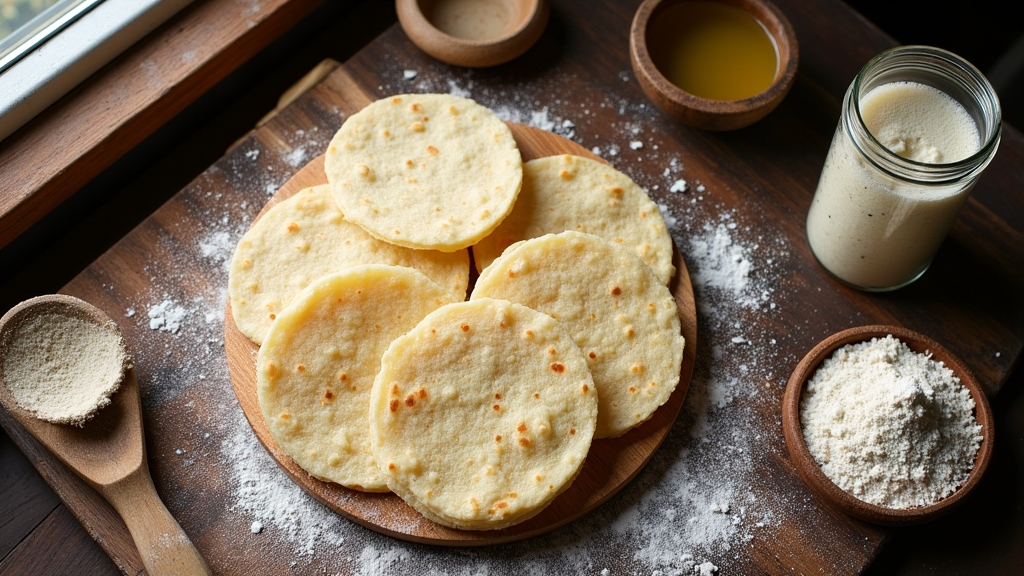
When you’re making sourdough tortillas, choosing the right ingredients sets the foundation for texture and flavor.
You’ll want unbleached all-purpose flour for that soft, light bite, maybe blending in a bit of whole wheat for depth and chewiness.
Your sourdough starter should be active and bubbly, fed 4 to 12 hours before use, to give the dough elasticity and tang.
Use an active, bubbly sourdough starter fed 4 to 12 hours prior for perfect elasticity and tang.
Warm, filtered water hydrates the flour and awakens the starter, while a splash of extra virgin olive oil or melted butter adds softness and pliability.
Don’t forget a pinch of salt; it enhances flavor and strengthens gluten without slowing fermentation too much.
Balancing these ingredients carefully ensures your dough will be smooth, elastic, and full of that signature sourdough tang.
Using traditional preparation methods aligned with ancestral grains helps improve digestibility and flavor complexity.
Preparing the Dough: Step-by-Step
Let’s kick things off by measuring your ingredients carefully. This step is super important because it ensures that you get the perfect balance for your dough. Precise measurement with a digital scale helps maintain consistency in fermentation.
Once you’ve got everything measured out, it’s time to mix and knead! You want to keep going until the dough feels smooth and elastic—this is a great sign that you’re on the right track. Mixing the dry ingredients with coconut oil until you achieve a fine, sandy texture helps create the perfect dough consistency.
Now, don’t rush this next part! Give your dough some time to rest. Allowing the dough to rise at a controlled temperature also supports the development of organic acids that enhance flavor and improve digestibility.
After that, you can divide it into portions. This little break is crucial because it sets the stage for those tender, easy-to-roll tortillas you’re aiming for.
Measuring Ingredients Accurately
Although measuring ingredients might seem straightforward, getting it right is essential to crafting perfect sourdough tortillas.
Using a digital scale helps you weigh flour, water, starter, and fats precisely. This is far better than relying on cups, which can vary by scooping technique. The choice of flour type significantly impacts the softness and flavor of the tortillas. Using the right measuring tools and techniques can improve dough consistency and gluten development.
Remember, flour usually weighs around 120–130 grams per cup, but it changes with type and packing. Your starter is typically measured at 100% hydration, while water’s weight matches its milliliters exactly.
If you prefer volume, use dry cups for flour—lightly spooned and leveled—and liquid cups for water and starter. Salt and baking powder demand precise measuring spoons.
Adjust as you go: add water or flour by tablespoons to achieve dough that’s cohesive yet slightly tacky. This ensures it’s ready for rolling without tearing.
Mixing and Kneading Techniques
Since kneading is where your tortilla dough truly comes to life, paying attention to technique and timing will make all the difference.
Start by mixing flour, water, salt, and sourdough starter until a rough dough forms. Then add fat, like butter or lard, after initial gluten develops. Using room temperature sourdough discard enhances the dough’s pliability and flavor.
If you use a stand mixer with a dough hook, knead on medium-low speed for 4-6 minutes until the dough feels smooth and elastic.
Hand kneading takes longer, about 8-10 minutes, using the heel of your hand to push, fold, and rotate the dough on a lightly floured surface.
You’ll know you’re done when the dough stretches without tearing, bounces back when poked, and pulls cleanly from the bowl, signaling a perfect gluten network ready for the next step.
Dough Resting and Dividing
When you let your dough rest after kneading, you give the gluten a chance to relax, making it much easier to roll out those perfect tortillas. This resting period also allows the microbial activity in the dough to begin enhancing flavor.
Rest your dough at room temperature for at least 30 minutes, covered with a towel or plastic wrap to keep it from drying out. For best results, incorporating an optional fat like oil or butter during mixing can help achieve softer, more pliable tortillas.
For deeper flavor and better digestibility, you can extend the rest for several hours or even refrigerate it for up to 2–3 days. Extended resting can encourage a more complex flavor profile through slower fermentation.
Once rested, divide the dough into 12 to 16 equal portions—around 44 grams each for consistency.
Use a bench scraper for clean cuts and shape each piece into a smooth ball. This shaping helps maintain an even fermentation environment for each dough portion.
Let these dough balls rest again, covered, for 30 minutes to 2 hours. This final rest softens the dough, making it a breeze to roll out thin, tender tortillas.
The Role of Sourdough Starter in Tortilla Flavor
You’ll notice that when you use a sourdough starter, it adds this lovely subtle tang that really brightens up your tortillas—way more than just using flour on its own could do. This natural leavening process relies on wild yeasts and bacteria that contribute to the unique flavor profile.
Plus, the age and activity of your starter can really shape the dough’s texture. It makes it stronger and more pliable, which is super helpful when you’re rolling out those tortillas.
Because the recipe uses a short resting period, the fermentation is limited, so you get a mild flavor without long wait times, making it a practical way to reduce sourdough waste.
Enhancing Tangy Flavor
Although sourdough tortillas may seem simple, the starter plays a vital role in crafting their signature tangy flavor. You’ll notice how fermentation time directly influences that delicious sour note. Choosing the right fermentation technique can enhance the depth and complexity of flavors.
For a subtle tang, a short ferment works, but to reveal deep, complex flavors, let the dough rest overnight. Long fermentation also breaks down phytic acid, aiding digestion and enhancing the tortillas’ health benefits.
Using sourdough discard can also give you quick tang without waiting. Here’s how to enhance tanginess in your tortillas:
Ferment dough overnight for bold, natural acidity.
Use sourdough discard to boost flavor and reduce waste.
Feed your starter 6-12 hours before use for ideal taste.
Combine starter with ingredients like olive oil or garlic powder for extra flavor layers.
This process transforms your tortillas into a tangy, flavorful delight you’ll love.
Impact on Dough Texture
Since the sourdough starter contains natural enzymes and gluten-building properties, it plays an essential role in shaping your tortilla’s texture. It balances gluten strength and dough hydration, making your tortillas chewy yet tender.
Using an active sourdough starter rather than discard ensures healthy microbes that enhance dough elasticity and flavor complexity. The fermentation relaxes the dough, improving rollability and flexibility, while enzymatic activity softens the crumb and prevents hardness.
Keeping the dough at an optimal temperature range during fermentation further improves its quality and workability. Whether you use active or discard starter, each influences dough softness and pliability differently, giving you control over your final tortilla.
| Aspect | Effect on Dough |
|---|---|
| Gluten Development | Chewier, stronger gluten network |
| Hydration | Softer, more tender dough |
| Fermentation | Easier rolling, flexible tortillas |
| Enzymatic Activity | Increased softness, pliability |
| Dough Strength | Holds shape, less cracking |
You’ll notice your tortillas become more elastic and resilient, perfect for wrapping.
Tips for Kneading and Resting the Dough
When kneading your sourdough tortilla dough, focus on developing a smooth, elastic texture that springs back when touched, signaling it’s ready for the next step. Incorporating ingredients like Greek yogurt can enhance the dough’s texture and flavor.
Take your time, whether by hand or stand mixer, to avoid tearing the dough. After kneading in softened butter or lard, make sure the dough feels cohesive and non-sticky.
Be patient kneading by hand or mixer; incorporate softened butter or lard until the dough is smooth and non-sticky.
Because the dough benefits from longer fermentation, letting it rest in a covered bowl for 6–24 hours develops thinner tortillas and better gluten.
Then, let it rest; this is where flavor and texture truly develop.
Keep these tips in mind:
- Knead gently for 5–10 minutes by hand or 2–3 minutes with a mixer, plus extra for fat incorporation.
- Look for dough that bounces back and isn’t sticky or rough.
- Rest the dough covered at room temperature for 12–24 hours to enhance flavor.
- Allow an initial 20-minute rest to relax gluten before shaping.
This rhythm creates tortillas that are both tender and flavorful.
How to Roll Out Perfectly Thin Tortillas?
To roll out perfectly thin tortillas, start by preparing your work surface with just a light dusting of flour to keep the dough from sticking without drying it out.
Shape your dough into smooth, round balls and flatten each slightly with your palm.
Place a ball on the surface and use a rolling pin, applying gentle, even pressure from the center outward.
Rotate the dough a quarter turn after each roll to keep thickness uniform.
Aim for about ¼ inch thick, thin enough to see the counter through the dough but not so thin it tears.
Dust lightly with flour as needed, but avoid over-flouring.
If the dough resists, let it rest briefly to enhance flavor development.
This careful technique ensures soft, pliable, beautifully thin tortillas every time.
Cooking Techniques for Soft and Pliable Tortillas
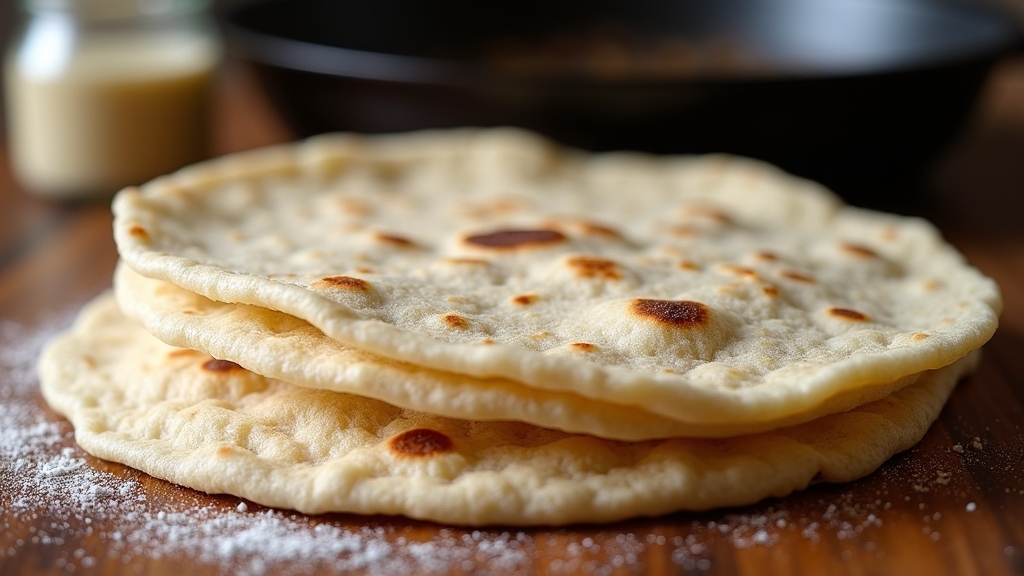
Alright, so first things first: you’ll want to preheat your skillet just right. You want it hot enough that when you drop a bit of water on it, it sizzles away instantly. That’s the sweet spot for getting those golden-brown spots and that soft texture we all love in tortillas! Using the right flour blend can also influence the moisture retention and softness of your tortillas.
Now, when you start cooking each tortilla, aim for about a minute per side. Keep an eye out for those little bubbles and slight puffing—that’s your cue that it’s time to flip them. Using a medium heat griddle helps ensure even cooking and prevents burning.
Once they’re done cooking, don’t forget to stack them under a towel! This helps lock in the moisture and keeps them warm, which is key for making sure they stay pliable and delicious. Enjoy!
Optimal Cooking Temperature
Although mastering the right temperature might seem tricky at first, controlling heat between 400 and 450°F guarantees your sourdough tortillas puff beautifully with those signature air pockets.
Using a cast iron skillet or nonstick pan guarantees even heat distribution, so every tortilla cooks uniformly. Preheat your pan well before placing the dough to achieve perfect golden-brown spots without burning. It is important to preheat skillet thoroughly to ensure proper searing and texture.
Adjust the heat slightly if you notice tortillas browning too fast or too slow.
Keep in mind:
Medium-high heat produces ideal puffing and texture.
Dry pans promote proper browning without sogginess.
Bubbles and golden spots signal when to flip.
Stacking cooked tortillas in towels locks in softness and warmth.
Follow these tips, and your sourdough tortillas will come out soft and pliable every time!
Cooking Duration Tips
Mastering the right cooking duration makes all the difference in achieving soft, pliable sourdough tortillas. Aim for about one minute per side on medium to medium-high heat until light golden brown spots and bubbles appear.
This timing guarantees the dough cooks through without drying out. Adjust your skillet’s heat: lower it if the tortillas blacken too quickly, or raise it if browning lags. Remember, your first tortilla acts as a perfect guide for the rest since pan temperature can vary.
Preheat your skillet thoroughly for even cooking, and skip heavy oil—just a light smear if you must. Watch for puffing and light blistering; these signs mean your tortilla’s perfectly cooked and ready to enjoy.
Using a hot cast iron skillet is ideal for cooking sourdough tortillas evenly and achieving the best texture. Incorporating sourdough discard in your dough also adds natural tangy flavor that enhances the taste and texture of your tortillas.
Post-Cook Moisture Retention
Often overlooked, how you handle sourdough tortillas right after cooking plays a huge role in keeping them soft and pliable. The key is to trap steam and prevent moisture loss immediately, a technique rooted in managing post-cook moisture retention.
Right off the skillet, stack your tortillas to lock in heat and humidity. Then, wrap them snugly in a clean kitchen towel to hold that trapped steam and stop drying. You can also use a tortilla warmer for controlled warmth without sogginess.
Avoid leaving your tortillas exposed to open air, which quickly evaporates moisture and hardens them. Using a damp towel to reheat tortillas can also help restore softness and moisture.
Try these tips:
- Stack tortillas immediately after cooking to trap steam
- Cover with a clean towel to retain humidity
- Use a tortilla warmer to maintain gentle heat
- Avoid exposing tortillas to open air to prevent drying
This simple care keeps your tortillas tender and ready to fold.
Variations to Customize Your Sourdough Tortillas
How can you elevate your sourdough tortillas beyond the basic recipe? Start by experimenting with flours. Try whole wheat or masa harina for nuttier, traditional corn flavors, or blend in gluten-free flours for allergy-friendly options.
Elevate sourdough tortillas by experimenting with whole wheat, masa harina, or gluten-free flours for unique flavors and textures.
You can swap olive oil for butter, ghee, or lard to add richness and softness. Feeling adventurous? Toss in fresh herbs like cilantro or spices such as cumin and smoked paprika for a savory twist.
Adjust hydration to get softer, stretchier dough or firmer tortillas that hold their shape. Don’t forget fermentation tweaks: longer cold rests deepen flavor, while shorter ones speed prep. The dough benefits from an overnight fermentation at room temperature to enhance flavor and texture.
Finally, a pinch of sugar or a splash of yogurt can boost tenderness and browning. With these tweaks, your sourdough tortillas become uniquely yours—flavorful, textured, and perfect every time.
Benefits of Fermentation and Flavor Development
When you let sourdough ferment, you reveal a world of benefits that go far beyond simple rising. The magic of fermentation breaks down phytic acid, releasing minerals like iron and magnesium. This makes your tortillas not only tastier but easier to digest. The wild yeast and lactobacillus bacteria present in sourdough starter help to pre-digest flour, enhancing the bread’s digestibility.
You’ll notice a delightful tang and a softer, chewier texture that sets sourdough tortillas apart. Plus, fermentation feeds your gut’s good bacteria, supporting digestion and overall health.
Here’s what you get with sourdough fermentation:
- Enhanced nutrient absorption for better health
- A complex, tangy flavor that deepens with time
- Improved digestibility, gentle on sensitive stomachs
- A prebiotic boost nourishing your gut microbiome
Embrace fermentation, and your tortillas become both a treat and a health ally.
Storing and Freezing Your Homemade Tortillas
After crafting those flavorful, tangy sourdough tortillas, you’ll want to keep them fresh and ready to enjoy.
For short-term use, store them at room temperature in an airtight container or wrapped in a kitchen towel to maintain softness and prevent drying.
If you need more time, pop them in the fridge sealed tightly; they’ll last about 5 to 7 days, though they might firm up slightly. Just reheat to soften.
For long-term storage, freezing is your best bet.
Cool tortillas completely, separate them with parchment paper, and freeze in airtight bags for up to 3 months. This method preserves the freshness and softness of the tortillas exceptionally well.
When ready, thaw at room temperature or in the fridge, then reheat gently to bring back that pliable, fresh-baked texture you love.
Creative Ways to Use Sourdough Tortillas
Although sourdough tortillas shine on their own, you’ll find their true magic unfolds when you experiment with creative fillings and uses.
These versatile wraps transform everyday meals into exciting culinary adventures. Imagine wrapping up savory grilled chicken with fresh salsa or indulging in a cheesy quesadilla toasted to perfection.
You can also explore Mediterranean flavors with falafel and tahini or enjoy a sweet twist by spreading almond butter and banana drizzled with honey.
Stuff soft tacos with roasted vegetables and your favorite protein.
Create cheesy quesadillas for quick, satisfying snacks.
Wrap falafel and veggies with garlic sauce for a Mediterranean flair.
Spread nut butter and banana topped with honey for a sweet treat.
Sourdough tortillas invite you to mix, match, and savor every bite.
Frequently Asked Questions
Can I Use Gluten-Free Flour for Sourdough Tortillas?
Yes, you can definitely use gluten-free flour for sourdough tortillas!
Just remember, gluten-free dough behaves differently. It’s less stretchy and can be fragile.
You’ll want to mix flours like sorghum and tapioca, add binding agents like psyllium husk or chia seeds, and maybe a bit of oil for softness.
With some patience and gentle handling, you’ll create tasty, pliable tortillas that are perfect for your gluten-free needs!
How Do Altitude Changes Affect Tortilla Dough Fermentation?
You might be surprised how altitude speeds up your tortilla dough’s fermentation.
Up high, lower air pressure lets gas expand faster, so your dough rises quicker. Sometimes this is too quick for deep flavor to develop.
You’ll need to watch it closely and shorten rise times to avoid overproofing. Plus, dough can dry out faster, so keep it covered well.
Adjusting hydration and proofing carefully helps you nail perfect tortillas every time.
What’s the Best Way to Prevent Tortillas From Tearing?
To prevent your tortillas from tearing, make sure your dough is smooth and pliable, like soft Play-Doh—not sticky or dry.
Keep your dough balls covered with a damp towel to avoid drying out while rolling.
Use a tortilla press lined with reusable plastic bags to prevent sticking.
Roll gently with moistened hands, and if edges crack, add water gradually.
Finally, fry or cook tortillas quickly, then keep them warm wrapped in a damp towel to maintain flexibility.
Can I Substitute Sourdough Starter With Commercial Yeast?
If you’re in a rush, you can swap sourdough starter for commercial yeast, like how my friend did when her starter was dormant.
Just remember, your tortillas won’t have that tangy depth or slow-fermented texture.
Commercial yeast speeds things up, cutting fermentation time markedly, but you’ll lose some flavor complexity and digestibility benefits.
Adjust rising times accordingly, and don’t expect the same tender, slightly sour bite sourdough brings.
How Do I Adjust Hydration for Different Flour Brands?
You’ll want to tweak hydration based on your flour’s protein and type. Higher protein flours soak up more water, so add a bit extra.
Whole grain or fresh-milled flours need even more hydration due to bran absorbing moisture. Start by holding back about 10% of your water and add it gradually, feeling the dough’s texture.
Adjust until it’s soft and pliable, not sticky or stiff. This way, you’ll nail perfect dough every time.
Transform Every Meal with Fresh Sourdough Tortillas
Now that you’ve mastered sourdough tortillas, remember that good things come to those who wait.
The slow fermentation not only deepens flavor but makes each bite a little more special.
Enjoy the process, from kneading to rolling, knowing you’re creating something truly homemade.
Whether you savor them fresh or get creative with fillings, these tortillas bring warmth and character to every meal.