
Sourdough Discard Granola: Crunchy & Healthy Breakfast Hack
You can use sourdough discard as a natural binder in granola, enhancing flavor and texture while reducing waste.
The discard’s fermentation acids add tanginess that balances sweetness. Its hydration improves cluster formation alongside honey and oil. Properly balancing wet and dry ingredients prevents sogginess, ensuring crisp, crunchy clusters.
This method also leverages discard’s nutritional benefits like increased nutrient bioavailability and probiotics.
Explore how to optimize ingredient ratios, baking techniques, and customization for your ideal granola.
Key Takeaways
- Sourdough discard acts as a natural binder in granola, enhancing cluster formation and reducing the need for extra sweeteners or binding agents.
- Incorporating discard adds subtle tanginess and complex flavor from fermentation acids, balancing sweetness and improving taste layering.
- Use 1/4 to 1/2 cup of discard with sweeteners like honey or maple syrup and 1–3 tablespoons of oil for proper moisture and crispness.
- Toasted nuts and seeds combined with discard create crunchy, nutrient-rich granola clusters with improved texture and aroma.
- Utilizing sourdough discard in granola reduces kitchen waste and supports sustainable, zero-waste baking practices by repurposing excess starter.
Complete Sourdough Discard Granola Ingredient Guide
| Component | Ingredient | Amount | Purpose |
|---|---|---|---|
| Wet Binder | Sourdough discard (100% hydration) | ¼ to ½ cup | Acts as natural binder, adds subtle tang and promotes cluster formation |
| Sweetener | Maple syrup or honey | 6 tablespoons (⅓ cup) | Provides moisture and sweetness, aids browning through Maillard reactions |
| Fat | Coconut, olive, or sunflower oil | 1-3 tablespoons | Enhances crispness and texture, prevents excessive wetness |
| Base Grain | Old-fashioned rolled oats | 3 cups | Provides structure and fiber, creates chewy-crisp texture |
| Protein & Crunch | Mixed nuts (almonds, walnuts, pecans) | ¾ to 1 cup (coarsely chopped) | Adds healthy fats, protein, and crunchy texture |
| Seeds | Pumpkin, sunflower, chia, or flaxseed | ⅓ to ½ cup | Boosts fiber, omega fatty acids, and nutrient density |
| Warm Spice | Ground cinnamon | ½ to 1½ teaspoons | Adds aromatic warmth and balances sweetness |
| Aromatic | Vanilla or almond extract | 1 teaspoon | Provides depth and complexity without extra moisture |
| Flavor Enhancer | Sea salt | ¼ to ½ teaspoon | Elevates sweetness and prevents blandness |
| Optional Spices | Cardamom, ginger, or nutmeg | ¼ to 1 teaspoon | Introduces citrusy, pungent notes for layered flavor |
| Post-Bake Mix-ins | Dried fruit (cranberries, raisins, apricots) | ½ to 1 cup | Adds natural sweetness and chewy contrast (add after cooling) |
Sourdough Discard and Its Benefits

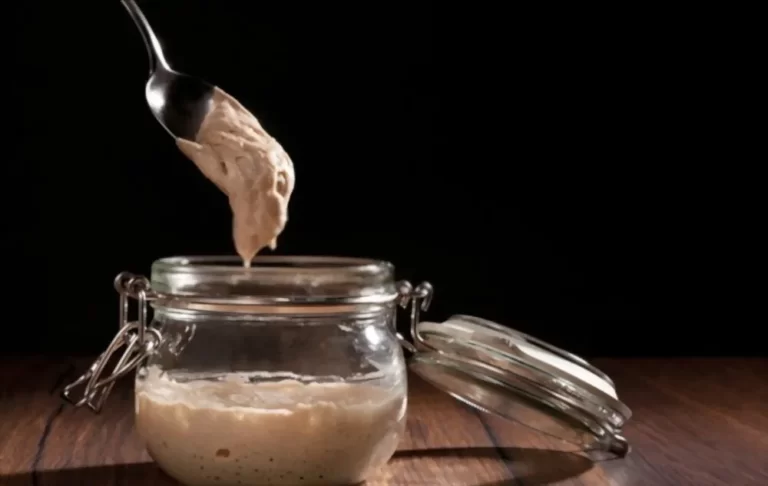
Although sourdough discard is often mistaken for waste, it plays an essential role in maintaining the health and balance of your sourdough starter.
Sourdough discard is vital for starter health and balance, not just leftover waste.
By removing a portion before each feeding, you control the starter’s microbial population and acidity, preventing overgrowth and spoilage.
Discard represents the inactive, unfed starter that has completed fermentation and lacks leavening power. Sourdough discard does not need to be thrown away and can be repurposed, enhancing various recipes.
It varies in texture and acidity depending on its age, influencing its culinary applications. Proper hydration and adjustment of liquids are important when incorporating discard into recipes to prevent dense or overly wet results.
Using discard reduces waste, allowing you to repurpose excess starter in recipes where additional leavening agents compensate for its inactivity.
Proper handling, including refrigerated storage and discarding only when moldy or off-smelling, preserves its quality.
This strategic management supports consistent fermentation performance and optimizes the starter’s longevity and flavor profile.
Key Ingredients for Perfect Sourdough Granola

To craft the perfect sourdough granola, you really want to focus on balancing those essential wet components. Think about using your sourdough discard, along with some liquid sweeteners and oils. This combo helps achieve the right moisture and binding for your granola.
Sourdough discard acts as a binder similar to egg whites, producing large granola clusters. Using discard also helps in waste reduction, making your cooking more sustainable.
Now, let’s talk about the nuts and seeds. Choosing a mix with different textures and nutritional profiles can really elevate your granola. It not only adds that satisfying crunch but also brings in complexities of flavor that make each bite enjoyable.
And don’t forget the flavor enhancers! A sprinkle of spices like cinnamon and cardamom can make a world of difference. Not only do they fine-tune the taste, but they also come with some nice functional benefits. So go ahead, get creative and enjoy the process!
Essential Wet Components
Mastering the wet components is essential for achieving the ideal texture and flavor in sourdough discard granola. You’ll typically use 1/4 to 1/2 cup of sourdough discard, preferably fed within two weeks, which acts as a thick binder and adds subtle tang.
Its 100% hydration level impacts moisture and cluster formation. Liquid sweeteners like 6 tablespoons of maple syrup or honey contribute both sweetness and moisture, promoting browning via Maillard reactions. Balance is vital to avoid sogginess.
Oils, 1 to 3 tablespoons of coconut, olive, or sunflower oil, enhance texture, crispness, and binding without excessive wetness. Vanilla or almond extracts (~1 teaspoon) and spices like cinnamon (~1 teaspoon) add aromatic complexity without increasing moisture.
Controlling liquid ratios guarantees uniform coating, preventing crumbly or overly sticky granola. Using a sticky sourdough starter along with ground flax meal helps achieve a chunky texture that naturally binds the granola clusters. For consistent results, accurate measurement using a kitchen scale is recommended to maintain proper ratios and texture.
Nut and Seed Selection
Selecting the right combination of nuts and seeds is essential for achieving the ideal texture, flavor, and nutritional profile in sourdough discard granola. You should coarsely chop nuts like almonds, walnuts, pecans, or pistachios to guarantee even distribution and maintain cluster integrity. Toasting the nuts and seeds before mixing enhances their flavor and crunch.
Incorporate ½ to 1 cup of mixed nuts to supply essential fats, protein, and diverse omega fatty acids. Complement these with ¼ to ½ cup of seeds such as pumpkin, sunflower, chia, or ground flaxseed, which enhance crunch, fiber, and heart-healthy nutrients.
The sourdough starter naturally binds the oats, nuts, and seeds together, allowing you to form chunky clusters with ease and reducing the amount of sweetener needed compared to using only honey or maple syrup, thanks to its binding properties. This fermentation process can also increase nutrient availability, making your granola bars even healthier.
Mixing nuts and seeds balances mild to robust flavor notes, including almonds’ sweetness, walnuts’ earthiness, and pumpkin seeds’ nuttiness. Toasting develops aromatic complexity. Proper sizing and ratio guarantee a cohesive texture, preventing overly large chunks and promoting uniform roasting throughout the granola batch.
Flavor Enhancers and Spices
Although nuts and seeds provide the structural and nutritional foundation for sourdough discard granola, flavor enhancers and spices define its sensory profile. You’ll want to carefully balance these ingredients to achieve complexity and depth.
Key components include:
- Spices: Cinnamon (0.5–1.5 tsp) adds warmth and sweetness. Cardamom (~1 tsp) introduces citrusy notes. Ginger and nutmeg (~0.25 tsp) enhance pungency and subtle sweetness. Using discard adds a nuanced acidity that complements these savory spices.
- Sweeteners: Honey and maple syrup (0.25–0.5 cup) contribute both moisture and flavor. They aid cluster formation while balancing spice intensity. The sourdough discard itself adds a subtle tang and binds ingredients, reducing the need for excessive sweeteners.
- Fats and Extracts: Oils (0.25–0.33 cup) like extra virgin olive or coconut oil influence mouthfeel and aftertaste. Vanilla or almond extracts provide aromatic complexity. Incorporating discard also improves moisture retention and contributes to a tender, crunchy texture once fully cooled.
Salt (~0.25–1 tsp) is essential to elevate sweetness and prevent blandness. Precision in these proportions guarantees a harmonious, multi-dimensional granola flavor and ensures a crunchy texture once fully cooled.
How Sourdough Discard Enhances Flavor and Texture?
When you incorporate sourdough discard into granola, it introduces a subtle tanginess from natural fermentation acids that balances the inherent sweetness of other ingredients. This tang enhances complexity by layering mild sour notes atop sweeteners like maple syrup.
Additionally, the use of sourdough discard provides a natural binder alongside honey and oil, which helps in creating firm, crunchy clusters that hold together well. Additionally, discard acts as a natural binder, improving cluster formation and texture by promoting crisp yet chewy contrast through starch softening and moisture retention.
The fermentation process also enhances digestibility, making the granola easier to enjoy for many.
| Aspect | Mechanism | Impact |
|---|---|---|
| Flavor Tanginess | Organic acids from fermentation | Balances sweetness, adds depth |
| Binding | Sticky discard consistency | Firm, crunchy clusters |
| Texture | Starch softening | Even toasting, crispiness |
| Moisture Retention | Overnight fermentation | Structural integrity |
| Flavor Complexity | Lactic acid bacteria interaction | Enhanced taste layering |
This synergy creates granola with artisan flavor and superior mouthfeel.
Step-by-Step Preparation and Baking Tips

Let’s kick things off by mixing up all your dry ingredients really well. This step is super important because it ensures that all those flavors are evenly distributed throughout your granola. Proper mixing also helps prevent uneven baking and flavor pockets that can affect texture.
Once you’ve got that sorted, move on to the wet ingredients. Whisk them together until everything is nice and smooth—that way, you’ll get a consistent coating when you combine the two mixtures. Including a sourdough discard binder in the wet mix helps the granola clump together and adds a subtle savoriness.
Now, when you’re ready to combine the wet and dry ingredients, do it gently. You want to avoid making things too soggy, and this careful folding helps promote those lovely clumps during baking. This gentle mixing also helps maintain the microbial balance that contributes to flavor development.
Speaking of baking, keep a close eye on your oven temperature. It can make a big difference! Overheating can cause burning, while too low a temperature may result in a lack of crunch.
And don’t forget to let your granola cool completely on the baking sheet once it’s done. This little step is key to achieving that perfect crunchy texture and preventing any burning.
Mixing Wet and Dry
In combining the wet and dry components of sourdough discard granola, you’ll want to make sure the wet mixture is thoroughly whisked to a smooth, thick consistency before gradual incorporation into the dry ingredients.
Start by blending sourdough discard with oils to guarantee even dispersion. Then add sweeteners and extracts for balanced flavor. Using this sequence of wet-then-dry mixing ensures even distribution of ingredients and easier mixing. This method also helps reduce kitchen waste by utilizing sourdough discard effectively.
When mixing wet and dry ingredients:
- Pour the wet mixture slowly over dry oats, nuts, and seeds while gently folding with a spatula to coat evenly.
- Avoid overmixing to prevent breaking nuts and seeds, preserving texture.
- Adjust wet-to-dry ratio to control cluster size; more wet yields larger clusters bound by sticky sugars and discard.
This precise technique guarantees uniform coating and optimalized granola structure, critical for texture and flavor development prior to baking.
Baking and Cooling Tips
Preheat your oven fully to a temperature between 275°F and 320°F to guarantee even heat distribution and consistent browning of your sourdough discard granola. Starting with a relatively high temperature helps begin moisture evaporation effectively. Using a stainless steel baking sheet with a smooth surface can enhance heat conduction and promote even baking.
Spread the mixture evenly in a thin ½-inch layer on parchment-lined sheets to promote uniform cooking and airflow.
Position racks in the upper-middle oven zone for ideal heat circulation.
Bake for 30-minute intervals, stirring every 10–15 minutes to prevent hot spots and ensure even toasting. Regular stirring also helps redistribute color and expose moist interior parts for even drying.
Monitor the color closely, aiming for a golden brown without dark spots to avoid bitterness. If browning occurs too quickly, reduce the oven temperature in 25°F increments.
After baking, cool granola completely on wire racks to allow moisture evaporation and cluster firming.
Avoid rapid cooling on sheets, which softens texture.
Only add dried fruit or delicate mix-ins post-cooling to maintain crispness and shelf stability.
Customizing Your Granola With Nuts, Seeds and Spices
Elevate your sourdough discard granola by thoughtfully selecting and balancing nuts, seeds, and spices to achieve targeted textures and flavor profiles.
Enhance your sourdough discard granola with a perfect harmony of nuts, seeds, and spices for ideal texture and flavor.
Begin by choosing nuts, such as pecans, walnuts, or almonds, chopped or whole to control crunch and richness.
Next, incorporate seeds like pumpkin, hemp, or chia to enhance fiber, protein, and omega fatty acids while adding textural contrast.
Finally, apply spices such as cinnamon or cardamom to introduce aromatic complexity and balance sweetness with a pinch of sea salt.
- Adjust nut and seed ratios (typically 50-100g nuts, 30-60g seeds) to modify texture and nutrient density.
- Toast nuts and seeds for intensified aroma and crispness or add raw to preserve nutrients.
- Experiment with spice blends, like pumpkin spice, to create unique flavor signatures tailored to your palate.
Adding ingredients like nuts and seeds not only boosts flavor and texture but also increases the overall protein content of your granola, making it more nutritious.
Nutritional Advantages of Sourdough Granola
While sourdough discard granola offers familiar textures and flavors, its nutritional advantages set it apart from conventional granola.
You gain increased nutrient bioavailability from fermentation, enhancing iron, fiber, and protein absorption. Its macronutrient profile typically includes balanced carbohydrates (~50g), protein (~12g), and healthy fats (~62g) per serving, emphasizing poly- and monounsaturated fatty acids.
Fermentation introduces probiotics and prebiotic fibers, promoting gut microbiome health and improving digestion by breaking down gluten and complex carbs. Additionally, sourdough starter acts as a natural binder, reducing the need for added sugars, which lowers metabolic and dental risks.
The combination of whole ingredients and fermentation preserves micronutrients and antioxidants better than commercial granolas. Finished granola also stores well for weeks when kept in an airtight container, ensuring freshness and convenience.
Consequently, you receive sustained energy and enhanced satiety, supporting metabolic health through a technically optimized nutrient matrix.
Sustainable Practices: Reducing Waste With Discard
Incorporating sourdough discard into granola recipes cuts down on kitchen waste by repurposing excess starter that would otherwise be thrown away during regular feeding cycles. This practice reduces flour and water waste embedded in starter maintenance, effectively lowering resource consumption. Because sourdough discard adds a tangy flavor balance to the granola, it enhances taste while maintaining sustainability.
You’ll transform a potential waste product into a nutritious, shelf-stable food, promoting sustainable consumption and minimizing landfill contributions.
Consider these benefits:
- Maximizes input efficiency by utilizing discard as a natural binder, eliminating the need for additional agents.
- Cuts reliance on commercial granola packaging and transport, indirectly reducing carbon footprint.
- Supports zero-waste baking habits by encouraging full ingredient utilization and decreasing organic waste output.
Variations for Dietary Preferences and Restrictions
Because dietary needs vary widely, adapting sourdough discard granola recipes guarantees nutritional compatibility and safety.
For gluten-free diets, use certified gluten-free oats and substitute grains like buckwheat groats. Avoid cross-contaminated nuts and malt sweeteners.
Vegan modifications require replacing honey with plant-based sweeteners and butter with oils such as coconut or olive. Ensure dried fruits lack animal-derived additives.
Nut-free versions rely on seeds like pumpkin and sunflower, complemented by oat and coconut flakes to maintain texture.
To reduce sugar, minimize natural sweeteners and enhance flavor with spices, using unsweetened dried fruits sparingly.
Paleo and keto adaptations substitute grains with low-carb nuts and seeds, use keto-friendly sweeteners, and include fats from coconut or olive oil. Avoid high-carb dried fruits.
These targeted alterations maintain granola integrity while meeting specific dietary restrictions.
Storage and Serving Suggestions for Freshness
To keep sourdough discard granola fresh and crunchy, store it in airtight containers at room temperature, ideally between 20–22°C (68–72°F) and low humidity.
Make sure the granola cools completely before storage to prevent moisture buildup and staling.
For peak freshness, follow these guidelines:
- Use rigid glass jars with tight-fitting lids to maintain low humidity and prevent air exposure.
- Avoid plastic bags or containers that can crush clusters, compromising texture.
- Store away from direct sunlight and temperature fluctuations to inhibit rancidity and microbial growth.
Adding dried fruit only after baking and cooling helps maintain the granola’s texture and moisture balance.
When serving, reheat stale granola briefly in an oven to restore crispness.
Enjoy it with yogurt, milk, fresh fruit, or as a topping for desserts, balancing moisture and crunch while preserving its tangy profile.
Frequently Asked Questions
Can I Use Sourdough Discard Granola as a Topping for Desserts?
Yes, you can use sourdough discard granola as a dessert topping. Its toasty crunch and mild tang provide balanced texture and flavor contrast to sweet dishes.
Make sure to cool it fully before sprinkling to maintain crispness. Adjust spices and sweeteners to match your dessert’s profile.
This topping enhances complexity without overpowering, offers nutritional benefits, and reduces waste. It makes for an effective and versatile choice for augmenting desserts.
How Long Does Sourdough Discard Granola Stay Crunchy After Baking?
Like a well-tuned clock, your granola stays crunchy for about two to three weeks if you let it cool fully and store it airtight in glass jars or ziplock bags.
Moisture is the enemy; keep it dry and cool to preserve that crisp texture.
Over time, absorbed humidity softens clusters, but a quick reheat in a toaster oven can revive crunch.
Freeze it up to six months for longer-lasting crispness.
Is Sourdough Discard Granola Safe for Toddlers and Young Children?
Yes, sourdough discard granola is safe for toddlers and young children when prepared properly.
You should use fresh discard without spoilage signs, avoid nuts or large seeds to prevent choking, and control sweeteners like honey for age appropriateness.
Fully cooked granola eliminates live fermentation risks.
Monitor for allergies and serve in small, manageable pieces.
Proper storage also maintains safety and freshness, making it a wholesome, digestible snack option for young kids.
Can I Freeze Sourdough Discard Granola for Longer Storage?
Yes, you can freeze sourdough discard granola for longer storage.
Make sure it’s fully baked and cooled before wrapping portions individually in airtight, freezer-safe packaging to prevent moisture and air exposure.
Label with the freezing date, and store up to 2 to 6 months for peak freshness.
Thaw gently at room temperature to maintain texture, avoiding microwaves.
This method preserves crunch and flavor effectively, extending shelf life markedly beyond room temperature storage.
What Is the Ideal Oven Temperature for Baking Sourdough Discard Granola?
You’ll want to set your oven between 300°F and 325°F.
This mid-range temp balances speed and even browning, especially with sourdough discard’s acidity tweaking moisture and caramelization.
Stir halfway through for uniform toasting. Lower temps risk underwhelming chewiness; higher temps flirt with burnt edges.
Preheat fully, use parchment, and cool with the door ajar to lock in that perfect crunch.
Your Sourdough Discard Has a Delicious Purpose
You might worry sourdough discard will make your granola soggy or off-flavored, but it actually adds a subtle tang and crunch that elevate each bite.
By integrating discard, you not only reduce waste but also enhance texture and nutritional value through natural fermentation.
This precise balance of ingredients and technique guarantees a consistently crisp granola, proving that sustainable baking can be both efficient and delicious without compromising quality or freshness.