
Is Cane Sugar Same as Brown Sugar in Recipes?
You might think cane sugar and brown sugar are the same, but they aren’t. Cane sugar is pure, refined sucrose from sugarcane, dry and granulated with no molasses.
Brown sugar still contains molasses, giving it higher moisture, a softer texture, and richer, caramel-like flavor. This molasses also affects baking, making goods chewier and moister.
If you want to grasp their distinct uses and how to substitute properly, there’s plenty more detail to explore.
Key Takeaways
- Cane sugar is primarily white, refined sugar made by removing molasses from sugarcane juice, resulting in dry, uniform crystals.
- Brown sugar contains varying amounts of molasses, which gives it a moist texture, darker color, and richer caramel flavor.
- The molasses in brown sugar increases moisture content, producing softer, chewier baked goods compared to cane sugar’s crisper texture.
- Cane sugar offers a clean, mild sweetness, while brown sugar provides deeper, toasty, and bittersweet flavor notes due to molasses.
- Brown sugar and cane sugar differ in production; brown sugar is either partially refined or white sugar with molasses added back.
Cane Sugar vs Brown Sugar in Baking Recipes
| Recipe | Best Sugar | Texture Result | Flavor Profile | Quick Tip |
|---|---|---|---|---|
| Chocolate chip cookies | Brown sugar or mix of brown + cane sugar | Soft, chewy centers with lightly crisp edges. | Caramel, toffee-like, gently sweet. | Use 50% brown and 50% cane sugar for balanced chew and spread. |
| Vanilla sponge cake | Cane sugar | Light, airy crumb with good rise. | Clean, neutral sweetness that highlights vanilla. | Cream butter and cane sugar thoroughly for volume. |
| Gingerbread or spiced muffins | Dark brown sugar | Moist, dense crumb that stays soft. | Deep molasses, warm spice notes. | Swap light for dark brown sugar 1:1 for stronger flavor. |
| Caramel sauce | Cane sugar | Smooth, glossy sauce with even texture. | Balanced caramel with mild earthy notes. | Melt cane sugar slowly and avoid stirring once it liquefies. |
| Oatmeal or banana bread | Light brown sugar | Tender, moist slices that keep well. | Mild molasses and cozy sweetness. | Pack brown sugar lightly to prevent over-sweetening. |
| Crisp sugar cookies | Cane sugar | Thin, crisp cookies with a slight snap. | Straightforward, clean sweetness. | Roll dough in cane sugar for extra crunch. |
| BBQ glazes and rubs | Dark brown sugar | Sticky, caramelized coating on meats. | Smoky, robust sweetness that loves spices. | Combine dark brown sugar with salt and spices for easy rubs. |
| Yeasted bread or rolls | Light brown sugar | Soft crumb with nice color. | Subtle caramel in crust, gentle sweetness. | Keep sugar near 3% of flour weight to avoid slowing yeast. |
Definition and Origin of Cane Sugar and Brown Sugar
Cane sugar comes specifically from the sugarcane plant, a tall tropical grass native to New Guinea and parts of Southeast Asia. It was first domesticated around 6,000 to 8,000 years ago. The method for extracting sugar from sugar cane was developed in Persia by 600 AD, marking an important milestone in sugar production history.
You extract sucrose by crushing the stalks to release juice, which you then boil and purify to crystallize sugar. This process yields raw or refined cane sugar, chemically distinct from beet sugar only by source, not composition.
Brown sugar, in contrast, isn’t a different product but a form of cane sugar retaining molasses. Historically, brown sugar emerged naturally from less-refined cane sugar where molasses remained.
Today, you get brown sugar either by partially refining cane sugar or adding molasses back to refined white sugar. This gives it its characteristic color, flavor, and moisture.
Differences in Physical Characteristics
While both sugars originate from the same plant, they differ markedly in their physical characteristics. This affects their texture, appearance, and handling.
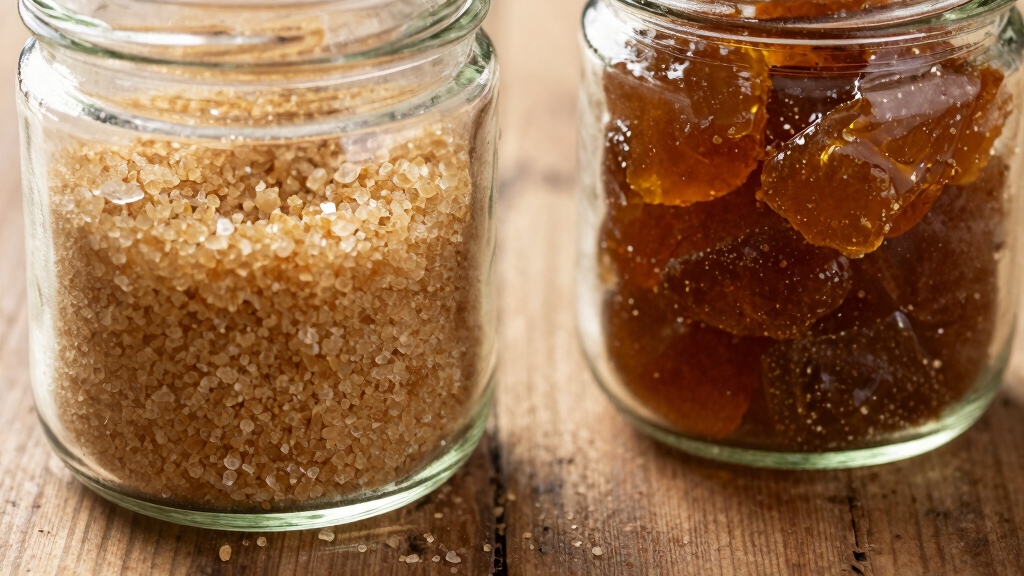
Cane sugar crystals are larger, drier, and more uniform. In contrast, brown sugar crystals are smaller, softer, and coated with molasses, which makes them moist and clumpy. Understanding these differences can be helpful in texture and consistency preferences for various culinary uses.
Their color also varies, with cane sugar ranging from nearly white to light brown. Brown sugar, on the other hand, is consistently medium to dark brown due to the presence of molasses. Moisture content is higher in brown sugar, impacting its texture and shelf life.
Additionally, brown sugars can be either refined blends or unrefined varieties, with unrefined types retaining more molasses and a stronger flavor unrefined brown sugars.
Flavor Profiles Compared

You might notice that both cane sugar and brown sugar are pretty similar when it comes to sweetness levels.
However, the flavor complexity is where things really start to differ because of their varying molasses content.
So, here’s the scoop: brown sugar has a higher percentage of molasses, which gives it this rich, nutty depth that can really enhance your dishes.
On the other hand, cane sugar is a bit milder, offering those nice caramel and earthy nuances. Brown cane sugar is also minimally processed and retains natural molasses, which contributes to its unique flavor. This difference in processing and composition can affect the way sugars interact with other ingredients, much like how anise oils provide concentrated flavor in baking.
Understanding these taste differences is super helpful, especially when you’re trying to figure out how each type of sugar will affect the final flavor profile of your recipes.
Sweetness and Complexity
Although both sugars add sweetness, they differ remarkably in flavor complexity and intensity.
Cane sugar matches standard white sugar’s sweetness, offering a clean, neutral taste with subtle caramel and fruity notes. Its minimal processing preserves natural compounds, giving it slight depth without overpowering other flavors, making it ideal for recipes where texture consistency is important.
In contrast, brown sugar’s sweetness is less intense but richer due to its molasses content, which lowers its sucrose to about 85%. This molasses imparts layered caramel, toffee, and nutty nuances, creating a bold, complex profile ideal for spiced or richly flavored recipes.
When you use cane sugar, expect straightforward sweetness; with brown sugar, anticipate a deeper, more intricate flavor that enhances rather than simply sweetens your dish.
Brown sugar also contributes moisture that affects the texture of baked goods, making them softer and chewier.
Molasses Influence
Because molasses content varies considerably between sugars, it profoundly shapes their flavor profiles.
When you compare cane sugar and brown sugar, molasses gives brown sugar its bittersweet, smoky, and caramel-like richness, absent in refined cane sugar. Commercial molasses content commonly ranges from 3.5% in light to 6.5% in dark brown sugar by volume, influencing this flavor depth.
Dark brown sugar’s higher molasses level intensifies these notes, while light brown sugar presents a subtler molasses influence.
Unrefined cane sugars, with elevated molasses, offer stronger molasses tones than commercial brown sugars. This variation affects not only taste but texture and moisture.
| Sugar Type | Molasses % | Flavor Notes | Moisture Level | Texture Impact |
|---|---|---|---|---|
| Refined Cane | ~0% | Clean, mild sweetness | Low | Dry, granular |
| Light Brown | 3-4% | Mild molasses, caramel hints | Moderate | Soft, slightly sticky |
| Dark Brown | 6-8% | Intense molasses, smoky, toffee | High | Sticky, moist |
| Raw Cane Sugar | 8-14% | Strong molasses, earthy tone | Moderate-High | Coarser, moist |
Taste Nuances
Several distinct flavor elements set brown sugar and brown cane sugar apart, shaping their unique culinary identities.
Brown sugar delivers a rich, bold sweetness with strong caramel and molasses notes, enhanced by its fine, moist crystals that dissolve quickly, intensifying flavor uniformly. Its molasses content typically ranges around 5–10%, contributing to its characteristic moist texture and deeper flavor.
In contrast, brown cane sugar offers a milder, earthier sweetness with subtle smoky caramel undertones, owing to its retained natural molasses and coarser, drier crystals that release flavors more gradually and add a slight crunch.
While both share similar sweetness levels, brown sugar’s pronounced toffee-like richness suits dense, flavorful desserts.
Brown cane sugar’s delicate, natural profile complements lighter baked goods.
You’ll find these nuanced differences essential when selecting sugar to achieve specific taste and texture outcomes in your recipes.
Nutritional Content and Health Implications

When comparing brown sugar and cane sugar, you’ll find their nutritional differences are minimal and unlikely to impact your diet noticeably. Both mainly consist of sucrose and supply about 15-16 calories per teaspoon, offering no significant protein, fiber, or fat.
The trace minerals present, calcium, iron, potassium, magnesium, and copper, exist in quantities too small to affect health meaningfully. Brown sugar typically contains slightly more minerals because it retains some molasses content, but these amounts are nutritionally insignificant.
Both sugars are commonly used in various recipes, including vegan baking where ingredient sourcing is important to ensure alignment with dietary requirements.
Consider these key points: Both sugars have similar glycemic indexes, causing comparable blood glucose and insulin spikes. Their caloric differences are negligible and don’t influence metabolic rates or energy balance materially. Antioxidants and phytochemicals in brown and cane sugars exist only in trace amounts, insufficient for measurable health benefits. Choosing sugars that fit into a balanced diet can support overall nutrition without emphasizing minor differences.
Therefore, from a nutritional and health standpoint, neither sugar offers advantages over the other.
Production and Processing Methods
Harvesting sugarcane and extracting its juice are essential initial steps in producing cane sugar and brown sugar. You start by crushing the stalks to obtain juice rich in sucrose and impurities, including natural molasses.
After clarification removes debris, the juice undergoes boiling to concentrate sugars. For brown sugar, boiling stops earlier, retaining molasses within the syrup, which then crystallizes partially. Organic sugarcane is often preferred because it requires no pesticides or herbicides during cultivation, promoting a more eco-friendly approach to sugar production organic sugarcane.
This process preserves molasses, influencing brown sugar’s color and flavor. Cane sugar, especially white refined types, requires further boiling and centrifugation to separate nearly all molasses, yielding pure sucrose crystals.
Variations in crystallization, either co-crystallizing molasses or coating refined crystals, differentiate brown sugar types like muscovado or turbinado. Understanding these production nuances clarifies how processing impacts sugar composition and characteristics.
Moisture Content and Its Effects on Baking
The presence of molasses in brown sugar directly influences its moisture content, which typically ranges from 1.5 to 3%, compared to the nearly zero moisture in granulated cane sugar. This moisture impacts baking outcomes markedly, altering texture, structure, and flavor development. The choice of sugar can also affect the flavor profile of baked goods, with brown sugar imparting a richer, more complex taste.
Molasses in brown sugar increases moisture, significantly affecting texture, structure, and flavor in baking.
When you use brown sugar, expect baked goods to be denser and chewier due to moisture retention, while cane sugar yields crisper, lighter textures.
Consider these effects when baking:
Brown sugar’s moisture promotes a softer crumb and extends freshness by retaining water. Cane sugar’s dryness facilitates rapid caramelization, producing crisp textures and lighter colors.
Moisture in brown sugar slows caramelization but enhances Maillard reactions, enriching flavor complexity. Because brown sugar burns 23% faster than granulated sugar above 350°F (177°C) due to molasses caramelization, it should be avoided in broiled dishes unless shielded.
Understanding these differences helps you optimize recipe results by selecting the appropriate sugar type.
Substitution Guidelines Between Cane Sugar and Brown Sugar
Although cane sugar and brown sugar share a common base ingredient, substituting one for the other requires careful consideration of their differing moisture, acidity, and flavor profiles.
To mimic brown sugar’s unique qualities, mix 1 cup white granulated sugar with 1 to 2 tablespoons molasses, adjusting for light or dark brown sugar.
Muscovado sugar serves as a direct 1:1 substitute but demands sifting due to its coarse texture.
If you opt for liquid sweeteners like honey or maple syrup, reduce other liquids by about ¼ cup per cup substituted to maintain balance. These liquids are invert sugars, which affect sweetness, browning, and moisture retention differently than dry sugars.
Using plain white sugar alone sacrifices moisture and acidity, affecting texture and rise.
Accurate measurement and understanding these moisture and flavor differences are essential for consistent baking results.
Varieties of Brown Sugar and Their Uses
When you’re deciding between light and dark brown sugar, it’s all about the molasses content and how it affects flavor. Light brown sugar gives you that nice, subtle caramel note, which is perfect for those delicate baked goods.
Think cookies or cakes that need a gentle touch. Its higher moisture content due to molasses contributes to softer, moister textures in baking, making it ideal for these recipes. Additionally, using sugars with natural oxidation processes can enhance the complexity of baked goods naturally.
On the other hand, dark brown sugar packs a punch with its richer, more intense flavor. It’s fantastic for recipes that call for warm spices, like gingerbread or spiced muffins. The higher molasses content in dark brown sugar gives it a sticky texture and the strongest caramel flavor among brown sugars.
Light Vs Dark Brown
You’ll often find light and dark brown sugar distinguished primarily by their molasses content, which directly influences their color, flavor, and moisture levels.
Light brown sugar contains about 3.5% molasses, offering a milder caramel and toffee profile with less moisture. It is commonly made by adding molasses back to white granulated sugar, which is why brown sugar is not pure cane sugar.
Dark brown sugar, with roughly 6.5% molasses, provides a deeper, richer flavor and retains more moisture, affecting texture and aroma.
Key differences include:
- Flavor intensity: Light is subtler; dark is robust with molasses acidity.
- Moisture content: Dark brown sugar is moister, influencing product texture.
- Color variation: Dark sugar’s higher molasses yields a darker, richer hue.
Understanding these distinctions helps you select the right sugar for specific culinary needs without compromising quality.
Baking and Cooking Uses
Explore the distinct baking and cooking roles of various brown sugar types to optimize flavor, texture, and moisture in your recipes.
Light brown sugar adds delicate caramel notes, perfect for cakes and custards. It can also enhance the tender crumb of baked goods for a softer texture. Dark brown sugar imparts moisture and acidity, ideal for spiced baked goods and meat glazes. Because it contains a higher molasses content, dark brown sugar provides a deeper color and richer flavor.
Coarse sugars like demerara and turbinado provide crunch and gradual sweetness, suitable for toppings and beverages. Muscovado’s intense molasses content enriches savory sauces and dense desserts. Pourable brown sugars offer convenient moisture without graininess, making them useful for recipes requiring even distribution of sweetness and moisture.
| Brown Sugar Type | Optimal Uses |
|---|---|
| Light Brown | Cakes, custards, fruit compotes |
| Dark Brown | Gingerbread, meat rubs, glazes |
| Demerara | Toppings, beverages, oatmeal |
| Muscovado | Barbecue sauces, rich cookies |
| Pourable Brown | Glazes, syrups, moist baking |
Impact of Molasses on Taste and Texture
Because molasses is rich in complex compounds, it markedly shapes both the taste and texture of brown sugar compared to cane sugar.
When you use brown sugar, you get a distinctive toasty and bittersweet flavor with caramel and roasted aromas, thanks to molasses’ burnt sugar notes and organic acids. This higher molasses content in cane sugars produces deeper, bittersweet flavor notes.
Additionally, the interaction between molasses and mineral content can subtly influence the final flavor profile in baked goods. Texture-wise, molasses adds moisture, resulting in a softer, chewier consistency that retains freshness longer.
Key impacts of molasses include:
- Enhanced caramel-like richness and complex aftertaste
- Increased moisture contributing to pliability and chewiness
- Acidic components affecting leavening and browning reactions
Understanding these factors helps you predict how brown sugar alters flavor and texture in recipes versus pure cane sugar.
Frequently Asked Questions
Can Brown Sugar Crystallize Like Cane Sugar Over Time?
Brown sugar can crystallize over time, but not like cane sugar.
You’ll notice it tends to clump and harden due to moisture loss and molasses content, which inhibits large crystal formation.
Unlike cane sugar’s pure sucrose crystals that grow distinctly, brown sugar’s glucose and fructose slow crystallization, keeping crystals small and sticky.
To soften hardened brown sugar, you can add moisture or heat to rehydrate the molasses and dissolve the crystals.
Does Storage Temperature Affect Cane Sugar Differently Than Brown Sugar?
Yes, storage temperature affects cane and brown sugar differently.
You’ll find cane sugar more stable across temperature fluctuations if kept dry, as its larger crystals resist clumping unless exposed to moisture.
Brown sugar, with its molasses and higher moisture, reacts more sensitively to temperature changes, often hardening or clumping in humidity or cold.
To maintain quality, store both sugars in airtight containers at consistent, cool, dry temperatures, but handle brown sugar’s moisture carefully.
Are There Environmental Impacts Unique to Cane Sugar Farming?
Yes, cane sugar farming has unique environmental impacts you should consider.
It drives deforestation by converting forests to plantations, displacing wildlife and other agriculture.
You’ll also see significant water use, thousands of liters per kilogram produced, and runoff causing aquatic dead zones.
Additionally, pre-harvest burning emits greenhouse gases and pollutants harmful to health.
Soil degradation occurs due to monoculture and heavy agrochemical use, further harming ecosystems and long-term productivity.
How Does Brown Sugar Affect Yeast Fermentation in Bread?
Picture dough bubbling gently as yeast feasts.
Brown sugar adds molasses’s richness, giving yeast extra nutrients and moisture.
This subtly enhances fermentation flavor and dough texture.
But too much sugar stresses yeast, slowing gas production and rise.
So, when you use brown sugar, keep it moderate—around 3%—to boost fermentation without overwhelming yeast with osmotic pressure.
This results in a softer crumb and a richer crust hue, balancing flavor and fermentation dynamics.
Can Cane Sugar Be Used in Candy Making as Effectively as Brown Sugar?
You can use cane sugar in candy making, but it won’t behave exactly like brown sugar.
Cane sugar’s coarser crystals and lower molasses content create a lighter sweetness and different caramel notes, affecting texture and flavor.
You’ll need to adjust moisture levels and possibly grind crystals for smooth integration.
Brown sugar’s higher moisture softens candies and intensifies flavor, so swap carefully and tweak recipes to maintain desired texture and taste.
From Cane Sugar to Brown Sugar: Your Next Baking Move
Now that you’ve peeled back the layers, you see cane sugar and brown sugar aren’t twins but close cousins. Each has distinct flavors, moisture levels, and uses.
While cane sugar offers a clean, sweet crunch, brown sugar’s molasses-rich depth adds moisture and complexity, especially in baking. Understanding these differences lets you swap them wisely, ensuring your recipes hit the right note every time.
Remember, choosing sugar is like tuning an instrument; the subtle variations shape the final harmony.