
How Long Does Fondant Stay Good? Shelf Life Explained
You can keep fondant good from a few days up to several months by storing it correctly.
Keep it wrapped tightly in plastic, inside an airtight container, away from heat, humidity, and direct sunlight.
Room temperature storage lasts 2–8 weeks if cool and dry.
Refrigeration shortens life due to moisture risk, while freezing extends it for months when well wrapped.
Proper handling and conditions prevent drying or stickiness.
Understanding these basics helps preserve fondant’s quality longer.
Key Takeaways
- Fondant stored tightly wrapped at room temperature lasts 2 to 8 weeks in a cool, dry, low-humidity environment.
- Refrigeration is generally discouraged due to condensation and texture damage; use only for a few days if double wrapped.
- Properly frozen fondant can last several months, but must be double wrapped and thawed gradually to maintain quality.
- Fondant on edible cakes remains fresh and smooth for about 4 to 6 days when kept airtight at room temperature.
- Fondant dummies stored cool, dry, and dark can last 1 to 2 years without degradation in shape or color.
Ideal Temperature Range for Fondant Storage
Although fondant can tolerate a range of conditions, you should store fondant-covered cakes between 68°F and 72°F (20°C to 22°C) to keep the icing pliable without drying out or melting.
This temperature range preserves the fondant’s smooth texture and vibrant color. Keep the cake in a cool, dry, low-humidity environment to prevent stickiness or softening.
It is also important to use a proper container, such as a cake box, to protect the fondant from dust and accidental damage, rather than placing the cake in any random container proper storage. Proper storage techniques can greatly influence the longevity of delicate coverings like fondant.
Avoid direct sunlight and heat sources, which cause the fondant to lose shape. When stored properly at room temperature, fondant can maintain its quality for 2 to 4 weeks if tightly wrapped in plastic and placed in airtight containers.
Maintaining a stable temperature is essential; fluctuations can cause cracking or sagging. By controlling temperature and humidity, you make certain fondant remains workable and visually appealing for extended periods. This careful environmental control is similar to managing proofing and rising times in baking processes to ensure optimal texture and appearance.
Best Practices for Storing Fondant at Home
To keep your fondant fresh and workable, start by wrapping it tightly in plastic wrap right after use to block out air and prevent drying. Using airtight methods such as press-n-seal storage can help keep decorations pliable over time.
Then, place the wrapped fondant inside a resealable zip-top bag, pushing out as much air as possible before sealing. Applying an even, thin coating of a baking spray on your tools and surfaces can also help prevent sticking during handling.
Wrap fondant tightly in plastic wrap immediately after use to keep it fresh and prevent drying out.
Store fondant in a cool, dark place away from sunlight and heat to avoid color fading and drying. For smaller decorations, wrap each piece individually with press-n-seal or plastic wrap before placing them in airtight containers to maintain softness.
Use parchment paper between decorations to prevent sticking. Avoid refrigerating fondant unless it’s properly sealed to prevent condensation damage. Label your storage containers with dates to track freshness.
Always re-knead fondant slightly before use if it has hardened, but avoid adding excess moisture that could spoil it.
Shelf Life of Fondant by Different Storage Methods

Proper storage directly affects how long your fondant stays fresh and usable. Different storage methods impact fondant’s shelf life greatly, so you must choose carefully based on your needs. It is crucial to maintain a consistent temperature and humidity to prevent fondant from becoming sticky or brittle over time.
Below is a summary of fondant longevity by storage method:
| Storage Method | Shelf Life | Key Tips |
|---|---|---|
| Room Temperature | 2 to 8 weeks | Wrap tightly; keep in cool, dry place |
| Refrigeration | Several days | Double wrap; avoid condensation |
| Freezing | Several months | Freeze tightly; thaw gradually |
| Dummy Cakes | 1 to 2 years | Store cool, dry, dark; avoid sunlight |
| Wrapping | Extends shelf life | Use plastic wrap + airtight container |
Longevity of Fondant on Edible Cakes
When it comes to fondant on edible cakes, you’ll find that it stays fresh and smooth for about 4 to 6 days if you store it at room temperature in airtight conditions. Isn’t that good to know?
But keep in mind that things like humidity, temperature changes, and how you handle the cake can really affect how long it lasts without cracking or drying out. Additionally, storage conditions such as temperature and humidity play a crucial role in maintaining the fondant’s quality.
To make sure your cake looks its best for as long as possible, it’s super important to wrap it up well. Oh, and try to avoid putting it in the fridge! Refrigeration can lead to condensation, which can mess with the fondant’s texture.
Shelf Life Factors
Although fondant can appear durable, its shelf life on edible cakes is limited to about 4 to 6 days at room temperature when stored away from direct sunlight and wrapped properly. Using non-toxic materials in cake decorations can further ensure food safety and longevity.
Temperature extremes shorten this span: heat makes fondant sticky; cold causes brittleness. Humidity also accelerates deterioration, leading to soggy or sticky surfaces.
Avoid refrigeration, as condensation damages fondant and hardens buttercream underneath, compromising taste and texture within days. Fondant refrigeration causes condensation, sweating, and a slimy layer, which deteriorates the fondant’s texture and appearance.
Premium fondants with additives like shortening last longer by maintaining pliability. Cakes with buttercream layers reduce fondant longevity due to moisture migration.
Frequent handling and exposure to air dry and crack fondant faster. To keep your fondant looking fresh, control environmental factors closely, maintain ambient temperature around 68°F to 72°F (20°C–22°C), and limit exposure to light and moisture.
Storage Best Practices
Controlling the environment where you store fondant-covered cakes directly impacts their longevity.
Keep cakes at a stable room temperature between 68°F and 72°F (20°C to 22°C), avoiding high humidity that causes stickiness and dullness. Choosing storage containers with airtight closures can help maintain freshness.
Store cakes away from direct sunlight and heat sources to prevent melting or discoloration.
Lightly wrap the cake with plastic wrap, then place it in an airtight container to protect against air exposure without damaging the fondant’s smooth finish.
Use silica gel packs inside containers to control moisture.
Refrigeration is generally discouraged due to condensation risks; if necessary, limit chilling to 10-15 minutes with tight wrapping. However, cakes with perishable fillings should be refrigerated to prevent spoilage, even if fondant may harden.
For freezing, double wrap with plastic wrap and foil, store inside a sturdy box, and thaw gradually to preserve fondant integrity.
Preserving Fondant on Dummy Display Cakes
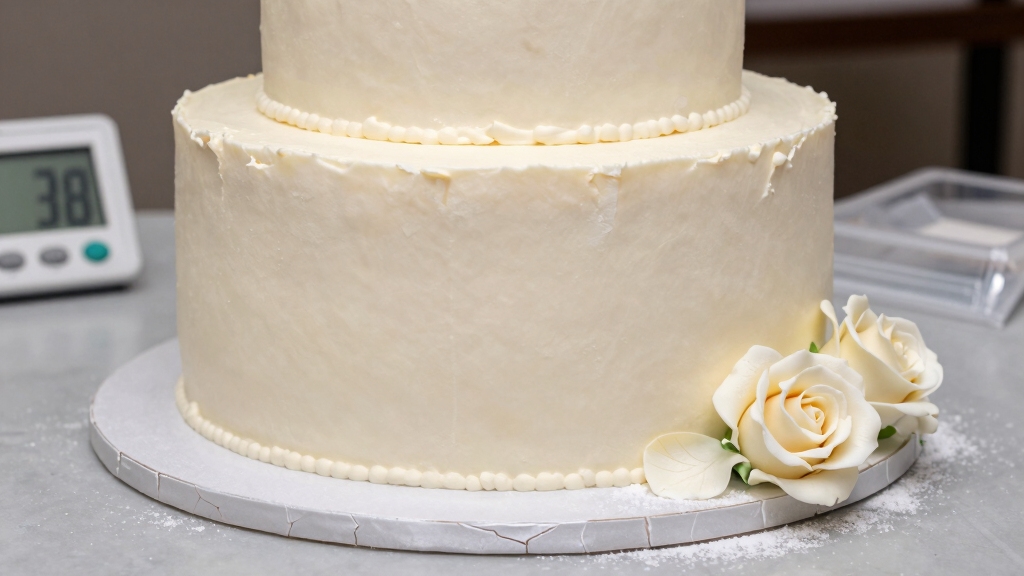
When preserving fondant on dummy display cakes, maintaining ideal storage conditions is essential to extend their lifespan and keep their appearance intact.
Store your dummy cakes in a cool, dry, and dark place away from direct sunlight and heat sources to prevent discoloration and cracking. Using eco-friendly materials in display environments can further support preservation.
Keep dummy cakes cool, dry, and dark to avoid discoloration and cracking from sunlight and heat exposure.
Use cake domes, boxes, or display cabinets to shield them from dust and contaminants. This controlled indoor environment is preferred to optimize shelf life.
Avoid humidity and outdoor exposure, as moisture accelerates deterioration.
Minimize handling and movement to reduce surface wear and mechanical damage.
Regularly inspect your dummies for visual changes like cracks or dust buildup, and gently clean with a soft brush as needed.
Keep in mind that some decorations may deteriorate faster than fondant, so add those closer to display time and apply protective edible sprays cautiously for added longevity.
Techniques to Maintain Fondant Elasticity and Appearance
To keep fondant elastic and smooth, you really want to knead it well. Choosing the right tools, such as a silicone spatula, can help you handle fondant more efficiently and prevent sticking.
Just make sure it feels soft but not sticky. If it’s a bit tough, you can add some vegetable shortening to help restore its pliability.
Using a small amount of glycerin or corn syrup can also act as a softener and moisture retainer to maintain elasticity.
Once you’ve got it to the right consistency, don’t forget to wrap it tightly in plastic wrap. This step is super important to prevent any moisture loss and to keep it from drying out.
So, remember, a good mix of proper kneading and airtight wrapping is key.
This way, your fondant stays workable and looks great for much longer!
Kneading and Shortening Use
Getting fondant ready for decorating starts with proper kneading and careful use of vegetable shortening to maintain its elasticity and smooth appearance. Knead fondant at room temperature using the palm-and-fold method to evenly distribute moisture and avoid air bubbles.
It is important to knead fondant until it is smooth and workable, ensuring the texture is neither sticky nor crumbly. Use a small amount of vegetable shortening to soften stiff fondant and prevent sticking, applying it sparingly to avoid greasiness. Follow these key steps:
- Knead until smooth and pliable, not sticky; stop if fondant becomes overly tacky.
- Lightly rub shortening into cracks and imperfections to restore elasticity and smoothness.
- Dust your work surface minimally with shortening or cornstarch to prevent sticking without drying the fondant.
These techniques guarantee your fondant remains workable and flawless for decorating.
Proper Wrapping Methods
Wrap fondant carefully to lock in its elasticity and smooth appearance.
Start by tightly enclosing fondant in plastic wrap, pushing out as much air as possible without pressing too hard to avoid imprint marks.
Fold gently from one end to prevent air pockets that cause dryness or deformation.
For short-term storage, a single sealed plastic layer usually suffices.
For longer storage, combine plastic wrap with airtight containers or vacuum sealing to minimize moisture loss and contamination.
Store fondant at room temperature, avoiding refrigeration to prevent condensation damage.
When freezing, use multiple wrapping layers: plastic wrap followed by aluminum foil, and thaw fondant while still wrapped.
Always handle fondant with clean, dry hands and smooth the surface before wrapping to maintain evenness and prevent dents or bubbles.
Using vacuum sealing can significantly extend fondant’s shelf life by removing air and reducing moisture exposure.
Impact of Cake Fillings on Fondant Shelf Life
Although fondant itself can remain stable for several days, the type of cake filling you choose directly affects how long your fondant-covered cake stays fresh and intact. Fillings with high moisture, like fresh fruit or custards, introduce excess moisture that can make fondant sticky and cause deterioration. Using proper storage techniques with temperature resistance can help maintain fondant quality.
Fondant’s stability depends on your filling choice; moist fillings can cause stickiness and damage over time.
Conversely, fillings such as buttercream or ganache that don’t require refrigeration help preserve fondant quality.
Keep in mind these key points:
- Moisture-heavy fillings require refrigeration, risking fondant sweating and texture loss.
- Use cling film to tightly wrap refrigerated cakes to reduce moisture damage, as cling film provides a better humidity barrier than foil.
- Buttercream or ganache-filled cakes can safely remain at room temperature for 3-4 days without fondant compromise.
Selecting appropriate fillings and managing storage will maximize your fondant cake’s shelf life and appearance. Proper handling and heat resistance considerations are essential for maintaining fondant integrity during storage.
Effects of Humidity and Light on Fondant Quality
When you work with fondant, controlling humidity and light is essential to maintaining its texture and appearance. Excess humidity makes fondant sticky and soft, causing sagging or color bleeding. Too much light dulls its finish and may even melt shapes.
Store fondant in cool, dry, dark places and use silica gel packs to absorb moisture. Shield cakes from direct sunlight with boxes or domes to preserve gloss and stability.
| Condition | Impact on Fondant |
|---|---|
| High Humidity | Sticky, soft, loses shape |
| Direct Light | Dulls shine, melts shapes |
| Controlled Environment | Maintains texture, color, stability |
Proper storage techniques and environmental control help ensure fondant decorations remain fresh and visually appealing longer.
Tips for Handling and Refreshing Fondant Decorations
To keep your fondant decorations looking their best, store them in a cool, dry place away from direct sunlight. Protect them with airtight containers or cake domes. Proper storage is essential for maintaining the fondant’s quality, as unopened fondant paper has a shelf life of up to 18 months when kept in optimal conditions.
Avoid refrigeration as moisture damages texture and appearance. Handle fondant minimally with clean, dry hands or tools to prevent contamination and breakage.
Follow these tips to refresh and maintain your fondant decorations:
- Gently dust off with a soft brush to remove dust without damage.
- Restore pliability by carefully rehydrating or kneading fresh fondant to mend cracks or broken areas.
- Lightly rub vegetable shortening on surfaces to renew sheen and prevent cracking.
Frequently Asked Questions
Can Fondant Be Reused After Drying Out?
Yes, you can reuse fondant after it dries out, but its success depends on how dry it is.
Knead small dried portions with a bit of shortening or glycerin to restore pliability. For larger, harder pieces, you might need to reshape and add moisture carefully.
Keep in mind, heavily dried fondant won’t fully return to its original texture, so blending with fresh fondant often helps for better smoothness and flexibility during reuse.
Does the Color of Fondant Affect Its Shelf Life?
They say, “Don’t judge a book by its cover,” and that applies here: the color of fondant doesn’t materially affect its shelf life.
However, natural dyes fade faster and can alter texture, while synthetic colors hold up better. To keep your fondant fresh, store it in a cool, dark place, avoiding heat and humidity.
Dark colors may absorb more heat, so extra care is needed to maintain quality.
How Does Fondant React to Different Types of Cake Bases?
Fondant reacts differently depending on your cake base. On moist sponge cakes, it seals in moisture but might get sticky or crack if humidity fluctuates.
Chocolate or rich cakes need refrigeration if perishable fillings are present, or fondant can last weeks sealed. Madeira and dense cakes release less moisture, keeping fondant stable longer.
For dummy bases, fondant won’t mold but can discolor over time if exposed to heat or humidity. Store accordingly to maintain texture.
Are There Any Preservatives to Extend Fondant Shelf Life?
You can extend fondant’s shelf life up to two weeks by applying a thin layer of shortening, which locks in moisture and prevents drying out.
Adding tylose powder also helps firm your decorations, making them last longer.
Remember to wrap fondant tightly in plastic wrap and store it in a cool, dry place.
Using these preservatives and storage tips keeps your fondant pliable and fresh for your cake projects.
Can Fondant Cause Allergic Reactions or Sensitivities?
Yes, fondant can cause allergic reactions or sensitivities, especially if it contains nuts, dairy, eggs, soy, or gluten.
You might experience skin irritation, respiratory issues, or digestive symptoms after contact or ingestion.
Handling fondant can also lead to allergic contact dermatitis, causing blisters or cracked skin.
Always check ingredient lists carefully, use gloves when working with fondant, and keep emergency medication handy if you have known allergies.
Keep Your Fondant Fresh and Your Cakes Stunning
You might think fondant lasts forever, but without the right care, it spoils quickly.
Store it in a cool, dry place, ideally between 65°F and 70°F, to keep it fresh.
While fondant on dummy cakes can last months, edible cakes demand quicker consumption due to fillings and humidity.
Handle it gently, refresh as needed, and avoid light and moisture.
By balancing these factors, you’ll extend fondant’s life and maintain its flawless look.