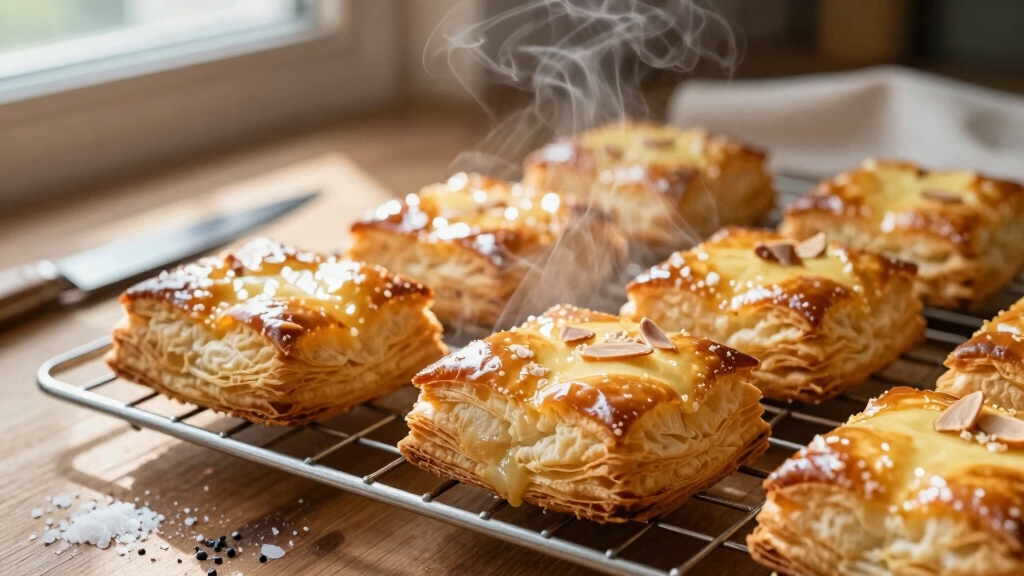
Gluten Free Puff Pastry Recipe: Flaky, Buttery Perfection
To make flaky gluten-free puff pastry, you’ll want a well-balanced flour blend with rice, potato, and tapioca flours plus xanthan gum for elasticity.
Keep your butter cold and in small pieces, folding it gently into the dough without overworking.
Chill the dough between folds to build layers, then bake at a high temperature for quick puffing.
Mastering these steps sets the stage for flaky, buttery results you’ll be excited to explore further.
Key Takeaways
- Use a well-balanced gluten-free flour blend with xanthan gum to replicate gluten’s texture and elasticity in puff pastry dough.
- Incorporate cold, cubed, grated, or sliced butter into the flour mixture to create distinct laminated layers and visible flakes.
- Gradually add ice-cold water to bring the dough together without kneading, keeping butter pieces intact for puffing.
- Roll and fold the dough multiple times using the rough puff method, chilling between turns to maintain cold butter layers.
- Preheat oven to 400°F (200°C), chill shaped dough before baking, and use parchment paper for optimal puff and browning.
Essential Ingredients for Gluten-Free Puff Pastry
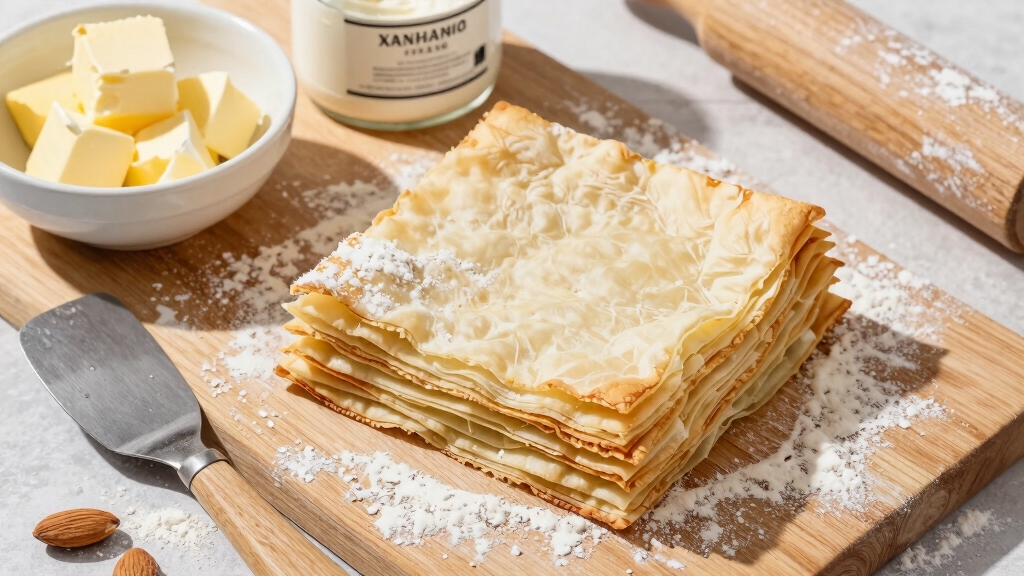
When you’re making gluten-free puff pastry, choosing the right ingredients is essential to achieving that perfect flaky texture and rich flavor.
Start with a well-balanced gluten-free flour blend, typically rice flour, potato starch, and tapioca starch, combined with xanthan gum to mimic gluten’s elasticity. Be aware that different flours have varying water absorption rates, which can impact dough hydration and texture.
Opt for cold, unsalted butter, cubed or grated finely, to create those crucial laminated layers.
Keep your butter chilled to prevent melting, ensuring maximum rise and flakiness.
Adding grated frozen butter directly into the flour helps create visible butter clumps that contribute to a flaky texture.
Add cold water gradually to hydrate the dough without warming it, preserving the dough’s structure. Precise measurements and gentle mixing help maintain ideal dough consistency.
Consider small amounts of sugar and salt to enhance browning and flavor balance.
Avoid nut-based flours, as they can alter texture.
Step-by-Step Dough Preparation
Selecting the right ingredients sets the stage, but the real magic begins as you bring them together into dough. Start by whisking your gluten-free flour blend, xanthan gum, sugar, and salt for even distribution.
Add cold, cubed butter, about 25-40g, and work it in using your fingertips or a pastry cutter until the mixture looks like coarse crumbs. Keep butter pieces pea-sized and well-coated to stay cold.
Gradually add chilled water, pressing gently to bring the dough together without kneading. Adjust moisture until it’s workable but not sticky. It is essential to use ice cold water to ensure the dough remains cool and the butter does not melt.
Shape the dough into a ball or rectangle, wrap it tightly, and chill for at least 30 minutes. This rest firms the butter and preps the dough for rolling, setting you up perfectly for the next steps.
Techniques for Achieving Flakiness
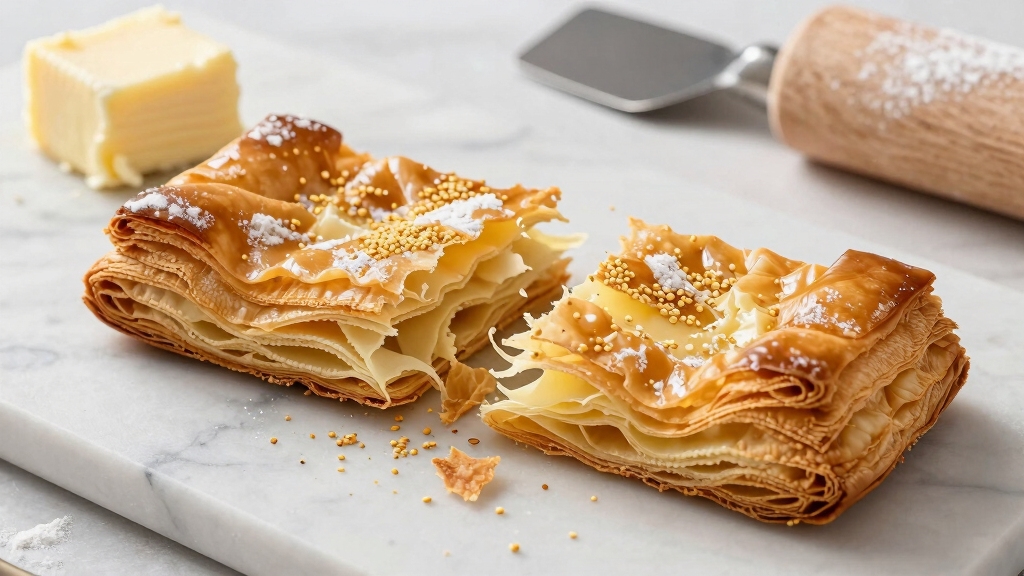
Mastering the art of flakiness in gluten-free puff pastry hinges on how you handle butter and dough throughout the process.
Start with cold, grated, and sliced butter to guarantee distinct layers. Grated distributes evenly, while slices create visible flakes. Incorporating a brief resting period after mixing flour and water can enhance dough extensibility and texture.
Avoid overworking the dough to keep butter pieces intact, which trap steam for puffiness. This rough puff method relies on many butter pieces folded into the flour rather than fully incorporating it, preserving flaky texture. Roll your dough in one direction, folding it into thirds multiple times, chilling thoroughly between each turn to maintain cold butter and relaxed dough.
Use minimal water, just enough to bring dough together, and dust your surface generously with gluten-free flour to prevent sticking.
Keep everything cold to preserve lamination layers, and watch for butter streaks forming as a sign of success.
These careful techniques build the flaky, tender structure you’re aiming for.
Baking Tips for Perfect Puff Pastry

Perfecting your gluten-free puff pastry doesn’t stop at preparing the dough and butter layers. It extends into how you bake it. Always preheat your oven to at least 400°F (200°C) to create rapid steam, which helps your pastry puff beautifully. Using unbleached parchment paper can prevent sticking and ensure an even bake.
Baking gluten-free puff pastry at 400°F ensures rapid steam for perfect puff and flakiness.
Before baking, chill your shaped dough for 15–60 minutes to firm up the butter and prevent leaks. This resting period also helps maintain cold dough temperature, which is crucial to preserving the distinct butter layers. Roll your dough to about 1/8 to 1/4 inch thick, repairing any cracks promptly to maintain even layers.
Use an ungreased baking sheet lined with parchment or sprinkled with cold water to avoid sticking and burning. If your pastry needs longer baking, lower the temperature to around 300°F to cook evenly without burning.
Handling dough gently and keeping it cold throughout guarantees those signature flaky layers.
Variations and Serving Suggestions

While gluten-free puff pastry offers a delicate, flaky base, you can transform it into diverse dishes by experimenting with both sweet and savory variations.
Try cinnamon sugar twists or fruit-filled turnovers for a sweet treat, or create elegant appetizers like brie and walnut wraps or spinach dip tarts. Remember to keep the dough and butter very cold during preparation to ensure the best puff and flakiness. Using xanthan gum in your dough can help improve texture and elasticity.
Enhance flavors by adding herbs, spices, or dairy-free alternatives in the dough. For presentation, craft intricate braids or lattice tops, and use scraps for bite-sized snacks.
Serve your pastries warm with complementary dips such as fruit preserves or pesto. Pair savory options with fresh or pickled sides to balance richness.
Whether for brunch, snacks, or festive occasions, your gluten-free puff pastry can shine in countless creative, delicious ways.
Frequently Asked Questions
Can Gluten-Free Puff Pastry Be Frozen Before Baking?
Yes, you can freeze gluten-free puff pastry before baking, but only after you’ve finished laminating and folding the dough.
Make sure you chill it well, wrap it tightly in plastic wrap, and place it in an airtight bag or container to keep it fresh.
When you’re ready, thaw it slowly in the fridge overnight or let it sit at room temperature for about an hour before rolling and baking for the best puff and flakiness.
How Long Does Gluten-Free Puff Pastry Keep Once Baked?
Imagine biting into flaky layers that melt, but time isn’t on your side.
Once baked, your gluten-free puff pastry keeps fresh for about 3 to 4 days in the fridge if you wrap it tightly.
To preserve that crisp texture, store it airtight and reheat in the oven.
For longer love, freeze it up to a month, but expect slight texture shifts after thawing.
Don’t let freshness slip away!
Is It Possible to Make Gluten-Free Puff Pastry Without Xanthan Gum?
Yes, you can definitely make gluten-free puff pastry without xanthan gum. By blending alternative flours like chickpea, cassava, and tapioca starch, you’ll achieve a flaky, buttery texture.
You might need to adjust hydration and use techniques like rough puff to keep the dough elastic and easy to handle. Natural binders such as psyllium husk or ground chia seeds can also help maintain structure.
What Is the Best Way to Thaw Frozen Gluten-Free Puff Pastry?
You might worry thawing takes too long, but the best way is the refrigerator method.
Place sheets separated on a plate, loosely covered, and chill for about 4 hours.
This gradual thaw keeps layers intact and prevents tearing.
Avoid unfolding until flexible enough.
If you’re short on time, room temperature works—just watch carefully to avoid gumminess.
Either way, work while cold to keep that perfect flaky texture.
Can Gluten-Free Puff Pastry Be Used for Savory and Sweet Dishes?
Absolutely, you can use gluten-free puff pastry for both savory and sweet dishes.
It’s wonderfully versatile, letting you craft flaky, crispy spanakopita or savory tarts with cheese and herbs.
You can also create delicate sweet treats like apple turnovers or cinnamon twists.
Just handle it carefully with proper folding and baking techniques to get those perfect layers.
Plus, brushing it with egg wash gives you that gorgeous golden crust every time.
Explore Flavor: Savory and Sweet Glucose-Free Puff Pastry Variations
Now that you’ve mastered this gluten-free puff pastry, you’re ready to channel your inner Julia Child and create flaky, golden layers that rival any Parisian bakery.
With the right ingredients and techniques, you’ll transform simple dough into a culinary masterpiece, proving that dietary restrictions don’t mean sacrificing flavor or texture.
So go ahead, embrace the challenge, bake with confidence, and let your kitchen become the stage for delicious, gluten-free magic.