
Fondant vs Sugar Paste: Which One Is Better for Cakes?
You’ll find fondant is soft, pliable, and ideal for smooth, polished cake coverings due to its fat content and slower drying time.
Sugar paste, lacking fat, dries hard and fast, perfect for intricate flowers and detailed decorations needing structure.
Handling fondant involves cornstarch to prevent stickiness, while sugar paste demands quicker work to avoid cracking.
Each has distinct texture and uses; understanding these differences ensures the right choice for your decorating needs and taste preferences.
Further detail reveals nuanced techniques and regional terms.
Key Takeaways
- Fondant contains fat, making it soft, pliable, and ideal for smooth cake coverings with a polished finish.
- Sugar paste has no fat, dries quickly to a hard, brittle state, and suits intricate, rigid decorations like flowers.
- Fondant remains workable longer, allowing easy manipulation, while sugar paste sets fast and holds detailed shapes firmly.
- Fondant requires cornstarch to prevent sticking; sugar paste often uses damp hands and dries better in humid conditions.
- Fondant tastes softer and more palatable, whereas sugar paste is firmer with a candy-like texture, less favored for eating.
Recipe and Usage Guide for Sugar Paste vs Fondant:
| Aspect | Fondant | Sugar Paste (Gum Paste) |
|---|---|---|
| Ingredients | Powdered sugar, water, gelatin, glycerin, fat (shortening/butter) | Powdered sugar, water, gelatin, gum tragacanth or tylose powder |
| Texture | Soft, pliable, elastic – ideal for smooth cake coverings | Firm, quick-drying, brittle – perfect for flowers & intricate details |
| Drying Time | 24–30 hours at room temperature; remains workable longer | Few hours; sets hard quickly, holds delicate shapes firmly |
| Best Use | Covering cakes with a polished, seamless finish | Crafting flowers, figurines, and detailed decorations |
| Taste | Soft, sweet, palatable; preferred for eating | Candy-like, tougher texture; less favored for consumption |
| Handling Tips | Use cornstarch to prevent sticking; knead with shortening if too dry | Work quickly with damp hands; store in airtight containers |
| Regional Term | Commonly called Fondant in North America | Known as Sugar Paste/Gum Paste in UK & Europe |
Fondant and Sugar Paste: Key Differences Explained
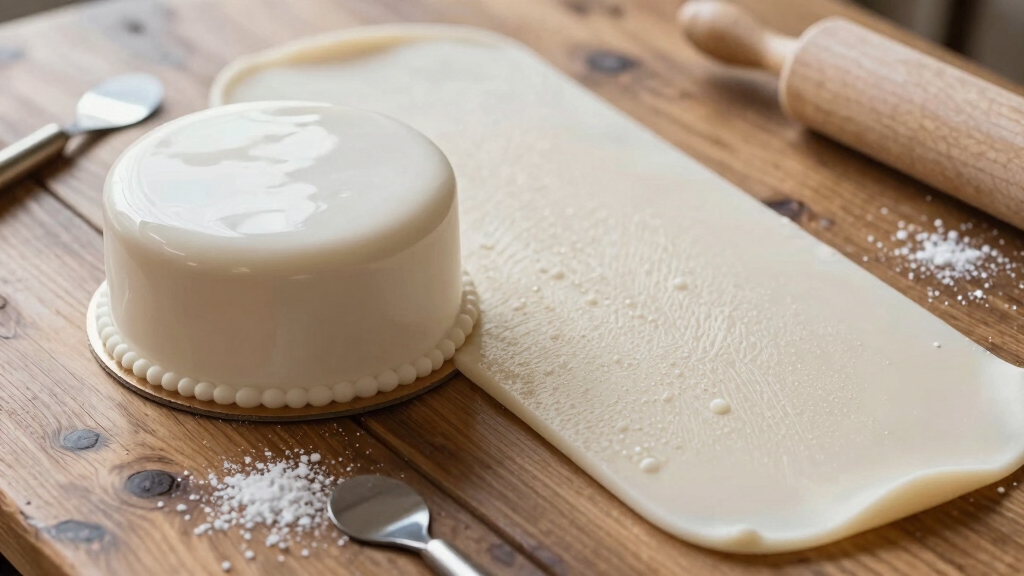
How do fondant and sugar paste differ in composition and function? Fondant contains fat, which grants it softness, pliability, and smoothness. This makes it ideal for covering cakes with a polished, flexible finish.
Sugar paste, also known as gum paste, lacks fat but includes powdered sugar, gelatin, water, and gums like tragacanth or tylose powder. This composition results in a stiffer texture that dries quickly to a hard, candy-like state. It’s perfect for creating detailed and rigid decorations like flowers and architectural elements. Gum paste is also ideal for sugar flowers and fine filigree elements due to its quick-drying nature.
Fondant remains soft longer during handling, while sugar paste firms immediately, especially with additives like CMC. You’ll find fondant better suited for smooth, bendable coverings.
In contrast, sugar paste excels at intricate, three-dimensional shapes requiring structural rigidity. Their distinct compositions directly influence their practical uses in cake decorating.
How Fondant and Sugar Paste Textures and Drying Times Affect Decorating?
When you work with fondant, you’ll quickly notice how soft and pliable it is. This texture makes it super easy to cover cakes smoothly and seamlessly, plus you get an extended working time to really perfect your design. On the other hand, sugar paste has a firmer consistency that hardens up quickly.
This means it’s great for holding those intricate shapes you might want to create. Sugar paste is a soft and pliable sugar dough that dries completely hard, making it ideal for detailed cake decorations. Understanding the importance of texture in baking materials can significantly improve your decorating results.
Now, because of this difference in drying time, fondant stays workable for longer periods. This is a big advantage if you’re in the zone and need a little more time to shape things just right.
However, if you’re thinking about detailed decorations that you want to make ahead of time, sugar paste is definitely the way to go. So, understanding these differences in texture and drying times can really help you hone your decorating skills and techniques!
Texture Differences Explained
Why does the texture of fondant and sugar paste matter so much in cake decorating?
The texture directly influences your ability to cover cakes smoothly and sculpt detailed decorations. Fondant’s soft, flexible, and pliable composition lets you drape it evenly over large surfaces, achieving a glossy, flawless finish with minimal tearing.
Its sensitivity to humidity and temperature means careful environmental control is essential for best results. This pliability also allows for minimal kneading during preparation, similar to some baking mixes that emphasize ease of use.
In contrast, sugar paste’s firmer, stiffer texture excels in precise molding and intricate detail work, thanks to its higher malleability and quick hardening. Sugar paste also tends to be more resilient to handling and temperature changes, making it suitable for durable decorations. Its quick drying time ensures that delicate shapes hold their form, much like how certain bread mixes require specific conditions for optimal texture.
Fondant’s elasticity and fat content maintain softness, ideal for smooth cake coverage.
Sugar paste’s firmness supports delicate shapes like flowers and figurines.
Handling differs: fondant needs cornstarch to prevent sticking; sugar paste requires damp hands for workability.
Understanding these textural differences helps you select the right medium for your decorating goals.
Drying Time Impacts
The texture differences between fondant and sugar paste also dictate their drying times, which directly impact your decorating process. Fondant requires 24 to 30 hours at room temperature to dry fully, remaining pliable longer. This allows fine adjustments but demands internal supports for intricate shapes. Typically, it is recommended to allow two days recommended for fully hardened decorations to ensure stability.
In contrast, sugar paste (gum paste) and pastillage dry significantly faster and harder, often within hours. This enables you to craft durable, structural decorations without reinforcement. Humidity affects fondant adversely; it absorbs moisture, causing sweat marks and surface damage.
Sugar paste resists humidity better. To expedite fondant drying, incorporate additives like Tylose or use air circulation. However, thin fondant layers increase fragility. Proper drying and storage at room temperature in airtight containers preserve decoration integrity, which is crucial for transport and long-term display.
Tips for Rolling and Handling Fondant and Sugar Paste

When you’re rolling out fondant, it’s super important to avoid that pesky stickiness. One of the best tricks is to lightly dust your work surface and your rolling pin with either powdered sugar or cornstarch. Just a heads up—stay away from flour.
It can mess with the taste and texture of your fondant. Fondant is a soft and pliable icing that allows for easy rolling and draping over cakes. Maintaining the right temperature for your fondant helps keep it workable and prevents it from becoming too sticky or too dry.
Oh, and if you have a silicone mat lying around, that’s a great choice for your surface. It helps keep everything at the right consistency and temperature, which is key to preventing your fondant from getting too soft.
If you find your fondant isn’t as pliable as you’d like, don’t worry! Just knead it really well or try adding a tiny bit of vegetable shortening. That should help make your rolling process smooth and even.
Preventing Stickiness While Rolling
How can you effectively prevent fondant and sugar paste from becoming sticky while rolling?
Temperature and humidity control are critical. Work during the coldest hours or use air conditioning in dry mode to minimize moisture and heat transfer. Since heat and humidity cause fondant to stay sticky, managing these environmental factors is essential. Maintaining a low-humidity environment is key to preserving the ideal texture of sugar-based pastes.
Cool your hands with a damp cloth (without wetting the fondant) to reduce stickiness caused by warmth. Knead lightly to avoid adding moisture and rest the paste before rolling to stabilize consistency.
Roll using a rolling pin on a surface dusted with cornflour to prevent sticking without softening the paste.
Operate in low-humidity, climate-controlled environments to maintain firmness.
Incorporate small amounts of cornstarch or icing sugar incrementally if stickiness occurs, monitoring texture carefully.
These precise techniques ensure smooth, non-sticky rolling for perfect fondant and sugar paste application.
Choosing Dusting Agents
Preventing stickiness while rolling sets the foundation for smooth handling. Selecting the right dusting agent sharpens your control over texture and elasticity.
For fondant, cornstarch or sifted icing sugar works best, preserving stretch without drying edges. When handling sugar paste, especially extra elastic types, use light dusting to maintain pliability. Different brands vary in elasticity and tear resistance, so experimenting with brand differences can improve your results.
Incorporate Tylo powder if you need firmness in gum paste. Cocoa powder blends seamlessly into modeling paste for smooth manipulation.
Apply dusting agents sparingly using a soft brush or sifting method to avoid clumping and excessive dryness. Keep tools clean and reapply powder minimally during extended work.
Avoid water-based wet applications; instead, use alcohol-thinned luster dust or extracts for quick drying and precise detail work. This enhances your control over texture and finish.
Maintaining Optimal Consistency
Why does maintaining the right consistency make all the difference when rolling fondant and sugar paste? Achieving optimal pliability ensures smooth rolling without cracks or tears, preserving your design’s integrity.
You’ll want to knead fondant thoroughly to activate elasticity from gum tragacanth, creating a dough-like texture ideal for draping. Sugar paste (gum paste) requires faster handling due to rapid drying and hardening but supports ultra-thin, intricate shapes.
Consider these tips: Apply a thin layer of shortening to slow drying and prevent elephant skin. Use confectioners’ sugar as a dusting agent to avoid excess drying and cracking.
Roll fondant thinner for cake covers; roll gum paste ultra-thin for delicate floral details. Master these techniques to maintain consistency, ensuring flawless finishes and durability.
Why Fondant Works Best for Smooth Cake Covers?

What makes fondant the preferred choice for achieving a flawlessly smooth cake cover lies in its unique formulation and application properties.
You’ll find fondant rolls out evenly, covering large cakes without visible seams or imperfections, creating a polished, uniform foundation.
Its softness and flexibility let you adjust and reposition it during application, ensuring consistent thickness across the surface.
Fondant’s pliability makes it significantly easier than sugar paste for large projects, requiring less precise handwork and allowing extended working time without rapid hardening.
Fondant’s flexibility simplifies large cakes, needing less precision and offering more working time than sugar paste.
Additionally, fondant forms a durable exterior crust that resists cracking and holds up well during display and transport.
This combination of ease, durability, and visual perfection sets fondant apart, making it your best option for achieving smooth, professional-looking cake covers.
Using a smooth surface pastry board can further enhance the ease of rolling out fondant evenly and maintaining its flawless finish.
When to Use Sugar Paste for Flowers and Detailed Decorations?
When should you choose sugar paste over fondant for cake decorations? Opt for sugar paste when crafting delicate, realistic flowers and intricate details that demand structural integrity and fine texturing.
Sugar paste, especially gum paste, stretches thinner and dries harder, allowing petals to achieve natural translucency and durability.
Thin petal edges using sculpting tools and create botanical veining with veiners or rolling boards for authentic texture. Assemble flowers with floral wire and secure petals using royal icing or edible glue for stability. This process involves wiring petals with royal icing to ensure the flowers maintain their shape during drying.
Accelerate drying on racks and enhance realism by applying food coloring, pearl dust, or edible glitter before full hardening.
Use sugar paste when your design requires precision, fine detail, and long-lasting, hardened decorations that fondant can’t structurally support.
Comparing Taste and Edibility of Fondant and Sugar Paste
Fondant typically offers a more palatable experience due to its fat content, which imparts softness and a bendable texture even after drying. This composition not only enhances mouthfeel but also yields slight sweetness variations by brand, with some providing a melt-in-mouth sensation resembling traditional birthday cake sweetness.
In contrast, sugar paste contains no fat, relying on powdered sugar, gelatin, and gums that harden quickly into a candy-like, tough texture. While fully edible, sugar paste is less enjoyable to consume and more challenging to knead.
You’ll find fondant preferred for larger consumption and easier handling, whereas sugar paste excels in strength for thin, detailed decorations but compromises taste and chewability. Choosing between them often hinges on balancing flavor with structural needs.
For bakers aiming for precision in cake decoration, using tools with tare function can ensure accurate ingredient measurement for both fondant and sugar paste preparation.
Understanding Regional Terms: Fondant, Sugar Paste and Gum Paste
Taste and handling preferences often lead bakers to explore terminology differences that can influence ingredient selection and technique.
You’ll find that fondant and sugar paste are essentially the same pliable sugar dough, differing mainly by regional names. Fondant is favored in North America, while sugar paste is common in the UK and Europe. Both have a dough-like consistency suitable for rolling and covering cakes, providing a smooth, polished finish. These types of sugar doughs can vary in texture and elasticity depending on regional preferences and recipes.
Gum paste, however, is a distinct product, known for its hard, brittle finish used in detailed decorations rather than cake covering. Its rigidity makes it ideal for creating intricate shapes that hold their form once dried.
Fondant contains glycerine for softness. Sugar paste uses gum tragacanth or tylose for elasticity. Gum paste has no fat, dries rigid, and is called flower paste in some areas, causing occasional confusion.
Knowing these terms helps you navigate international recipes and product labels accurately, especially when considering the cultural influences that affect ingredient choices and baking techniques.
Frequently Asked Questions
Can Fondant or Sugar Paste Be Colored With Natural Food Dyes?
Yes, you can color fondant or sugar paste using natural food dyes, but you should add the dye gradually, kneading thoroughly for even distribution.
Keep in mind, liquid natural dyes might make the fondant sticky and less vibrant than gels. Using plant-based concentrated liquids works best without heat.
Also, expect some flavor changes and avoid overheating since natural colors can fade during baking. Start with small amounts to control intensity precisely.
How Long Can Fondant and Sugar Paste Decorations Be Stored Before Use?
You can keep fondant and sugar paste decorations for years if you store them right: cool, dry, and away from sunlight.
Just remember, they aren’t immortal; their shelf life depends on conditions.
Use airtight containers with desiccants and avoid humidity, extreme temperatures, or plastic.
Fondant-covered cakes last 3 to 4 days at room temperature, but shaped decorations, sealed and kept dark, stay stable much longer, ready when you need them.
Are There Vegan or Allergen-Free Alternatives to Traditional Fondant and Sugar Paste?
Yes, you can use vegan and allergen-free alternatives like agar-agar-based fondant, which mimics gelatin’s texture without animal products.
Another option is vegan marshmallow fondant made from plant-based marshmallows, powdered sugar, and vegetable shortening.
Additionally, CMC/Tylose powder or gum tragacanth creates elastic, vegan modeling paste.
Commercial vegan fondants, like Satin Ice, offer allergen transparency and consistent quality.
This simplifies your preparation while avoiding animal-derived ingredients and common allergens.
Can Fondant or Sugar Paste Be Reused After Drying or Baking?
You can reuse dried fondant by carefully rehydrating it. Seal it airtight, then immerse in hot water for about five minutes to regain pliability, kneading with icing sugar during cooling.
Avoid moisture loss by airtight wrapping before water exposure. While baked sugar paste can’t be restored, dried fondant pieces work well for practice or decoration after removing crusty bits.
Proper storage prevents excessive drying, reducing the need for repeated salvage efforts.
What Tools Are Best for Sculpting Sugar Paste Flowers and Details?
You’ll want metal ball tools for smooth, delicate petal edges.
Use foam pads to shape and thin leaves effortlessly.
Pair these with sharp metal cutters for crisp flower shapes.
Veining tools are essential to add lifelike texture.
Don’t forget floral tape for assembling wired flowers.
Drying racks help achieve perfect curves.
These precise instruments give your sugar paste flowers natural, detailed beauty with professional finesse and control at every step.
Mastering Cake Artistry with Fondant and Sugar Paste
Fondant and sugar paste stand side by side like smooth silk and delicate lace. Fondant’s sleek, pliable surface wraps cakes flawlessly, while sugar paste’s firmer texture sculpts intricate flowers with lasting detail.
You’ll notice fondant dries slower, perfect for seamless covers. Sugar paste sets quickly, ideal for fine decorations. Understanding these contrasts helps you choose the right medium.
Balancing workability and artistic precision leads to stunning, professional cake designs every time.