How Long Is Coconut Cream Good for in the Fridge: Spoilage Signs
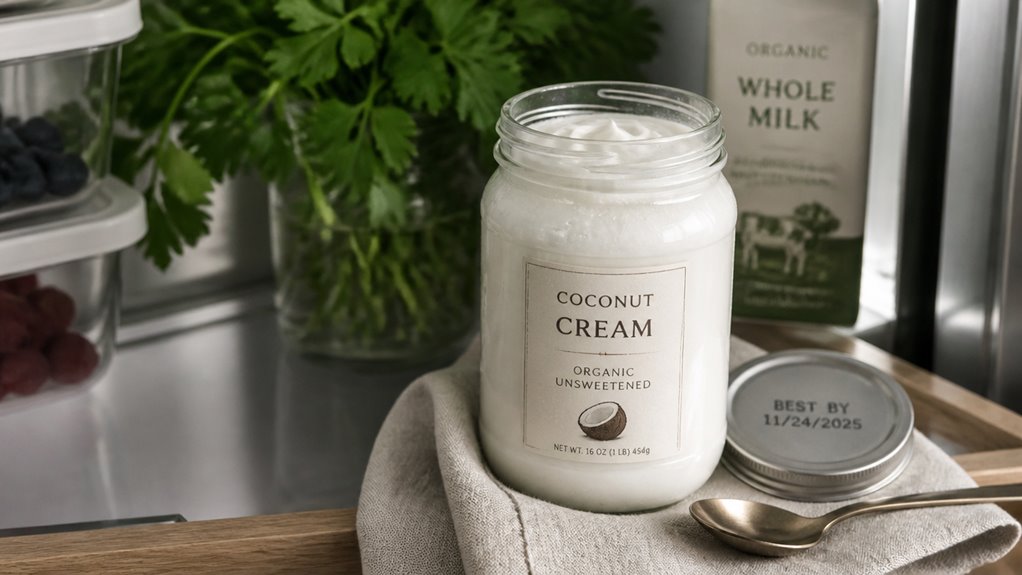
You can keep opened coconut cream fresh in your fridge for about 4 to 7 days if you transfer it immediately to an airtight container.
Store it at or below 40°F (4°C). Avoid keeping it in the original can because exposure to air and metal speeds up spoilage.
Unopened coconut cream lasts much longer, often until the best-by date. Proper storage and careful monitoring of smells, color, and texture help guarantee safety.
Explore further for detailed tips on storage and signs of spoilage.
Key Takeaways
- Opened coconut cream lasts 4 to 7 days refrigerated at or below 40°F (4°C) when stored in an airtight container.
- Unopened coconut cream remains good for up to 2 to 3 weeks in the fridge or until the printed best-by date.
- Avoid storing opened coconut cream in the original can to prevent spoilage from air and metal exposure.
- Homemade coconut cream spoils faster, typically within 1 to 3 days refrigerated due to lack of preservatives.
- Discard coconut cream if it shows sour smell, discoloration, texture changes, or mold regardless of storage time.
How Long Does Opened Coconut Cream Last in the Fridge?

Typically, opened coconut cream lasts about 4 to 7 days in the fridge when stored properly in an airtight container at 40°F (4°C) or below.
The USDA FoodKeeper guidance advises using opened canned coconut cream within 4 days, while other sources extend this to 5 to 7 days.
Avoid leaving coconut cream in the can after opening, as exposure to air and metal accelerates spoilage.
Airtight containers limit contamination and odor absorption, preserving freshness.
Temperature control is critical; maintaining refrigeration at or below 40°F slows microbial growth.
Signs of spoilage include sour smell, discoloration, texture changes, and mold, which indicate you should discard the product.
Consequently, to guarantee safety and quality, plan to consume opened coconut cream promptly within this 4 to 7-day window.
For best results, choose coconut cream products with higher fat content as they tend to maintain stability and quality longer when refrigerated.
How Long Does Unopened Coconut Cream Last?
Unopened coconut cream can really stick around longer than you might think, often lasting right up to the best-by date if you store it correctly.
Keeping it chilled is key! Make sure your fridge stays at or below 40°F (4°C) to help preserve its freshness and ward off spoilage.
Just a heads-up, though: the exact shelf life can vary a bit based on the packaging and how it was handled before it made its way to your fridge.
For best results, maintaining a cold fermentation environment slows down spoilage and extends shelf life.
Unopened Shelf Life
While unopened coconut cream remains sealed, its shelf life extends markedly compared to once opened. You can expect it to last several weeks in the fridge, often up to the printed best-by date, depending on packaging and prior handling.
Research shows unopened canned or carton coconut cream typically remains stable for 2 to 3 weeks when refrigerated properly. Factors like product type and sealing integrity influence this duration.
Unlike opened cream, which lasts 4 to 7 days, the sealed product avoids contamination and oxidation, preserving freshness longer. To maximize shelf life, keep it chilled consistently.
Always check the label’s date and inspect for any bulging or damage before use, as these indicate potential spoilage despite being unopened.
Proper storage in a food-grade container can further help maintain the quality and safety of coconut cream during refrigeration.
Storage Temperature Importance
Consistently maintaining a refrigerator temperature at or below 40°F (4°C) critically preserves the quality and safety of unopened coconut cream. At this temperature, metabolic and microbial activities slow markedly, extending the product’s shelf life.
Unopened coconut cream, when stored properly, can last up to the best-by date or for several weeks. Deviations above 40°F accelerate spoilage through increased bacterial growth and enzymatic degradation, reducing safe consumption time.
Additionally, temperature fluctuations can cause condensation inside packaging, promoting mold or bacterial contamination. To maximize unopened coconut cream longevity, make sure your fridge temperature remains stable and monitor it with a reliable thermometer.
This precise control is the most effective variable you can manage to keep coconut cream safe and fresh before opening. Using a frost-free freezer can help maintain consistent temperatures and prevent ice buildup that might affect product storage conditions.
Why You Should Never Store Coconut Cream in the Can After Opening?
Because the metal can becomes exposed to air and moisture after opening, storing coconut cream directly in the can accelerates spoilage and increases the risk of contamination.
The exposed metal facilitates oxidation and may react with the acidic components in the cream, altering its flavor and safety.
Additionally, cans are porous to odors and bacteria once opened, making them unsuitable for prolonged storage.
This exposure promotes microbial growth, reducing the cream’s safe fridge life below the typical 4 to 7 days.
Furthermore, the can’s edges can harbor bacteria, increasing contamination risk.
To preserve quality and minimize health hazards, transfer coconut cream to an airtight container immediately after opening.
This prevents oxidation, microbial contamination, and off-flavors, ensuring you consume the cream within its peak freshness window.
For best results, refrigeration should maintain a stable temperature to preserve the cream’s rich texture and prevent separation or spoilage.
How to Store Coconut Cream to Keep It Fresh Longer?
Properly storing coconut cream markedly extends its freshness and safety in the fridge. Once opened, transfer the cream to an airtight container immediately. Leaving it in the can accelerates spoilage due to exposure and metal interaction.
Keep the container tightly sealed to prevent odor absorption and contamination. Consistent cold storage at proper temperatures slows microbial growth and quality degradation.
To maximize shelf life, follow these evidence-based tips:
Use airtight containers to minimize air and moisture exposure.
Avoid storing in the original can after opening.
Refrigerate promptly after use, maintaining stable cold conditions.
Label the container with the opening date to track freshness accurately.
Adhering to these practices helps guarantee your coconut cream remains safe and flavorful for 4 to 7 days. Using oven-safe glass containers can also help maintain freshness by allowing easy reheating and storage without transferring food to another dish.
What Is the Best Temperature for Refrigerating Coconut Cream?
To keep your coconut cream fresh and safe, aim to refrigerate it at 40°F (4°C) or below. This temperature really helps slow down bacterial growth and keeps spoilage at bay.
It’s also super important to maintain a consistent cold storage environment. Any fluctuations in temperature can speed up deterioration, so try to keep your fridge stable. That way, your coconut cream stays as fresh as possible for longer!
Additionally, avoiding sudden temperature changes is essential to prevent thermal shock that can affect the quality of your coconut cream.
Ideal Refrigerator Temperature
Maintaining a refrigerator temperature at or below 40°F (4°C) is essential for preserving the freshness and safety of coconut cream. This temperature inhibits bacterial growth and slows down enzymatic spoilage, extending coconut cream’s usability.
To optimize storage, focus on these key points:
Store coconut cream in an airtight container immediately after opening to prevent contamination and odor absorption.
Avoid leaving coconut cream in its original can post-opening to reduce oxidation and spoilage.
Make certain your fridge’s thermostat is accurate and consistent to maintain stable cold conditions.
Regularly check your refrigerator’s temperature with a separate thermometer to confirm it stays at or below 40°F (4°C).
Using an airtight container with a silicone gasket can help maintain freshness and prevent spills during refrigeration.
Adhering to these guidelines helps you maximize coconut cream’s safe refrigerated lifespan and maintain its quality.
Temperature Impact On Freshness
Because coconut cream’s freshness hinges largely on temperature, storing it at the right cold setting is critical.
The optimal refrigeration temperature is 40°F (4°C) or below, as recommended by food safety standards.
At this temperature, microbial growth slows significantly, preserving coconut cream’s quality and extending its shelf life to about 4 to 7 days once opened.
Temperatures above 40°F accelerate spoilage by promoting bacterial and mold proliferation, which can cause sour odors and texture changes.
Conversely, temperatures much lower than 32°F risk freezing, which may alter texture negatively after thawing.
Maintaining a fridge temperature consistently at or below 40°F ensures you keep coconut cream safe and fresh without compromising its texture or flavor prematurely.
This precise control is essential for maximizing coconut cream’s usability.
Similarly, just as optimal hydration is crucial for preserving the texture and quality of Italian 00 flours in baking, maintaining precise temperature control is vital for coconut cream freshness.
Consistent Cold Storage
Consistently storing coconut cream at the proper temperature markedly extends its freshness and safety.
You should keep it refrigerated at or below 40°F (4°C) to slow bacterial growth and enzymatic spoilage.
This precise temperature control is essential for maintaining quality and preventing foodborne risks.
To optimize storage, consider:
Transfer opened coconut cream to an airtight container immediately.
Avoid storing coconut cream in the original can once opened.
Maintain refrigerator temperature consistently at 40°F (4°C) or lower.
Monitor for spoilage signs like sour smell or discoloration regularly.
For best results, establish a regular cleaning routine for your refrigerator to prevent cross-contamination and odors that could affect coconut cream quality.
How to Tell If Coconut Cream Has Gone Bad?
How can you confidently tell if your coconut cream has gone bad? First, check its smell; any sour or rancid odor signals spoilage.
Next, examine the color; yellowing, browning, or other discolorations indicate deterioration. Texture also matters: clumping, excessive separation, or an unusual consistency often mean it’s no longer safe.
Most critically, visible mold on the surface demands immediate disposal. If any of these signs appear, don’t risk consumption.
These indicators provide reliable evidence that the coconut cream’s quality and safety have declined, regardless of storage duration. When in doubt, trust sensory cues over dates.
Discarding coconut cream showing off smells, colors, textures, or mold is the safest choice to avoid foodborne illness.
Key Factors That Affect Coconut Cream’s Shelf Life
Several key factors influence how long coconut cream remains safe and fresh in your fridge. Understanding these variables helps you maximize shelf life and minimize waste.
Temperature control is vital. Keeping your fridge at or below 40°F (4°C) slows spoilage. Whether the coconut cream is opened or unopened dramatically impacts freshness duration.
Proper storage using an airtight container prevents contamination and odor absorption. Additionally, the product’s packaging and handling prior to refrigeration affect its longevity.
Temperature consistency maintains freshness.
Opened vs. unopened status alters shelf life.
Airtight containers reduce quality degradation.
Packaging type and pre-chill handling influence durability.
Homemade vs. Store-Bought Coconut Cream Shelf Life
When you compare homemade coconut cream to store-bought versions, you’ll notice a significant difference in shelf life.
Homemade coconut cream lacks preservatives and undergoes minimal processing, so it typically spoils within 1 to 3 days in the fridge.
In contrast, store-bought coconut cream, whether canned or carton-packaged, often contains stabilizers and is processed under sterile conditions.
This extends its unopened fridge life to several weeks or up to the best-by date.
Once opened, both types require airtight storage at 40°F (4°C) or below.
However, store-bought coconut cream generally remains safe for 4 to 7 days, per USDA guidance.
Homemade versions spoil faster due to exposure to environmental microbes.
Therefore, for longer usability, store-bought coconut cream offers a more reliable shelf life when refrigerated properly.
Safe Ways to Use Leftover Coconut Cream
Maximizing the use of leftover coconut cream involves storing it properly and incorporating it into recipes that tolerate its unique texture and flavor.
First, transfer it to an airtight container and refrigerate at 40°F (4°C) or below to slow spoilage.
Use it within 4 to 7 days for safety.
You can confidently include leftover coconut cream in:
Curries and soups, where its richness blends seamlessly.
Smoothies and desserts, enhancing creaminess without overpowering.
Baking recipes as a dairy substitute, maintaining moisture.
Coffee or tea as a flavor-rich creamer alternative.
Avoid leaving it in the can to prevent contamination.
Always check for off smells, discoloration, or mold before use.
Following these practices guarantees safe consumption and reduces waste while leveraging coconut cream’s versatility.
Frequently Asked Questions
Can Coconut Cream Be Frozen to Extend Its Shelf Life?
Yes, you can freeze coconut cream to extend its shelf life. Just transfer it to an airtight container, leaving some space for expansion.
Freezing slows spoilage and keeps it safe for several months. However, expect some texture changes, like separation or graininess, after thawing.
To restore consistency, stir or blend it well before use. Freezing is a practical option if you won’t use it within a week or so.
Is It Safe to Consume Coconut Cream Past the Best-By Date?
You might think coconut cream past its best-by date is unsafe, but it’s not always the case. The best-by date marks quality, not safety.
If the cream looks, smells, and feels normal—no sour odor, discoloration, or mold—it’s usually safe to consume.
Yet, since spoilage risks increase over time, always rely on sensory checks rather than dates alone. When in doubt, err on the side of caution and discard it.
Does Coconut Cream Expire Faster if Left Out at Room Temperature?
Yes, coconut cream does expire faster if left out at room temperature. Without refrigeration, harmful bacteria and mold can grow quickly, especially once opened.
You should never leave coconut cream unrefrigerated for more than two hours to avoid spoilage and foodborne illness. Keeping it cold slows microbial growth and preserves quality.
For safety, transfer to an airtight container and refrigerate promptly after opening.
Can You Use Coconut Cream in Skincare After It’s Expired?
You shouldn’t use expired coconut cream in skincare because it can harbor bacteria or mold that irritate your skin.
Although some believe its natural fats remain beneficial, spoilage changes its chemical profile.
This increases the risk of allergic reactions or infections.
For safety, always check for sour smell, discoloration, or texture changes.
If any signs appear, discard it rather than applying it topically.
Fresh coconut cream or dedicated skincare products are safer choices.
How Does the Fat Content Affect Coconut Cream’s Fridge Shelf Life?
Higher fat content in coconut cream generally shortens its fridge shelf life because fats oxidize and go rancid faster, especially when exposed to air.
You’ll notice that richer coconut cream spoils more quickly due to lipid degradation. To extend freshness, store it airtight and cold.
Lower-fat versions tend to last a bit longer as they contain fewer unstable lipids.
Always check for off smells or discoloration before use.
Store It Right and Reduce Waste
Think of coconut cream like a delicate bloom. Its freshness signals the peak of flavor and safety. Store it properly in a sealed container at ideal fridge temperatures to preserve its quality.
Once opened, use it within a few days to avoid spoilage, just as you wouldn’t keep a cut flower too long. By understanding its shelf life and handling it with care, you guarantee every use is both safe and delicious. This maximizes its value in your kitchen.