Planetary vs Spiral Mixer: Best Choice for Bakers
If you need versatile mixing for batters, creams, and light doughs in smaller batches, a planetary mixer fits well with its interchangeable attachments and broad contact mixing.
But if you’re focused on large batches of dense, high-gluten dough like bread or pizza, a spiral mixer’s rotating bowl and spiral hook deliver superior gluten development and temperature control.
Your choice depends on volume, dough type, and recipe variety. Keep exploring to match the right mixer to your kitchen’s needs and workflow.

- Luna Planetary Countertop mixer is an elite machine for the gourmet chef; 11 mixing speeds, front...
- Accessories include stainless steel bowl, whisk and dough Hook, aluminum mixing paddle and rubber...
- This heavy duty big mixer machine features a 1/2 horse power gear driven induction motor with a...
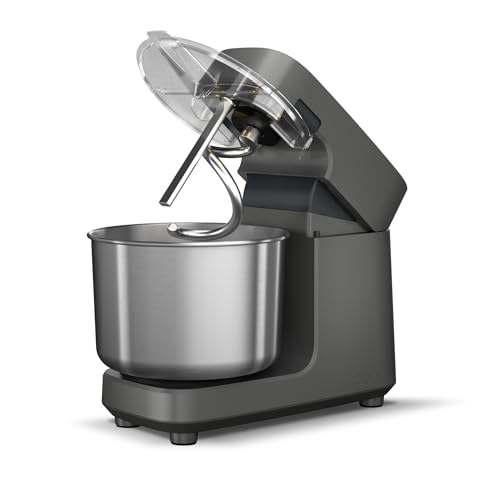
- Better Dough at Home - Make bakery-quality dough at home with groundbreaking spiral mixing...
- Professional Spiral Mixing Technology - The Spiral mixer technology, with a Rotating Bowl, Spiral...
- Precision Control - Fine-tune your mixing through 58 speed settings, from 60 RPMs to over 1,000.
Key Takeaways
- Planetary mixers offer versatile mixing for batters, creams, and light doughs with interchangeable attachments suitable for varied recipes and smaller batches.
- Spiral mixers specialize in kneading dense, high-gluten doughs like bread and pizza, excelling in large batch production with consistent dough quality.
- Spiral mixers generate less heat during mixing, preserving dough temperature and gluten strength for better elasticity and gas retention.
- Planetary mixers tend to heat dough more and may overwork dense mixtures, making them less ideal for heavy dough but better for lighter mixtures.
- Choosing between mixers depends on production focus: spirals for high-volume, dough-centric operations; planetary for multi-purpose, varied recipe kitchens.
Head-to-Head Comparison and Key Differences between Planetary and Spiral Mixer
| Feature | Planetary Mixer | Spiral Mixer | Best For |
|---|---|---|---|
| Mixing Motion | Attachment orbits a fixed bowl for broad ingredient contact | Spiral hook and rotating bowl create focused kneading | Planetary for multi-purpose mixing; spiral for dough development |
| Dough Performance | Handles light doughs and batters well | Excels with dense, high-gluten dough | Planetary for variety; spiral for bread and pizza dough |
| Gluten Development | Adequate for lighter mixes, less efficient on heavy dough | Strong and efficient gluten formation with gentle kneading | Spiral for elastic, structured dough |
| Heat Control | May produce more friction heat during longer mixing | Generates less heat, helping preserve dough temperature | Spiral for temperature-sensitive dough |
| Batch Size | Best for small to mid-size batches | Built for larger batch production | Planetary for smaller kitchens; spiral for bulk output |
| Versatility | Highly versatile with whisks, beaters, and hooks | Specialized for dough-only mixing | Planetary for varied recipes; spiral for focused bakery production |
| Cost | Usually more affordable upfront | Typically higher investment with specialized value | Planetary for budget flexibility; spiral for high-volume dough work |
How Planetary and Spiral Mixers Move Differently?
Understanding how planetary and spiral mixers move differently can help you choose the right tool for your mixing needs.
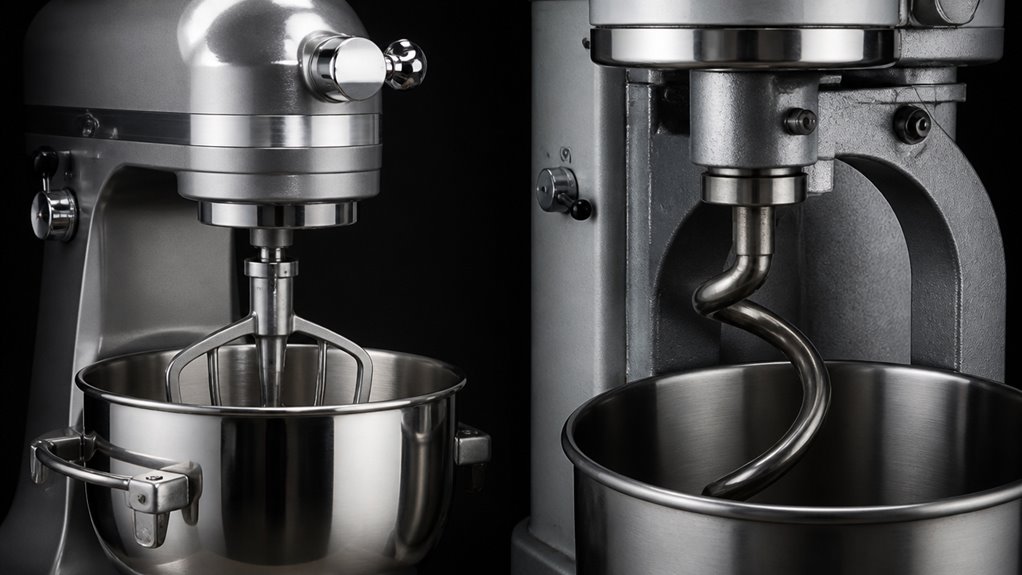
Planetary mixers use an attachment that orbits around a fixed bowl, ensuring broad, thorough contact with your ingredients. This motion suits a wide variety of tasks, from whipping creams to light doughs, thanks to interchangeable tools like whisks and beaters.
Planetary mixers orbit a fixed bowl, delivering versatile mixing with tools like whisks and beaters.
In contrast, spiral mixers combine a rotating bowl with a spiral hook, focusing intense kneading on dough.
This design excels at developing gluten structure and handling dense, heavy doughs without overheating.
You’ll find spiral mixers simpler mechanically and built for larger batches, especially where dough quality and consistency matter most. Knowing these motion differences helps you match your mixer to your production style and ingredient demands.
For sourdough bread making, many bakers prefer hand mixing or using a dough whisk to avoid overworking the dough and better feel its texture.
Which Mixer Works Best for Different Baking Needs?
When it comes to baking, picking the right mixer can make a huge difference. You really want to match your mixer to the type of baking you do most often. For instance, if you’re whipping up batters, creams, or light doughs, a planetary mixer is your best bet. It handles those tasks like a champ!
On the other hand, if you’re working with dense, high-gluten doughs, a spiral mixer is the way to go. It’s designed to knead without generating too much heat, which is super important for maintaining dough quality. So, understanding these differences is key. It’ll help you choose the right tool for consistent results and a smoother baking experience! Additionally, using the right equipment like a commercial dough sheeter can enhance dough consistency and streamline your workflow.
Ideal Applications Comparison
When choosing between a planetary and spiral mixer, consider the specific baking tasks you handle most often.
If you frequently whip creams, meringues, or prepare batters and icings, a planetary mixer’s versatility with multiple attachments suits you best.
It handles a wide range of recipes and smaller batches efficiently.
On the other hand, if your focus is bread, pizza, or bagel dough, a spiral mixer excels by kneading dense, high-gluten doughs gently and thoroughly.
This supports larger batch sizes.
Spiral mixers are built for dough-heavy workloads, preserving dough temperature and structure better during long kneading.
Additionally, for optimal bread-making results, pairing a spiral mixer with durable stainless steel pans can enhance heat distribution and loaf quality.
Dough Quality Differences
If your baking revolves around dough quality, the choice between planetary and spiral mixers directly impacts your results. Spiral mixers excel at developing gluten efficiently, producing dough with superior elasticity and gas retention, ideal for bread, pizza, and bagels.
Planetary mixers handle dough adequately but may strain dense mixtures and generate more heat, risking overworked dough.
Consider these points when choosing:
- Gluten Development: Spiral mixers create stronger gluten networks gently, supporting better dough structure.
- Heat Control: Spirals generate less friction heat, preserving dough fermentation and consistency.
- Dough Type: Planetary mixers suit lighter doughs; spirals work best for high-gluten, heavy doughs.
Choose spirals for dough-centric baking and planetary if you need versatility beyond dough. Using the right yeast with your mixer can further enhance dough quality and rise consistency.
How Mixers Affect Dough Quality and Gluten?
Because dough quality hinges on gluten development, the mixer you choose directly impacts your final product’s texture and structure. Spiral mixers excel at developing gluten efficiently while treating dough gently, preserving elasticity and extensibility.
Planetary mixers can handle dough but may overwork thick doughs, risking toughness.
Here’s a quick comparison:
| Mixer Type | Gluten Development | Dough Handling |
|---|---|---|
| Spiral Mixer | Strong, efficient, gentle | Ideal for high-gluten doughs |
| Planetary Mixer | Adequate but less efficient | Better for lighter doughs |
| Impact | Texture, gas retention | Risk of overmixing with heavy dough |
Choosing a spiral mixer helps you create doughs with excellent structure and gas retention. This is perfect for artisan breads and pizzas. Planetary mixers work well if you need versatility, but don’t expect top gluten quality on heavy doughs. Using the right tools, such as stainless steel bowls, can further support optimal dough development and fermentation.
Why Dough Temperature Matters for Mixing?
Gluten development plays a big role in dough quality, but the temperature of your dough during mixing can be just as influential. When your dough heats up too much, it speeds fermentation prematurely and weakens gluten structure.
Dough temperature during mixing is as crucial as gluten development for quality and fermentation control.
That’s why controlling dough temperature during mixing is essential for consistent results.
Here’s what you need to focus on:
- Friction heat: Mixers like planetary types generate more heat due to their motion, so watch the dough temperature closely.
- Fermentation timing: Cooler dough keeps yeast activity predictable, preventing overproofing.
- Texture and elasticity: Lower dough temperatures preserve gluten strength, improving dough extensibility and gas retention.
Using the right tools during mixing and scoring ensures that dough handling complements temperature control for optimal loaf quality.
Comparing Capacity and Production Scale of Mixers
When it comes to mixers, you’ll notice that planetary mixers typically range from smaller to mid-size models. These are great for whipping up a variety of recipes in modest batches.
They really shine when you’re working on different types of mixes, making them quite versatile for smaller operations.
Now, if you’re looking to scale up, spiral mixers are the way to go. They come in larger floor units that are specifically designed for bulk dough production.
So, if volume is your main focus, these mixers are definitely your best bet.
Understanding the differences in size and capacity really helps you choose the right mixer for your production needs. It’s all about matching the mixer to what you’re aiming to achieve!
Additionally, considering the operation modes of dough handling equipment can further optimize your workflow based on batch size and dough type.
Mixer Size Variations
When choosing between planetary and spiral mixers, understanding their size variations can greatly impact your production efficiency.
Spiral mixers generally come in larger, floor-standing models designed for high-volume dough production. Planetary mixers are found in smaller to mid-size formats suited to versatile kitchen tasks. This difference influences your workflow markedly.
Consider these points:
- Spiral mixers handle bigger batch sizes efficiently, making them ideal when dough volume dominates your production.
- Planetary mixers excel in smaller batches and diverse recipes, offering flexibility without taking up excessive space.
- The physical footprint and capacity of your mixer should align with your kitchen layout and production goals to optimize output and space usage.
Knowing these variations helps you pick a mixer that matches your scale and operational needs precisely. Additionally, choosing the right equipment and maintaining it properly ensure peak performance and longevity in your kitchen operations.
Batch Volume Capacity
Understanding how much dough your mixer can handle per batch directly impacts your production planning. Spiral mixers typically offer larger batch volume capacity compared to planetary mixers, making them ideal when you need to produce bulk dough efficiently.
Their design allows you to mix denser, high-gluten doughs in bigger quantities without compromising dough quality. On the other hand, planetary mixers excel with smaller to mid-size batches and greater recipe variety, which suits kitchens handling multiple product types.
If you regularly switch between batters, creams, and doughs, planetary capacity aligns better with your needs. But if your focus is consistent, high-volume bread or pizza dough, a spiral mixer’s larger capacity will save mixing cycles and time.
Choosing the right capacity means matching your batch sizes to the mixer’s strengths for smoother production flow. Additionally, selecting equipment with durable materials such as stainless steel construction ensures long-term resilience in demanding kitchen environments.
Production Scale Suitability
Though both planetary and spiral mixers serve important roles in food production, their suitability for different scales of operation varies markedly.
When deciding which mixer fits your production scale, consider these key points:
- Batch Size and Volume: Spiral mixers handle larger dough volumes per batch. This makes them ideal for high-capacity bakeries or pizzerias focused on dough production. Planetary mixers work better for smaller batches or varied recipes.
- Production Consistency: Spirals maintain consistent dough quality in large batches due to their focused kneading action. Planetary mixers offer versatility for diverse mixing tasks but less efficiency at scale.
- Operational Focus: If your operation centers on dough-heavy output, a spiral mixer delivers efficiency and capacity. For multi-purpose kitchens with varied products, planetary mixers provide the necessary flexibility.
Additionally, selecting equipment with precision control features can further enhance efficiency and product consistency at different production scales.
Choose based on your production volume and product focus to maximize efficiency.
Attachments, Versatility, and What You Can Do With Each Mixer
Since your kitchen handles a variety of recipes, you’ll appreciate how planetary mixers come equipped with multiple attachments like dough hooks, flat beaters, and whisks. This allows you to switch seamlessly between tasks.
This versatility means you can whip meringues, mix batters, or knead light doughs all with one machine. On the other hand, spiral mixers focus solely on dough, featuring a single spiral hook and rotating bowl designed for intensive kneading.
While they excel at developing strong gluten in bread and pizza dough, they lack the adaptability for creams or batters. If your kitchen demands variety, the planetary mixer’s range of attachments gives you more options.
But if dough is your priority, the spiral mixer provides specialized, efficient mixing that’s hard to match.
Cost Differences and What You Get for Your Money
Choosing the right mixer also means balancing your budget with what you need from the machine.
Planetary mixers usually cost less upfront, making them ideal if you want versatility without breaking the bank.
Spiral mixers tend to be pricier but excel in heavy dough handling and larger batch production, which justifies their higher cost if your focus is dough-centric.
Consider these points:
- Initial Investment: Planetary mixers cost less and cover multiple tasks. Spiral mixers demand a bigger investment but specialize in dough.
- Long-term Value: Spirals reduce dough temperature rise and improve gluten development, saving you quality losses.
- Production Scale: If you need high-volume dough mixing, a spiral’s efficiency can offset the higher price.
Weigh your priorities carefully to get the best value for your money.
Choosing the Right Planetary or Spiral Mixer for Your Kitchen or Bakery
Assess your kitchen or bakery’s specific needs before deciding between a planetary or spiral mixer.
Evaluate your bakery’s unique requirements before choosing between a planetary or spiral mixer for optimal results.
If you handle a variety of recipes, such as batters, creams, and light doughs, a planetary mixer’s versatility and multiple attachments suit you best.
But if your focus is bread, pizza, or high-gluten dough production, a spiral mixer excels with efficient gluten development and cooler mixing, preserving dough quality.
Consider batch size: spiral mixers handle larger dough volumes, ideal for bulk production, while planetary mixers fit smaller, varied batches.
Also, think about space and budget. Planetary mixers are usually smaller and more affordable, while spiral mixers are larger and specialized.
Ultimately, matching your mixer to your workflow and product demands guarantees better results and smoother kitchen operations.
Frequently Asked Questions
How Do Cleaning and Maintenance Differ Between Planetary and Spiral Mixers?
You’ll find cleaning a planetary mixer easier because of its simpler bowl design and detachable attachments like beaters and hooks.
Spiral mixers often have heavier parts and a fixed spiral hook, making thorough cleaning more time-consuming.
Maintenance-wise, planetary mixers need occasional lubrication and checking of multiple attachment points.
Spiral mixers require more focus on the gear and motor due to heavier dough loads.
Both need regular cleaning to prevent buildup and guarantee longevity.
Can Either Mixer Handle Gluten-Free or Specialty Flours Effectively?
When working with gluten-free or specialty flours, you’ll find planetary mixers handle them like a champ due to their versatility and gentle mixing action.
They won’t overwork delicate batters or non-gluten doughs.
Spiral mixers, built for heavy gluten development, might be overkill and too vigorous.
What Are the Typical Noise Levels During Operation for Each Mixer Type?
You’ll find that planetary mixers usually run a bit noisier due to their complex attachment movement and multiple speed settings.
Spiral mixers tend to operate quieter since their simpler, dough-focused mechanism creates less vibration and friction noise.
If you’re working in a busy kitchen, the lower noise of a spiral mixer can be less disruptive, especially during long dough mixing sessions.
Still, noise levels depend on motor quality and maintenance.
Are There Energy Consumption Differences Between Planetary and Spiral Mixers?
Energy use is the backbone of your mixer’s efficiency.
Spiral mixers generally consume less energy than planetary ones because their simpler mechanics and lower friction mean they work smarter, not harder.
If you’re mixing dense doughs regularly, a spiral mixer keeps energy costs down while protecting dough quality.
Planetary mixers, juggling various tasks, may draw more power but offer versatility.
Your choice depends on balancing energy savings with your mixing needs.
How Do Mixer Warranties and Service Support Compare by Brand and Type?
You’ll find that warranties and service support vary noticeably by brand rather than mixer type.
Top brands usually offer 1-3 year warranties, covering parts and labor.
Spiral mixers, being more specialized, often come with stronger service contracts due to heavier use in bakeries.
Planetary mixers may have broader support networks because they’re more common in diverse kitchens.
Always check if local technicians are available to avoid downtime.
Match Your Mixer to Your Kitchen’s Future Needs
Choosing between a planetary and spiral mixer is like picking your baking’s rhythm: steady versatility or focused power.
You’ll want the planetary for diverse tasks and smaller batches, while the spiral shines with large doughs and perfect gluten.
Remember, your dough’s temperature and mixer capacity aren’t just details; they’re the quiet conductors of your bakery’s success.
Knowing these nuances helps you invest wisely, turning every mix into a masterpiece.
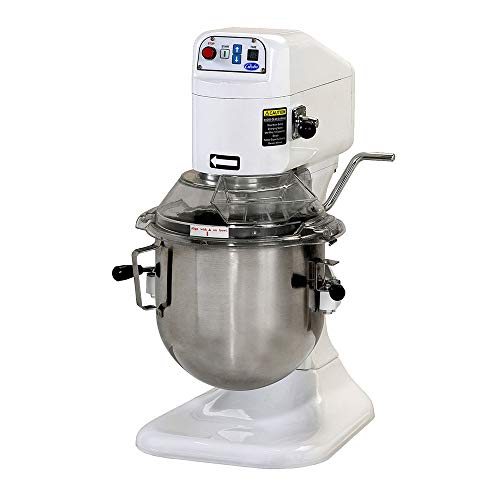
- SPACIOUS 8 QUART BOWL: This mixer features a sleek, 8 Qt. stainless steel bowl that provides plenty...
- STURDY AND SAFE DESIGN: This mixer was designed with sturdy dual bowl clamps to create a firm hold...
- EASY TO USE CONTROL PANEL: The control panel on this machine is very simple to manage, it features a...
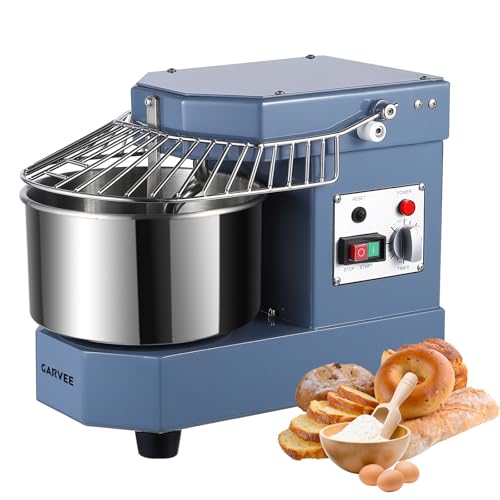
- Large Bowl Capacity: Our commercial stand mixer is equipped with a bowl 10.5 QT, allowing you to mix...
- Powerful Dual Rotation Design: Our commercial dough mixer with 650W copper motor. Besides, with a...
- Easy Operation: It is effortless for you to control the mixing process with simple buttons and...
Last update on 2026-09-09 / Affiliate links / Images from Amazon Product Advertising API