
Does Air Fryer Dry Out Food? Tips to Keep It Juicy
Yes, air fryers can dry out your food if you use excessively high heat or overcook it. This forces moisture out through rapid evaporation and protein contraction.
Overcrowding the basket restricts airflow, causing uneven drying. Skipping oil or marinades removes barriers that preserve juiciness.
Proper temperature control, oil application, and basket arrangement help maintain moisture. Techniques like steaming or resting also play vital roles.
To optimize your results, understanding these factors is essential.
Key Takeaways
- Rapid hot air circulation in air fryers can cause surface moisture to evaporate quickly, potentially drying out food if not managed properly.
- High heat and extended cooking times increase internal moisture loss, leading to dry and tough textures in meat.
- Applying oil or marinades helps retain moisture by creating a barrier and enhancing juiciness during air frying.
- Proper basket arrangement, flipping food, and preheating improve even cooking, minimizing uneven drying and moisture loss.
- Using foil, steam, and resting techniques can preserve moisture and prevent food from drying out after air frying.
Know How Air Fryers Impact Food Juiciness
| Factor | How It Affects Moisture | Recommended Action |
|---|---|---|
| High Heat & Temperature | Accelerates rapid moisture evaporation causing dryness, especially in lean meats. | Cook between 350–380°F and avoid prolonged exposure to prevent dehydration. |
| Airflow & Basket Arrangement | Improper spacing or overcrowding restricts airflow, causing uneven drying and moisture loss. | Arrange food in a single layer with space; flip midway for uniform cooking. |
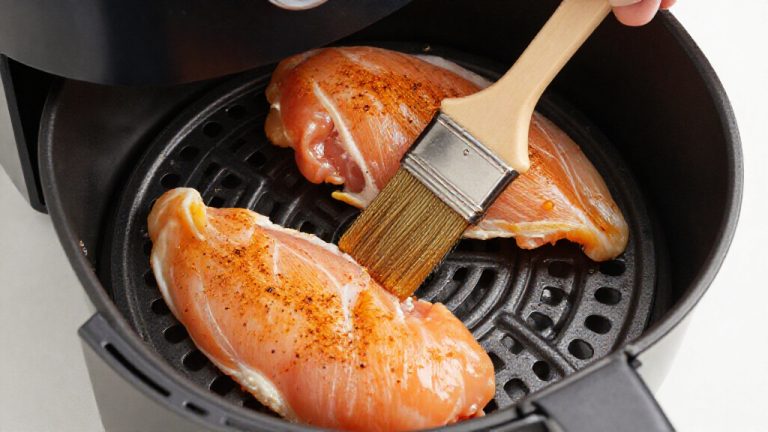
| Oil and Marinades | Create a protective moisture barrier that slows evaporation and enhances juiciness. | Apply a light coating of oil or marinate for at least 30 minutes before air frying. |
| Cooking Time Management | Overcooking causes excessive protein contraction and intracellular water loss. | Use a food thermometer and check food early to avoid drying out. |
| Foil and Steam Techniques | Use of foil and added moisture creates a humid microenvironment to lock in juices. | Wrap food tightly and add small water or broth amounts for steaming during cooking. |
| Resting Food Post-Cooking | Allows internal juices to redistribute, enhancing tenderness and moisture retention. | Rest air fried food for 3–5 minutes before serving or reheating. |
Why Air Fryers Make Food Dry Out?

Although air fryers offer a convenient way to cook food quickly, their mechanism of circulating powerful blasts of hot air causes rapid moisture evaporation. This often results in dryness.
You’ll notice that this high-speed air circulation removes surface moisture faster than conventional ovens, accelerating dehydration. Additionally, since air frying uses markedly less oil than deep frying, lean meats lack the fat barrier that helps retain internal juices, exacerbating dryness.
The rapid heat exposure also crisps the exterior before the interior finishes cooking, causing uneven moisture distribution. If you overcook or use excessively high temperatures, moisture loss intensifies.
Understanding these mechanistic causes helps you adjust your technique to mitigate dryness, rather than attributing it solely to the appliance itself.
Using 360° airflow technologies can help achieve more even cooking and reduce uneven moisture loss.
How High Heat Dries Meat in Air Fryers?
When you cook meat at high temperatures in an air fryer, something interesting happens. The intense heat really kicks into gear, rapidly evaporating moisture from both the surface and the inside of the meat. This quick evaporation gives the exterior that nice, crispy texture we all love. But here’s the catch: while the outside gets all crispy and golden, the inside might end up undercooked or too dry if it’s exposed for too long.
Now, if the temperature goes beyond the ideal range, things can get a bit tricky. You risk accelerating moisture loss even more, which can lead to tough and dehydrated meat. Nobody wants that! So, it’s all about finding that sweet spot in temperature to keep your meat juicy and delicious. Using a steam air fryer with integrated steam delivery systems can help retain moisture while achieving that perfect crispiness.
Rapid Moisture Evaporation
Because air fryers rely on powerful blasts of hot air circulating at high speeds, they rapidly evaporate moisture from meat surfaces, often faster than traditional cooking methods.
This accelerated evaporation occurs as hot air strips surface water molecules, creating a dry environment that pulls internal moisture outward.
The rapid airflow removes steam quickly, preventing reabsorption and accelerating dehydration.
| Factor | Effect on Moisture Evaporation | Outcome |
|---|---|---|
| High Air Velocity | Increases evaporation rate | Faster surface drying |
| Elevated Temperature | Raises water vapor pressure | Accelerates moisture loss |
| Low Humidity | Limits moisture retention | Intensifies dehydration |
You’ll notice that this combination intensifies moisture loss.
It requires precise temperature control and timing to prevent drying out meat inside the air fryer. Efficient models with precise temperature control help maintain moisture balance while achieving crisp textures.
Surface Crisping Effects
If you apply high heat too quickly in an air fryer, the exterior of the meat crisps before the interior finishes cooking. This creates a moisture gradient that drives internal water outward.
This rapid surface drying forms a hardened crust, increasing vapor pressure inside the meat. As a result, water migrates from the interior toward the surface, where intense heat accelerates evaporation.
The high-speed air circulation compounds this effect by continuously removing surface moisture, preventing reabsorption. Consequently, the interior loses hydration prematurely, leading to a drier texture.
You can mitigate this by controlling heat application, ensuring the meat cooks evenly without overly crisping the surface first. Proper temperature management balances Maillard reactions and moisture retention, preserving juiciness while achieving desirable crispness.
Additionally, excessive steam and pressure buildup inside the cooking chamber caused by moisture evaporation can affect cooking performance and safety, making it important to avoid excess pressure when using an air fryer.
Temperature-Induced Dryness
Controlling heat application is key to preventing moisture loss. Pushing temperatures too high accelerates dehydration inside the air fryer.
High heat rapidly evaporates water within the meat, especially when air circulates at high speed. This strips moisture faster than conventional ovens, causing the exterior to crisp prematurely and leaving the interior dry.
To manage temperature-induced dryness effectively, you should:
- Maintain cooking temperatures within 350–380°F to balance doneness and moisture retention.
- Avoid extended cooking times that exacerbate internal dehydration.
- Use a food thermometer to prevent overcooking beyond safe internal temperatures.
Preheating the air fryer properly also helps achieve even heat distribution, which can prevent uneven cooking and reduce the risk of excess moisture loss.
How Overcooking Makes Air Fried Food Dry and Tough?
When you overcook food in an air fryer, the intense heat rapidly evaporates internal moisture, leading to dryness and toughness.
Overcooking in an air fryer quickly evaporates moisture, causing food to become dry and tough.
High-speed air circulation accelerates water loss, especially when cooking times exceed ideal durations.
Extending cooking time beyond necessity strips away essential juices, causing proteins to denature excessively and fibers to contract tightly.
This contraction forces out intracellular water, reducing tenderness.
Additionally, not monitoring internal temperature with a thermometer increases the risk of overshooting the critical endpoint, further dehydrating the food.
Overcooking at temperatures outside the ideal 350–380°F range exacerbates this effect, as excessive heat dries the surface quickly while the interior remains tough.
To avoid this, you should check food early and adjust cooking duration precisely.
This prevents the structural breakdown that results in dry, tough air-fried dishes.
Regular cleaning of the air fryer basket also helps maintain optimal performance and consistent cooking results.
How Oil and Marinades Keep Air Fryer Food Juicy?
You might’ve noticed that when you add a thin layer of oil to your food, it really makes a difference. It creates a moisture barrier that helps slow down evaporation while air frying. Pretty neat, right?
Now, let’s talk about marinades. They’re packed with water and salt, which actually help your food hold onto moisture better. By changing the structure of the proteins, they keep everything nice and juicy.
Using an air fryer with 360° hot air circulation technology can also help cook food evenly without drying it out.
Oil’s Moisture Barrier
Applying oil or marinades creates a protective moisture barrier on the surface of food. This markedly reduces rapid water evaporation during air frying.
This barrier slows down moisture loss by sealing the food’s exterior, minimizing direct exposure to circulating hot air. Oil also promotes even heat distribution, preventing premature surface drying.
When you apply oil before air frying, you:
- Limit surface moisture evaporation, maintaining juiciness.
- Create a heat-conductive layer that crisps exterior without overcooking interior.
- Enhance browning via the Maillard reaction, improving texture and flavor.
This moisture barrier is vital because air fryers rely on convective hot air. This process accelerates water loss compared to traditional ovens.
Without this layer, your food dries out faster, especially lean proteins. Consequently, a precise application of oil or marinade is essential for optimizing moisture retention and achieving tender, juicy results.
Using non-toxic air fryer baskets with ceramic coatings can further enhance cooking quality by ensuring safe, even heat transfer without harmful chemical interference.
Marinade’s Water Retention
Although air frying uses intense circulating heat that can rapidly dehydrate food, marinating introduces water and solutes into the muscle fibers, enhancing internal moisture retention during cooking.
When you marinate, osmotic pressure draws water and dissolved substances like salts and sugars into the tissue, increasing the muscle’s water-holding capacity. This hydration reduces moisture loss caused by high-speed hot air circulation.
Additionally, marinades often contain oils that form a thin surface layer, limiting evaporation. Studies show marinating for at least 30 minutes improves juiciness by maintaining intracellular water despite rapid external dehydration.
Using oil and marinades also helps in retaining moisture and preventing dryness during air frying.
Enhancing Flavor And Juiciness
Building on how marinating boosts internal water retention, incorporating oil plays a vital role in preserving surface moisture and enhancing flavor during air frying.
Oil forms a protective barrier that slows moisture evaporation caused by high-speed hot air circulation. It also facilitates Maillard reactions, improving taste and texture.
To optimize juiciness and flavor, focus on these key factors:
- Apply 1 teaspoon to 1 tablespoon of oil evenly to food surfaces to maintain moisture.
- Combine oil with marinades to enhance water retention and flavor absorption.
- Use oils with high smoke points (e.g., avocado, grapeseed) to prevent premature drying at typical air fryer temperatures (350–380°F).
Together, oil and marinades mitigate drying effects inherent in air frying, ensuring your food remains juicy and flavorful. Using air fryer liners can also help retain moisture by preventing direct exposure to hot air and reducing evaporation.
Why Basket Arrangement Matters for Juicy Air Frying?
When you arrange food properly in the air fryer basket, you guarantee peak airflow that prevents uneven drying and promotes juicier results.
Placing items in a single layer with adequate space allows hot air to circulate uniformly, reducing moisture loss caused by trapped steam. Overcrowding restricts airflow, causing uneven heat distribution and localized dehydration in denser clusters.
Additionally, neglecting to flip food midway intensifies this imbalance, drying out certain areas while leaving others undercooked. Scientific analyses confirm that ideal spacing minimizes the drying rate by facilitating more consistent surface temperature control.
Easy Tips to Stop Air Fryer Food From Drying Out
Implementing a few targeted techniques can markedly reduce moisture loss during air frying, preserving food’s juiciness and texture.
You should prioritize controlling temperature and cooking time to avoid over-dehydration. Preheating the air fryer for 3–4 minutes accelerates cooking, minimizing moisture evaporation.
Applying a light oil coating (1 teaspoon to 1 tablespoon) creates a moisture barrier, reducing surface dryness.
Focus on these practices to maintain moisture:
Use medium heat (350–380°F) to balance cooking speed and moisture retention.
Flip food halfway to ensure even cooking and prevent localized drying.
Check food earlier than standard times to avoid overcooking and excessive moisture loss.
These evidence-based steps help you achieve tender, juicy results consistently in your air fryer.
How to Use Foil and Steam to Lock in Moisture?
Frequently, using foil and steam techniques effectively locks in moisture during air frying, preventing excessive drying.
Using foil and steam during air frying helps retain moisture and prevents food from drying out.
When you wrap food tightly in aluminum foil, you create a barrier that minimizes direct hot air exposure, reducing rapid moisture evaporation.
Adding a small amount of water or broth inside the foil pouch generates steam, which maintains a humid microenvironment.
This steam slows moisture loss by counteracting the air fryer’s high-speed circulation that typically accelerates dehydration.
Make certain the foil is securely sealed to trap steam but avoid blocking airflow entirely, which can hinder cooking.
Using this method helps balance the crisp exterior with a juicy interior by preventing the internal temperature from rising too fast and drying out the food’s core, especially with lean proteins.
Resting and Reheating: Tips for Juicier Air Fried Food
Although air frying cooks food quickly, allowing it to rest after cooking markedly improves juiciness. This resting period lets internal juices redistribute evenly.
When you cut into food immediately, those hot juices escape, causing dryness. Resting for 3–5 minutes stabilizes temperature gradients and moisture content, enhancing tenderness.
For reheating, avoid high temperatures that accelerate moisture loss. Instead, apply these evidence-based tips:
Reheat at 300–320°F to gently warm food without over-drying.
Add a splash of water or cover loosely with foil to create steam and retain moisture.
Use short intervals, checking frequently, to prevent overheating and texture degradation.
Adjusting Temperature and Time to Keep Food Moist
When you adjust the air fryer’s temperature and cooking time carefully, you can markedly reduce moisture loss and maintain juiciness.
Avoid cooking at excessively high temperatures above 380°F, which accelerate moisture evaporation and cause premature surface drying before the interior is fully cooked.
Instead, use a medium range of 350–380°F to balance heat penetration and moisture retention.
Monitor the food early and reduce the cooking time as needed to prevent overcooking, which strips essential internal water.
Preheating the air fryer for 3–4 minutes enhances heat distribution, allowing quicker cooking and less moisture loss.
Utilize a food thermometer to ensure precise internal temperatures, avoiding unnecessary extended cooking.
Frequently Asked Questions
Can Air Fryers Cause Food to Lose Nutrients?
Yes, air fryers can cause some nutrient loss, particularly heat-sensitive vitamins like vitamin C and certain B vitamins. The rapid, high-temperature cooking promotes nutrient degradation faster than gentler methods.
However, air frying generally preserves more nutrients than deep frying because it uses less oil and shorter cook times. To minimize nutrient loss, you should cook at moderate temperatures (350–380°F) and avoid overcooking, ensuring food retains maximum nutritional value.
Does Air Frying Affect the Taste Compared to Traditional Frying?
You’ll notice air frying produces a different taste than traditional frying because it uses hot air circulation instead of submerging food in oil.
This results in less oil absorption, so flavors are less greasy and more focused on the food’s natural profile.
While air frying crisps the exterior effectively, it can slightly alter texture and reduce the richness that oil imparts.
This makes taste cleaner but less indulgent compared to deep frying.
Are Certain Foods More Prone to Drying Out in Air Fryers?
You’ll notice lean meats like chicken breast and fish dry out faster in air fryers because hot air evaporates moisture rapidly. This happens up to 50% faster than in ovens.
Their low fat content means less natural lubrication, so you must adjust cooking time and temperature carefully. Foods with higher fat or water content retain moisture better.
Using oil coatings, marination, or wrapping can help prevent drying, especially with delicate or lean proteins.
How Does Altitude Impact Air Frying Moisture Retention?
At higher altitudes, you’ll experience lower atmospheric pressure, which reduces the boiling point of water. This causes moisture in food to evaporate faster during air frying, increasing dryness risk.
To counter this, you should lower the cooking temperature slightly and shorten cooking times. Additionally, adding moisture-retaining techniques like wrapping food or spritzing oil helps maintain juiciness despite altitude-driven faster dehydration.
Monitoring internal temperature becomes essential for precision.
Can Using Air Fryer Accessories Improve Moisture Levels?
Yes, using air fryer accessories can markedly improve moisture levels.
For instance, wrapping food in aluminum foil or using parchment pouches creates a moisture barrier, preventing rapid evaporation.
Adding a water tray generates humid steam, counteracting dryness.
These methods slow moisture loss caused by high-speed hot air circulation.
Want Juicier Air Fryer Food? Master Moisture Retention Techniques
You’ve learned that air fryers can dry out food due to high heat and overcooking.
But using oil, marinades, and proper basket arrangement can keep it juicy.
Did you know cooking at 400°F can evaporate up to 20% of moisture from meat?
By adjusting temperature, time, and employing techniques like foil wrapping and resting, you’ll retain that essential moisture.
These evidence-based steps guarantee your air-fried meals stay tender and flavorful every time.