Is It Cheaper to Mill Your Own Flour at Home?
If you mill your own flour, you’ll cut costs substantially.
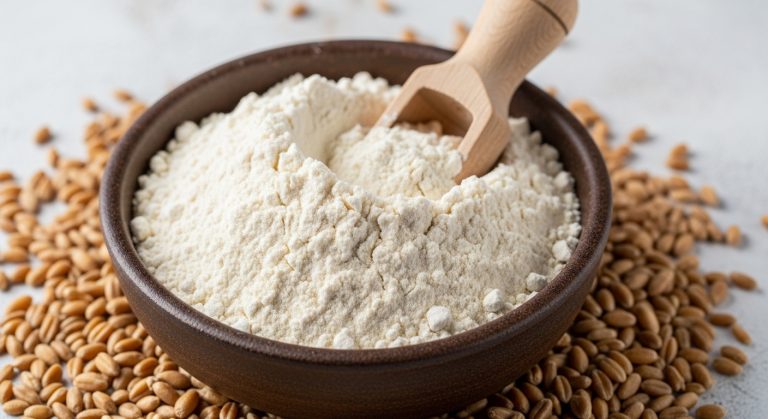
Buying wheat berries in bulk at around $0.96 per pound is cheaper than store flour at $1.19.
Your upfront investment in quality steel burr mills can pay off long-term through consistent savings, about $1.15 per 5-pound batch.
Plus, you get fresher flour with better nutrients and flavor.
Considering these factors, exploring equipment choices, sourcing, and benefits can help you maximize both savings and quality in your baking.
Key Takeaways
- Bulk wheat berries cost about $0.96 per pound, cheaper than store-bought flour priced around $1.19 per pound.
- Milling at home saves approximately $1.15 per 5-pound batch of flour compared to buying pre-milled flour.
- Initial grain mill investment amortizes over time, leading to long-term savings and lower flour costs.
- Bulk purchases and local sourcing reduce costs further, offsetting equipment and storage expenses.
- Milling your own flour offers economic benefits especially with regular use and large volume processing.
Why Should You Mill Your Own Flour?

When you mill your own flour, you unleash both economic and nutritional advantages that store-bought flour can’t match.
Milling your own flour unlocks unique economic and nutritional benefits beyond what store-bought options offer.
Wheat berries cost significantly less per pound than packaged flour, translating into tangible savings, especially when purchased in bulk.
Milling at home also ensures flour retains its nutrient profile, as commercial flours lose vitamins within 72 hours of grinding.
This freshness enhances both flavor and health benefits in your baked goods.
Additionally, home milling allows you to control the grain type and grind texture, improving recipe customization.
While initial equipment costs exist, these are offset by long-term savings.
Overall, milling your own flour offers a cost-effective, nutrient-rich alternative that increases your control over ingredients and quality.
This makes it a practical choice for health-conscious and budget-aware individuals.
Freshly milled flour also contains active enzymes that improve digestion and nutrient absorption when used promptly.
What Gear Do You Need to Mill Flour at Home?
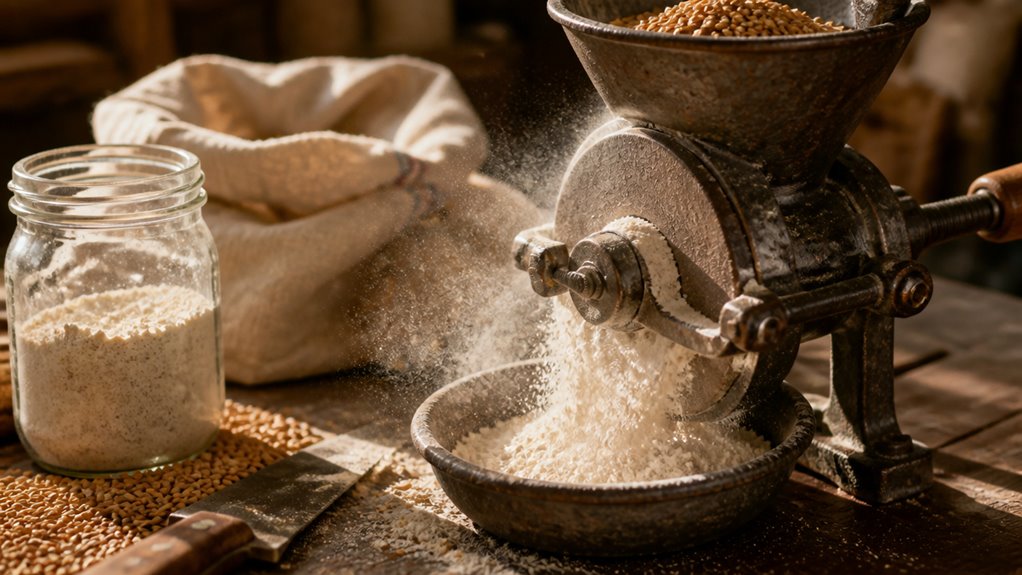
Selecting the right equipment is essential to effectively mill flour at home and maximize both cost savings and nutritional benefits. You’ll need a quality grain mill, typically ranging from $199 to $1,000, with steel burr mills preferred for preserving nutrients by minimizing heat during grinding.
While premium models like Nutrimill offer consistent fineness, used or refurbished options can reduce costs. Avoid makeshift grinders, as inconsistent particle size can affect baking outcomes.
Beyond the mill, you’ll need a storage container for wheat berries and a measuring system for accuracy. Consider maintenance costs and durability when choosing equipment, as these impact long-term value.
Initial investment amortizes over years, so prioritize build quality and milling precision to guarantee both cost-effectiveness and superior flour performance. The KitchenAid Grain Mill Attachment provides an affordable and versatile option for those already owning a compatible stand mixer, though it is best suited for small, occasional use.
Where to Buy Wheat Berries for Flour Milling Without Breaking the Bank?
After securing the right milling equipment, the next step is sourcing wheat berries at prices that maintain your overall cost savings.
You’ll find that bulk purchases, especially 50-pound bags, offer the best value. This reduces per-pound costs to about $0.96, markedly lower than store-bought flour.
Consider regional availability: local farmers markets or grain mills often provide competitive pricing without added shipping fees.
Online bulk suppliers can be convenient, but factor in delivery costs, which might offset savings depending on your location.
Start with small quantities to assess quality and milling compatibility before committing to larger orders.
Organic wheat berries cost more, so weigh their benefits against budget constraints.
Buying in bulk not only lowers price per unit but also contributes to cost efficiency by reducing packaging waste and frequent purchases.
How Much Can You Really Save by Milling Your Own Flour?
Although milling your own flour requires an upfront investment, you can markedly reduce your costs over time by purchasing wheat berries in bulk and grinding them at home.
Buying wheat berries at roughly $0.96 per pound versus $1.19 per pound for store-bought flour saves you around $1.15 per 5-pound batch.
Over a year, especially for large families, these savings add up considerably, helping recoup your milling equipment cost within months.
Using a mill with adjustable output allows you to customize flour texture, adding value to your homemade flour.
| Product Type | Cost per Pound | Cost per 5 Pounds |
|---|---|---|
| Wheat Berries (Bulk) | $0.96 | $4.80 |
| Store-Bought Flour | $1.19 | $5.95 |
| Savings per 5 Pounds | – | $1.15 |
| Annual Savings (240 lbs) | – | ~$391 |
How Fresh Flour Milling Preserves Nutrients and Flavor?
When you mill flour fresh at home, you preserve substantially more nutrients than store-bought options that sit on shelves for weeks.
Commercially ground flour loses vitamins rapidly within 72 hours due to exposure to air and light.
By milling yourself, you access flour rich in naturally occurring nutrients and enzymes that degrade in pre-ground products.
This nutrient density directly impacts both health benefits and flavor quality.
Freshly milled flour also retains volatile compounds responsible for a fuller, more complex taste in baked goods.
Nutrients like vitamin E and B-complex vitamins remain intact.
Antioxidants degrade slower in fresh flour.
Essential oils contribute to enhanced aroma and flavor.
No nutrient loss from prolonged storage or processing occurs.
Immediate use maximizes flour’s nutritional profile.
Milling flour fresh guarantees peak nutritional and sensory quality.
Additionally, the higher enzymatic activity in freshly milled flour enhances crust shine and flavor development during fermentation.
Frequently Asked Questions
How Does Regional Availability Affect Wheat Berry Prices?
Regional availability affects wheat berry prices because if you live near local suppliers or farmers markets, you’ll likely pay less due to reduced shipping costs and greater competition.
Conversely, if you rely on online bulk purchases with high shipping fees, your price per pound increases, cutting into savings.
You’ll need to analyze your area’s supply options carefully since limited local availability or high transport expenses can markedly raise your overall wheat berry cost.
What Are the Maintenance Costs of a Home Grain Mill?
Like caring for a fine instrument, maintaining your home grain mill involves occasional upkeep. You’ll need to clean burrs regularly to prevent buildup and guarantee consistent grinding.
Replacement parts, such as burrs or belts, might cost $20–$50 over years, depending on usage. Proper storage prevents rust or damage, minimizing expenses.
While not frequent, these maintenance costs add to your overall investment but help preserve mill efficiency and flour quality.
Can Alternative Grinding Tools Replace a Grain Mill Effectively?
Alternative grinding tools like coffee grinders, food processors, or blenders can’t effectively replace a grain mill.
They often produce coarser, inconsistent flour, which affects baking quality.
While you might use them in a pinch, they lack the precision and nutrient-preserving benefits of steel burr mills.
Investing in a dedicated grain mill guarantees finer, uniform flour and better baking results.
This makes it a more reliable long-term choice for milling grains at home.
How Quickly Does a Grain Mill Investment Pay Off?
If you bake regularly, your grain mill can pay off in about nine months.
For example, a family using 240 flour bags annually can save nearly $400 each year by milling at home.
Since mills like the Nutrimill cost around $230, your initial investment recovers quickly through bulk wheat berry savings.
After that, every pound you mill saves you $2–3, making long-term use highly cost-effective and worthwhile.
Are Organic Wheat Berries Significantly More Expensive Than Conventional?
Yes, organic wheat berries are markedly more expensive than conventional ones.
You’ll find that organic varieties carry a premium due to certification costs and farming practices.
While conventional wheat berries might cost under a dollar per pound, organic options can be substantially higher.
This price difference affects your overall milling cost. If you prioritize organic, you should factor in these higher expenses when calculating your savings and budget for milling at home.
Home Milling is a Smart Long-Term Baking Investment
Milling your own flour isn’t just about saving money. It’s like crafting your own Excalibur in the kitchen.
While initial gear costs might seem steep, sourcing affordable wheat berries and enjoying fresher, nutrient-rich flour pays off over time.
You get more control, better flavor, and potential savings.
In the end, milling flour at home is a practical investment, blending tradition and modern savvy to elevate both your baking and budget.