

How to Store Wheat Berries: Cool, Dry, Dark Done Right
To store wheat berries effectively, use airtight, food-grade containers like 5-gallon buckets lined with Mylar bags and oxygen absorbers to block moisture and pests.
Keep them in a cool, dark environment between 40-60°F to maintain viability and nutrient integrity for decades.
Avoid moisture and light exposure, and consider freezing to eliminate pests before storage.
Proper sealing and temperature control are key. A detailed approach to container choices, preparation, and pest management can further optimize your storage strategy.
Key Takeaways
- Store wheat berries in airtight, food-grade containers like 5-gallon buckets with gamma seal lids to block moisture and pests.
- Use Mylar bags with oxygen absorbers inside containers to create near-vacuum conditions that extend shelf life up to 30+ years.
- Keep wheat berries in a cool, dark environment between 40-60°F to preserve viability and prevent spoilage.
- Avoid washing wheat berries before storage and ensure grains are dry and insect-free to minimize pest risks.
- Regularly inspect stored wheat berries, rotate stock every 5 years, and freeze for 72 hours before storage to eliminate pests.
Why Store Wheat Berries Long-Term?

Why should you consider storing wheat berries long-term? Because when stored properly, nutrient-rich, dry, and protected from insects, wheat berries maintain viability and nutrition for over 30 years.
Unlike commercial flour, which spoils within a year due to rancid oils exposed by grinding, whole wheat berries keep indefinitely intact. This long shelf life ensures you have a stable, reliable food source during scarcity or emergencies. Choosing the right variety, such as hard red wheat, can enhance your baking options and storage outcomes.
Additionally, storing wheat berries preserves essential nutrients like protein, B vitamins, vitamin E, and zinc that degrade quickly once ground. You can mill fresh flour on demand, avoiding nutrient loss from oxidation.
This makes whole wheat berries a practical, space-efficient, and superior alternative to processed flour, supporting both your nutritional needs and food security over decades.
Best Containers for Storing Wheat Berries
To keep wheat berries viable and nutrient-dense over decades, selecting the right storage containers is key.
Food-grade 5-gallon buckets hold 30-35 pounds of wheat berries and feature tight-fitting or gamma seal lids that effectively block moisture and pests. Proper storage also helps maintain the nutrient integrity of grains over time.
For long-term bulk storage, 6-gallon super pails combined with mylar bags and oxygen absorbers maintain freshness and prevent oxidation, accommodating up to 43 pounds. These buckets are often sourced from suppliers like Uline, Amazon, or farm supply stores to ensure they are food-grade.
Mason jars and airtight canisters offer airtight, light-blocking storage, ideal for smaller quantities and easy rotation.
Resealable food-safe bags, including Ziploc gallon sizes, provide moisture resistance for daily use or limited space.
Store buckets off the floor on shelves to avoid dampness.
Utilize smaller containers from bulk buckets for convenient daily access while preserving the bulk’s integrity.
Ideal Conditions for Long-Term Wheat Storage
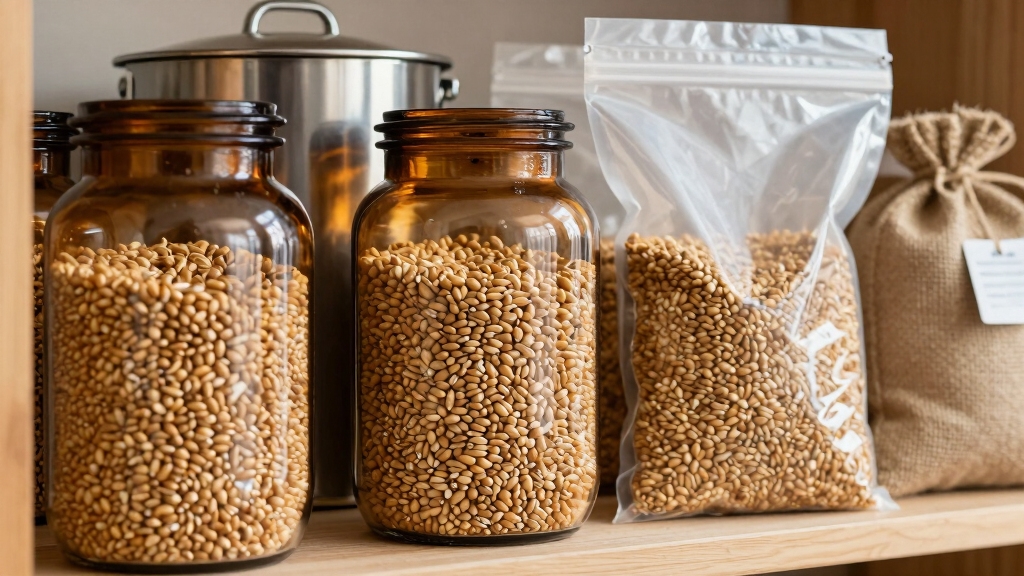
How can you ensure wheat berries remain viable and nutrient-rich for decades? Store them in a cool environment between 40-60°F, which slows spoilage and preserves seed viability. Using airtight containers helps maintain a stable environment critical for long-term preservation.
Keep wheat berries cool at 40-60°F to preserve freshness and seed viability for decades
Avoid temperatures above 60°F, since heat accelerates degradation, but freezing is safe. Maintain low humidity to prevent mold and spoilage.
Use moisture-proof, sealed containers with oxygen absorbers to eliminate residual moisture and oxygen. Store wheat in dark, opaque containers to block light, which speeds chemical breakdown. Using airtight enclosures such as 5-gallon food-grade buckets with Gamma lids is recommended for easy access and optimal storage.
Oxygen absorbers activate quickly, creating near-vacuum conditions that can extend shelf life to 10-12 years or even 30+ years under ideal conditions. Avoid humid locations like garages.
Rotate stock every 5 years for best results. Well-stored wheat up to 30 years retains about 80% of its nutritional value and remains usable for bread baking.
Preparing Wheat Berries Before Storage
What steps should you take to prepare wheat berries before storage to guarantee their longevity and quality?
First, assess moisture content carefully. Avoid introducing moisture sources like freezers, as high moisture promotes mold and bacterial growth, spoiling the grain. Wheat berries can last indefinitely when stored in a cool, dry, dark environment, so maintaining these conditions is key. Additionally, storing grains away from light helps preserve their nutritional value and prevents rancidity.
Avoid washing wheat berries; farmers clean them thoroughly before distribution. Wet grains gum up mills during processing. Select clean, insect-free wheat to minimize pest issues.
For pest management, note that freezing isn’t reliable for killing eggs and can increase moisture, so avoid it. Instead, consider heat treatments around 140°F or oxygen absorbers after packing.
Finally, choose wheat berries with intact bran layers and mark purchase dates to track freshness. Properly prepared, whole grains can last up to six months in a pantry or a year when stored correctly.
Packaging Wheat Berries for Long-Term Storage
Where you store your wheat berries can determine their shelf life and quality over decades.
Proper storage location plays a crucial role in maintaining wheat berries’ long-term freshness and quality.
For long-term storage, choose food-grade, airtight containers like 5-gallon buckets lined with Mylar bags or vacuum-sealed glass jars. Using airtight containers helps maintain moisture balance and prevents spoilage.
Adding oxygen absorbers inside helps prevent oxidation.
Remove excess air before sealing with a ziplock or heat iron.
Maintain cool, dark conditions ideally between 40-60°F to preserve viability. Temperatures above 60°F accelerate loss of seed viability and slightly increase loss of food value.
Consider these packaging tips:
Use gamma-sealed lids for buckets to ensure airtight closure.
Employ vacuum sealing or dry ice methods to displace oxygen.
Opt for opaque containers to block light exposure.
Store containers off the floor on shelves to prevent moisture ingress.
Following these precise methods will keep your wheat berries fresh and viable for 30+ years.
Pest Prevention for Stored Wheat Berries
Why focus on pest prevention when storing wheat berries? Because pests can rapidly degrade your grain quality, causing losses and contamination. You must control temperature, moisture, sanitation, and sealing to protect your stock effectively.
Proper temperature management also supports maintaining the ideal environment for long-term storage by preventing spoilage and pest proliferation through temperature control tools.
| Factor | Key Action | Result |
|---|---|---|
| Temperature | Maintain 40-50°F (4-10°C) | Slows insect activity and mold |
| Moisture | Dry grain; avoid condensation | Prevents bacterial growth |
| Container Seal | Use airtight buckets with DE | Blocks pest entry and kills bugs |
Proper storage also requires regular inspection and monitoring to detect any quality issues early and maintain grain freshness. Combine these tactics with sanitation. Clean bins, seal cracks, and rotate stock to minimize infestation risk. Adding diatomaceous earth and oxygen absorbers further enhances protection. Consistent control keeps wheat berries safe for long-term storage.
Short-Term Storage Options for Wheat Berries
Several effective container options exist for short-term storage of wheat berries, each designed to maintain freshness and prevent contamination.
To optimize protection, store wheat in food-grade plastic buckets lined with Mylar bags and sealed with oxygen absorbers. Alternatively, use airtight glass jars in cool, dark places or resealable polyethylene bags for moisture resistance. Because wheat berries have a long shelf life, proper storage can keep them viable for years. Just as with sourdough batter resting, allowing time for proper fermentation and flavor development can be beneficial in other grain preparations.
Freezing wheat berries for 2-3 days before room storage eradicates pests efficiently. Maintain storage temperatures between 40-60°F to preserve quality without accelerating viability loss.
- Food-grade plastic buckets with gamma seal lids for bulk storage
- Mylar bags with oxygen absorbers inside buckets for air and light barrier
- Airtight glass jars for vacuum sealing in dark, cool environments
- Freezing for 72 hours to eliminate pests before short-term room storage
Frequently Asked Questions
Can Wheat Berries Be Stored in a Refrigerator or Freezer?
You can store wheat berries in the refrigerator to extend their shelf life up to a year, provided you keep them in airtight containers at 40-60°F, away from light and temperature fluctuations.
However, freezing intact wheat berries isn’t recommended, as moisture imbalance can cause mold and spoilage. Instead, use freezer storage only for whole grain flour, not berries, to avoid quality and contamination issues.
Proper sealing and cool, dark placement are key.
How Do I Know if Stored Wheat Berries Have Gone Bad?
Imagine opening a jar of wheat berries only to spot dark, fuzzy mold and smell a sour, fermented odor. These are clear signs they’ve gone bad.
You’ll know stored wheat berries are spoiled if you observe discoloration, mold growth, or clumping from moisture.
Also, if they emit musty or rancid smells or feel soft and sticky instead of firm, discard them immediately to avoid health risks and poor baking results.
Is It Necessary to Wash Wheat Berries Before Storage?
No, you don’t need to wash wheat berries before storage. Washing introduces moisture, which promotes mold, mildew, and spoilage, ruining the grain and your mill.
Instead, inspect and dry clean using sieves or blowers to remove debris. Store wheat berries dry in food-grade containers with oxygen absorbers to maintain quality.
Keeping them dry ensures a long shelf life, prevents clumping, and avoids equipment damage during milling.
Can I Mix Different Grain Types With Wheat Berries in One Container?
You can mix wheat berries with certain grains like spelt or rye in one airtight container.
However, avoid high-oil grains such as buckwheat or oats, as they shorten shelf life and risk rancidity.
Always use opaque, moisture- and pest-resistant containers with oxygen absorbers to extend freshness.
Label clearly and store in cool, dry, dark places.
Monitor mixed batches carefully, since differing moisture and oil content can cause uneven spoilage.
How Often Should I Check or Rotate My Stored Wheat Berries?
Think of your wheat berries like a ticking clock. You should check and rotate them regularly to keep quality crisp. Inspect them at least every six months, especially if stored above 60°F or without oxygen absorbers.
Use the oldest stock first to prevent spoilage and maintain baking performance. Pull a ¼ cup sample before milling to assess for mold, moisture, or germination drop. If stored optimally, annual checks suffice; otherwise, increase frequency.
Store Wheat Berries Once, Eat Better Later: Build Your System
By choosing the right container, you not only protect your wheat berries but also preserve their freshness longer.
Store them in cool, dry places, and you’ll prevent spoilage while maintaining nutritional value.
Preparing and packaging them properly means you’ll avoid pests.
With short-term options handy, you can use what you need without waste.
When you store wheat berries correctly, you ensure quality, quantity, and safety, all working together to keep your grain ready and reliable.