
Can You Use Almond Flour Instead of Coconut Flour? Swap Guide
You can substitute almond flour for coconut flour, but you’ll need to considerably adjust your recipe.
Almond flour absorbs much less liquid, about a quarter of what coconut flour does, so reduce eggs and liquids accordingly to avoid a dense, greasy result.
Almond flour yields a moister texture with a milder nutty flavor, contrasting coconut flour’s sweet, powdery feel.
Adjusting ratios and hydration is key for success, and exploring these differences will help you bake perfectly with either flour.
Key Takeaways
- Almond flour absorbs much less liquid than coconut flour, requiring significant adjustments in eggs and liquids when substituting.
- Use about four times the volume of almond flour to replace coconut flour for similar texture and moisture balance.
- Almond flour produces a denser, moister texture, while coconut flour is lighter and more powdery in baked goods.
- Flavor differs: almond flour has a mild nutty taste, coconut flour offers a sweeter coconut flavor, affecting recipe balance.
- Nutritionally, almond flour has more protein and fat; coconut flour has higher fiber and fewer net carbs per serving.
Almond Flour vs Coconut Flour Swap Chart (Baking Guide)
| Baking Goal / Recipe Type | If your recipe uses coconut flour… | Replace with almond flour | Liquid & egg adjustments | What you’ll notice in results | Best tip for success |
|---|---|---|---|---|---|
| Quick conversion (general baking) | 1/4 cup coconut flour | 1 cup almond flour | Reduce liquids and often reduce eggs (coconut flour usually needs more eggs) | More moist and slightly denser crumb | Rest batter 5–10 minutes so it thickens before baking |
| Muffins & cupcakes | Batter is usually thick and egg-heavy | Use almond flour for softer crumb | Start by cutting 1 egg per 1/4 cup coconut flour removed; add liquid only if batter feels tight | More tender texture, less “spongy” | Add 1/4–1/2 tsp extra baking powder if they look heavy |
| Cookies | Coconut flour cookies can feel dry/crumbly | Almond flour works great | You’ll likely need less egg and less added liquid; chill dough | Cookies spread more and brown faster | Chill dough 20–30 minutes to control spreading |
| Pancakes / waffles | Coconut flour needs lots of eggs for structure | Almond flour makes them richer | Use fewer eggs; add liquid slowly until pourable | Less “egginess,” more buttery bite | Cook on lower heat (almond flour browns faster) |
| Banana bread / quick breads | Coconut flour versions can turn dry if under-hydrated | Almond flour makes it moist | Cut back eggs slightly; avoid extra oils at first | Can feel oily if fats aren’t reduced | If loaf looks greasy, reduce added fat by 1–2 tbsp next round |
| Cakes (light/airy goal) | Coconut flour can be lighter if perfectly hydrated | Almond flour can be heavier | Consider extra leavener; don’t overmix | More dense but moist cake | Use finely ground blanched almond flour for best crumb |
| Combining both flours | You want balance (not too dry, not too moist) | Blend: 3 parts almond flour : 1 part coconut flour | Fewer eggs than all-coconut flour, less liquid than all-almond flour | More “all-purpose-like” balance | Great for “experiment batches” when you’re unsure |
Can You Really Substitute Almond Flour for Coconut Flour?
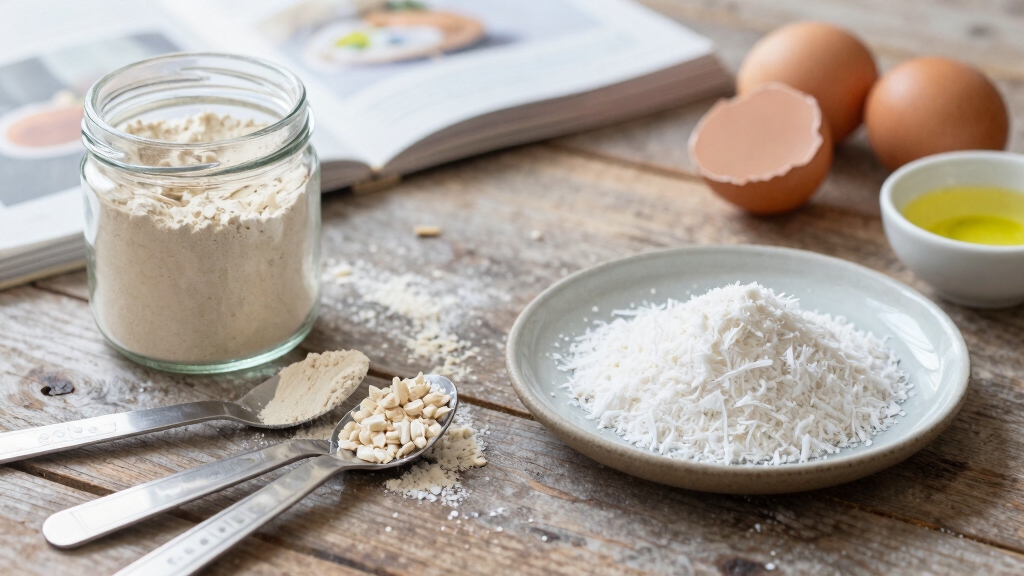
How closely can you substitute almond flour for coconut flour in your recipes? You can’t simply swap them 1:1 because coconut flour absorbs much more liquid—about four times as much.
Almond flour can’t replace coconut flour 1:1 due to coconut’s much higher liquid absorption.
For example, one-quarter cup of coconut flour equals roughly one cup of almond flour by volume. Coconut flour recipes usually need additional eggs and liquids to bind and achieve the right texture. Coconut flour also tends to impart a distinct flavor and requires time for the batter to absorb moisture fully. This difference in absorption is similar to how some baking mixes require precise liquid ratios for optimal texture and rising.
Almond flour behaves more like traditional wheat flour and is easier to use. Almond flour produces a lighter, airier texture, while coconut flour results in denser baked goods.
Nutritionally, almond flour offers more protein and fat, but coconut flour provides more fiber. So, while substitution is possible, you must consider these differences before making an equal replacement in your baking.
How to Adjust Recipes When Using Almond Flour?
When you swap coconut flour for almond flour, you’ll need to adjust your recipe’s liquids and eggs carefully to maintain the right texture and consistency.
Use a 1:4 substitution ratio: 1 cup almond flour replaces 1/4 cup coconut flour. Since almond flour absorbs less liquid, reduce eggs accordingly; for every 1/4 cup coconut flour replaced, decrease the egg count by one.
Almond flour has a higher fat content compared to coconut flour, which can affect the moisture and texture of your baked goods, so keep this in mind when adjusting recipes. Keeping track of ingredient ratios is essential for maintaining texture and moisture.
Increase liquids gradually, potentially doubling the original amount, as almond flour behaves more like wheat flour in absorption. If your batter feels dry, add an egg or 2 tablespoons of liquid.
Allow the batter to rest for proper hydration. Start converting recipes with small almond flour quantities, testing and tweaking as needed to achieve a smooth, balanced batter that bakes well. This approach helps accommodate the different nutrient density and absorption qualities of almond flour versus coconut flour.
Texture and Flavor Differences Between Almond and Coconut Flour

When you bake with almond flour, you’ll find it has this moist, dense texture and a lovely nutty flavor that really shines through.
On the flip side, coconut flour is quite different—it’s light, powdery, and has a mild sweetness with those subtle coconut notes that can really elevate your dish. Because coconut flour is powdery, soft, it soaks up a lot of liquid, which means you’ll need to adjust your recipe accordingly.
These texture and flavor differences are super important because they can totally change how your baked goods turn out.
Almond flour tends to give you tender, fluffy results, which is great for cakes and muffins.
But with coconut flour, you might end up with drier, crumbly textures unless you tweak the liquids in your recipe.
Texture Variations
Why do almond and coconut flours produce such different textures in baking?
It mainly comes down to absorbency and grind. Coconut flour soaks up much more moisture, demanding extra liquids and eggs to avoid dryness. Almond flour keeps moisture balanced, yielding tender, fluffy results.
Additionally, coconut flour requires significantly more liquid and eggs to achieve proper texture due to its high absorbency. Proper moisture balance is crucial as it affects the final texture and prevents dryness, much like how moisture balance impacts sourdough starters.
Its slightly grainy texture contrasts with coconut flour’s fine powder, affecting binding and crumb.
| Aspect | Almond Flour | Coconut Flour |
|---|---|---|
| Absorbency | Moderate, maintains moisture | High, absorbs significantly more |
| Texture | Grainy, ideal for crumbly texture | Very fine, powdery, can be crumbly |
| Resulting Tenderness | Tender, fluffy baked goods | Denser, chewier, drier if unadjusted |
Adjusting liquids is key when swapping due to these texture differences.
Flavor Profiles
Flavor plays a pivotal role in choosing between almond and coconut flours, as each imparts distinct characteristics that influence your baked goods.
Almond flour offers a subtle nutty, buttery flavor that works well in cookies and savory items. Coconut flour carries a sweeter, more pronounced coconut taste. Because of these differences, swapping one for the other can alter your recipe’s flavor profile notably. Different flour types significantly impact the texture and flavor of baked goods.
Almond flour’s nuttiness complements savory and mild-sweet recipes. Coconut flour’s sweetness and coconut notes stand out unless masked. One-to-one substitution often causes flavor imbalance.
Blanched almond flour has milder nuttiness than unblanched. Almond flour is made from ground almonds and comes in two types: blanched and unblanched, with blanched preferred for lighter color and finer texture due to the absence of skin (almond flour types).
Combining both flours can balance complexity in flavor. Understanding these nuances helps you achieve the desired taste and texture in your baking.
Nutritional and Dietary Benefits of Almond vs. Coconut Flour
Understanding the nutritional and dietary differences between almond and coconut flour can help you choose the best option for your health goals and recipes.
Almond flour contains more calories and fat, mainly healthy unsaturated fats, while offering higher protein (24g per cup) and fiber (14g) than coconut flour. Almond flour is keto-friendly and recommended more for keto baking due to its low net carb content and higher fat levels. It can also be combined with other ingredients to achieve different textures and flavors, similar to how dips like olive dip cream cheese are customized.
Coconut flour has fewer calories and fat but a higher fiber percentage. It also provides unique medium-chain triglycerides (MCTs) that support energy metabolism.
Almond flour is rich in vitamin E, magnesium, and manganese, whereas coconut flour supplies more iron and potassium.
Both flours are high in fiber, aiding digestion, but coconut flour’s fiber is more concentrated. However, coconut flour absorbs a lot of moisture and yields a heavier batter, requiring extra eggs and liquids in recipes.
Your choice depends on whether you prioritize protein, fat quality, or specific micronutrients. Both flours deliver distinct dietary benefits that impact digestion and nutrient absorption differently.
Which Flour Is Best for Keto, Weight Loss, and Allergies?

If you’re diving into the keto diet, you’ll find that almond flour is quite popular. It’s got lower net carbs and higher fat content, which is great for keeping you in ketosis. Plus, its versatility makes it ideal for various baking tasks. But hey, if you have nut allergies, don’t worry!
Coconut flour is a fantastic alternative. It’s allergen-free and still gives you those gluten-free benefits. So, understanding these differences can really help you pick the right flour that fits your dietary needs. Additionally, coconut flour is highly absorbent and requires more eggs and liquids in recipes, which affects texture and moisture balance baking properties.
Keto Compatibility Comparison
Both flours offer keto-friendly options but differ in carb content, calories, and macronutrients. Almond flour is higher in protein and healthy fats, supporting stable blood sugar and texture in baking.
Almond flour mimics all-purpose flour more closely, making it versatile for many recipes. Proper storage and handling are essential to preserve the nutrient profile and prevent spoilage.
Coconut flour, with fewer net carbs per serving and lower calories, promotes fat loss and ketosis through fiber and MCTs. Regular monitoring of ingredient quality ensures consistent results when baking with coconut flour.
Almond flour contains 12g net carbs per cup; coconut flour has 6g net carbs per 1/4 cup.
Coconut flour’s high fiber (60% of carbs) supports keto despite total carbs.
Almond flour offers more protein (24g vs 4g) and heart-healthy fats.
Coconut flour’s lower calories and MCTs aid weight loss and energy.
Substituting 1/4 cup coconut flour for 1 cup almond flour reduces carbs drastically.
Choose based on your keto goals and recipe needs.
Allergy Considerations
Choosing between almond and coconut flour for keto and weight loss involves more than just macronutrient profiles; allergy considerations also play a significant role.
If you have a tree nut allergy, almond flour is off-limits because it triggers reactions. Coconut flour, a drupe, rarely does. However, cross-reactivity exists but remains uncommon.
Additionally, almond flour is generally more commonly used than coconut flour, making it easier to find in stores and recipes more commonly used. Understanding the temperature accuracy of baking ingredients can also impact recipe outcomes when substituting flours.
For egg allergies, almond flour is preferable since coconut flour recipes typically require more eggs for moisture. Although, egg-free options combining coconut flour with other grain-free flours do exist.
Additionally, almond flour contains omega-6 fatty acids that may promote inflammation, which is less of a concern with coconut flour.
If pesticide exposure worries you, coconut flour generally has fewer residues, especially when organic.
Ultimately, understanding your allergies and sensitivities helps you choose the safest, most effective flour.
How to Combine Almond and Coconut Flour in Baking?
Why blend almond and coconut flour in your baking? Combining them balances moisture, texture, and nutrition, avoiding greasiness from almond flour alone and dryness from coconut flour. This blend also helps improve nutrient absorption and digestive benefits due to its prebiotic content.
Use a 3:1 almond to coconut flour ratio to mimic all-purpose flour without extra eggs. This ratio is recommended because it closely mirrors all-purpose flour and keeps the need for extra eggs minimal.
Consider these tips:
Add 1 egg per 1/4 cup coconut flour to ensure proper binding.
Double the liquid if batter feels too dry; adjust gradually.
Almond flour browns faster, so monitor baking time closely.
Increase raising agents slightly for quick breads and muffins.
Let batter rest to allow flours to absorb liquids fully before baking.
Blending flours improves texture and manages absorption differences, resulting in better baked goods and a more balanced nutrient profile.
Frequently Asked Questions
Can Almond Flour Cause Allergic Reactions Similar to Coconut Flour?
Yes, almond flour can cause allergic reactions similar to coconut flour, but the risks differ.
If you have tree nut allergies, almond flour is more likely to trigger a reaction because it contains tree nut proteins shared among nuts.
Coconut flour, however, rarely causes reactions in nut-allergic individuals since coconuts aren’t true nuts.
Always avoid almond flour if you’re tree nut sensitive, and consider coconut flour as a safer alternative, checking labels for cross-contamination.
How Should Storage Differ Between Almond and Coconut Flour?
Think of almond flour like a delicate treasure that needs a cool vault; you should store it in the freezer to prevent rancidity due to its high fat content.
Coconut flour, however, is like a sponge. Keep it sealed tight in an airtight container to avoid moisture and maintain quality.
Almond flour’s fats demand cold storage, while coconut’s fiber-rich nature calls for dryness and protection from humidity to preserve freshness.
Are There Specific Recipes That Fail Completely When Substituting Almond Flour?
Yes, certain recipes fail entirely if you substitute almond flour for coconut flour without adjustments.
For example, coconut flour banana bread turns dense and flat, and almond sponge cakes won’t rise properly.
Chocolate Paleo cakes crumble, and muffins become dry or eggy.
These failures happen because almond flour lacks coconut flour’s high absorption.
You must reformulate with extra eggs and liquids to avoid ruining texture and structure.
What Is the Environmental Impact of Producing Almond Versus Coconut Flour?
You should know almond flour production demands significant water, about 1.1 gallons per almond, and relies heavily on California’s irrigation, though efficiency has improved.
Almonds also have a smaller carbon footprint than dairy but involve pesticide use harmful to bees.
Coconut flour generally requires less water and fewer pesticides, making it more environmentally friendly.
Choosing between them depends on balancing water use, carbon impact, and biodiversity concerns based on your priorities.
Can Almond Flour Be Used in Raw Recipes Instead of Coconut Flour?
You can’t just swap coconut flour with almond flour in raw recipes without consequences. It’s like replacing sand with feathers!
Almond flour is moister and denser, so your raw dish might turn out soggy or heavy. Coconut flour’s dryness and high fiber absorb liquids uniquely, giving structure in raw preparations.
To use almond flour, you’ll need to adjust liquids carefully. Otherwise, texture and consistency will suffer markedly.
Almond Flour vs Coconut Flour: Find Your Best Texture
So, can you swap almond flour for coconut flour? Yes, but it’s not as simple as a one-to-one trade. You’ll need to tweak liquids and eggs to get it right.
The texture and flavor will shift, too, affecting your final bake. But here’s the twist: combining both flours might reveal the perfect balance you’ve been searching for.
Ready to experiment and discover which mix suits your taste and dietary needs best?