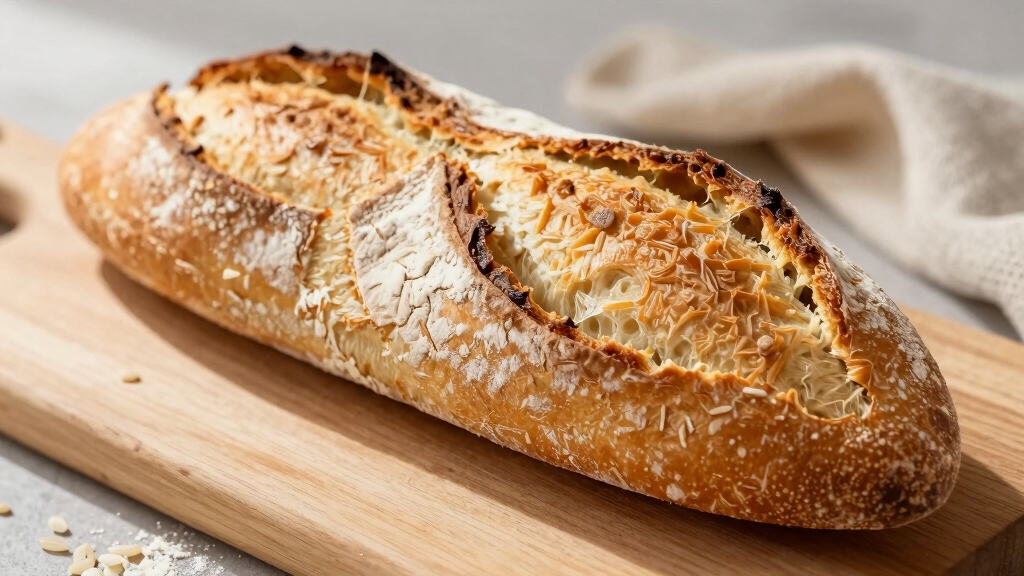
Gluten Free French Bread Baguette Recipe with Crispy Crust
To make gluten-free French bread baguettes, start with a balanced blend of rice and tapioca flours plus psyllium husk for elasticity.
Mix dry ingredients thoroughly before adding warm water, eggs, and fat, whipping to a thick, cohesive dough.
Shape into tapered logs, proof in a warm, draft-free environment until doubled, then bake at 450°F with steam to develop a crispy crust.
Master these steps, and you’ll perfect baguettes with the ideal airy crumb and crust. More detailed guidance awaits.
Key Takeaways
- Use a gluten-free flour blend with 25–36% tapioca starch and 15g psyllium husk for elasticity and authentic baguette texture.
- Mix dry ingredients thoroughly, then add warm water (95°F), eggs, and fats; beat to a smooth, thick, and sticky dough.
- Shape dough into 6×4½-inch rectangles or logs, proof in a warm, draft-free environment at 50°C (120°F) until doubled, about 45–60 minutes.
- Bake at 450°F with steam for 20 minutes, then increase to 475°F for 15–20 minutes until crust is evenly browned and internal temperature is 205°F.
- Cool baguettes completely on wire racks to maintain a thin, extra-crispy crust and avoid sogginess.
Gluten Free French Bread Baguette Recipe: Key Steps
| Stage | What You Do | Key Specs (Scan-Friendly) | Time | Temp |
|---|---|---|---|---|
| Mix | Whisk dry, add wet, beat smooth | 25–36% tapioca, 15 g psyllium, water 95°F; thick sticky dough | 6–8 min | — |
| Chill (optional) | Rest dough covered | Improves handling before shaping | 30 min | Fridge |
| Shape | Form tapered logs | Pat to rectangle, fold, roll to 13–15 in; dust with tapioca starch | 10–12 min | — |
| Proof | Rise until doubled | Warm, draft-free; cover airtight; support sides to prevent spreading | 45–60 min | Warm |
| Bake (steam) | Start bake with steam | Bake at 450°F with steam for oven spring | 20 min | 450°F |
| Finish bake | Dry crumb + deepen crust | Increase to 475°F; bake to 205°F internal | 15–20 min | 475°F |
| Cool | Cool fully on rack | Full cooling keeps thin, crisp crust; slice after set | 45–60 min | Room |
| Store / Reheat | Keep crust enjoyable | Room airtight 2–3 days; reheat 350°F (foil) or 400°F crispier | 5–15 min | 350–400°F |
Essential Dry Ingredients for Gluten-Free Baguettes

What makes gluten-free baguettes rise and hold their shape without traditional wheat flour? You rely on a carefully balanced flour blend and effective binders.
A balanced flour blend and strong binders are key to gluten-free baguettes rising and keeping their shape.
Tapioca starch forms 25-36% of your dry mix, providing chewiness and stretch. Rice flours, white, brown, or fine, serve as the base, ranging from 70g to 200g.
Alternative grains like millet, buckwheat, sorghum, and oat flour enhance structure and flavor complexity. Potato starch, at 20-25g, improves moisture retention and texture.
To replicate gluten’s elasticity, you incorporate 15g of ground psyllium husk, which delivers necessary extensibility for shaping. Xanthan gum, at 0.75-1.25 teaspoons, substitutes if psyllium is unavailable.
Commercial gluten-free flour blends offer a convenient alternative but may alter texture. This precise composition ensures your dough rises properly and maintains the baguette’s iconic form. Achieving an authentic texture, crust, and chew is essential to replicate the experience of real French bread in gluten-free form.
Selecting the Perfect Wet Ingredients
Selecting the perfect wet ingredients plays a crucial role in achieving the ideal texture and rise for your gluten-free baguette dough.
Start with water at 95°F to optimally activate yeast; adjust volume based on dough size—typically ¾ cup for small batches, up to 2 cups in larger ones.
For yeast-free doughs, club soda can substitute to enhance rise. Incorporate eggs for structure: 25g room-temperature egg white provides lift, while a full extra-large egg enriches gum-free recipes.
Vegan alternatives like aquafaba replicate binding properties. Include fats such as 1 Tbsp unsalted butter or 2 Tbsp extra virgin olive oil to improve moisture and crust quality.
Sweeteners like 1 Tbsp honey feed yeast and tenderize crumb. Finally, add 1 tsp apple cider vinegar to aid dough relaxation and rise, ensuring balanced hydration and elasticity.
After mixing the wet and dry ingredients, refrigerate the dough for at least 30 minutes to improve texture and manageability before shaping, which is essential for dough preparation.
Combining Ingredients: Mixing Techniques Explained

Alright, let’s get started! First things first, you want to whisk those dry ingredients really well. This is super important because it helps everything mix evenly and also adds some air into the mixture.
Using a bowl with high sidewalls can help prevent mess while whisking. Once you’ve done that, it’s time to slowly add in some warm water. You want to do this gradually so you can achieve that perfect sticky, cohesive dough.
Now, as you’re mixing, keep a close eye on the texture of the dough. It should feel wet, almost like a thick batter, but it needs to hold together nicely without getting too dense.
Finding that balance is key here! It’s all about creating a manageable dough that will give you that light, authentic baguette crumb we’re aiming for. Remember, using a Gluten-Free All-Purpose Flour with xanthan gum helps provide the structure needed for yeast baking.
Dry and Wet Integration
When combining dry and wet ingredients for gluten-free French bread baguette dough, you’ll begin by thoroughly whisking the dry components, such as gluten-free flours, xanthan gum, starches, yeast, and salt, in your mixer bowl to ensure even distribution.
Psyllium husk powder and baking powder are also important dry mix additions that contribute to the dough’s structure and rise. Then, create a well in the dry mix to add wet ingredients like water, egg whites, honey, vinegar, and oils.
Mix on low speed to integrate until the dough clumps, then increase speed to develop a smooth, cohesive batter. This controlled integration prevents uneven hydration and promotes proper yeast activation. Using commercial yeast ensures rapid fermentation and consistent rise in gluten-free doughs.
| Step | Action |
|---|---|
| Dry Mixing | Whisk flour, xanthan gum, yeast |
| Wet Addition | Pour in water, egg whites, honey |
| Initial Mixing | Low speed, combine until clumps |
| Speed Increase | Medium-high, smooth batter |
| Final Texture | Thick, cohesive, no dry pockets |
Dough Consistency Tips
How do you achieve the ideal dough consistency for gluten-free French bread baguettes?
Start by combining dry ingredients thoroughly using a paddle attachment or whisk, ensuring uniform distribution of flour, xanthan gum, starch, and yeast.
Add liquids gradually, mixing at medium speed for 1 minute until the dough clumps. Using non-stick surfaces like parchment paper can help prevent dough from sticking during handling.
Increase to medium-high speed and beat until the dough develops a whipped texture resembling thick mashed potatoes.
Continue mixing for 5 minutes at medium speed, scraping the bowl halfway, to form a thick, stiff batter.
The use of psyllium husk as a gluten substitute is essential to achieve the dough’s chewiness and elasticity.
When using a dough hook, knead until the dough pulls away from the bowl sides, soft yet not overly sticky.
The final dough should be smooth, elastic, sticky but manageable, without lumps or dry patches.
Avoid adding excess flour; test gently to confirm consistency before dividing.
Shaping Your Gluten-Free Baguette Dough
A handful of essential steps will guide you through shaping your gluten-free baguette dough with precision.
Start by gently easing the chilled dough onto a tapioca starch-dusted surface, sprinkling flour sparingly.
Divide it into 2-3 equal portions, patting each into a 6×4½-inch rectangle about ½-¾ inch thick.
Fold each piece using a letter fold: fold two-thirds toward yourself, seal seams firmly, rotate, and repeat.
Pinch edges and smooth irregularities, then fold the bottom over with a bench scraper to form a neat rectangle.
Rolling the dough is easier when using gfJules All-Purpose Gluten-Free Flour, which is the primary ingredient after water for optimal dough consistency.
Roll the dough log with cupped hands in a half-moon motion, tapering ends and achieving a 13-15 inch length.
Finally, shape ends as preferred and place baguettes spaced on parchment, ready for the next step.
Proofing Tips for Optimal Rise

Why does proofing matter so much in gluten-free baguette baking? Proper proofing activates yeast and develops dough structure, critical for rise and crumb. Because gluten-free doughs lack natural elasticity, using a tall-sided tin or supportive structure during proofing helps maintain shape and prevents collapse. It is important to note that yeast activity can be affected by factors like ingredient freshness, similar to the yeast efficacy concerns in sourdough mixes.
Maintain a warm, draft-free environment, ideally 50°C (120°F) initially for 10 minutes, then proof 45–60 minutes until doubled.
Use airtight plastic wrap to prevent drying; avoid towels for long proofs. Support dough with floured couche folds or rolled kitchen towels to maintain shape.
| Aspect | Recommendation | Purpose |
|---|---|---|
| Environment | Warm, draft-free, 50°C initial | Optimal yeast activation |
| Covering | Airtight plastic wrap | Retains moisture, prevents crust |
| Support | Floured couche or towel folds | Prevents spreading, supports rise |
Follow these precise steps for an optimal gluten-free baguette rise.
Baking Instructions for a Crispy Crust
Position your baguettes on the middle oven rack for balanced heat exposure and a crisp bottom crust. Start baking at 450°F with steam generated by placing ice cubes on the oven floor or a water-filled pan on the bottom rack.
Close the door immediately to trap steam. Spritz the baguettes with water before baking and again after 5 minutes to enhance crunchiness.
Maintain steam only for the first 20 minutes, then increase the temperature to 475°F for 15-20 minutes to dry the crumb and finalize the crust. Bake until the internal temperature reaches 205°F and the crust browns evenly.
Cool completely before slicing to preserve the thin, extra-crispy crust on all surfaces. Proper cooling on a wire rack is essential to prevent sogginess and maintain that ideal crust texture, as highlighted in optimal cooling practices.
Helpful Tips and Ingredient Substitutions
How can you adapt your ingredient choices without compromising the integrity of your gluten-free French bread baguette? Focus on maintaining structure and texture by selecting appropriate substitutes.
Using the right mixing bowl material can also influence dough handling and rise, with options like glass or stainless steel being preferred for their non-porous surfaces and ease of cleaning that prevent contamination and odor retention.
For instance, use cornstarch or arrowroot starch in place of tapioca starch in equal weights, or choose finely ground brown rice flour to replace millet flour. Always include binders like xanthan gum or psyllium husk powder at 85% weight if substituting to mimic gluten’s elasticity. Since gluten acts as the glue that provides the dough with its characteristic stretch and rise, these binders are essential to achieve a similar dough cohesion.
Wet ingredient swaps such as aquafaba for egg whites or vegan butters for dairy butter preserve dough performance. Maintain proper yeast activation with water at 95°F–115°F and adjust sugar to aid fermentation. Using a mixing bowl with non-slip base can provide stability while kneading, making the process easier and more effective.
| Ingredient | Substitute Options |
|---|---|
| Tapioca starch | Cornstarch, potato starch, arrowroot |
| Millet flour | Brown rice flour |
| Egg whites | Aquafaba |
Frequently Asked Questions
Can I Freeze Gluten-Free Baguette Dough Before Baking?
Yes, you can freeze gluten-free baguette dough before baking. Shape the dough first, then wrap it tightly and place it in a freezer bag to maintain its rise quality.
Freeze it for up to two weeks. When ready, defrost it overnight in the refrigerator, allowing extra rising time post-thaw, typically several hours, for proper proofing.
Note that cold dough from the fridge will require a slightly longer baking time to achieve optimal results.
How Long Does Gluten-Free Baguette Stay Fresh After Baking?
Your freshly baked gluten-free baguette will shine brightest within 2-3 days at room temperature.
Store it airtight to prevent rapid drying, which dulls texture and flavor.
Though it stays acceptable up to 4 days, quality declines after that.
Avoid refrigeration; it speeds staling.
For longer enjoyment, freeze it promptly. Frozen baguettes hold their best quality for up to 180 days.
After thawing, consume within 3-4 days to savor optimal freshness.
What Is the Best Way to Reheat Gluten-Free Baguettes?
The best way to reheat gluten-free baguettes is to preheat your oven to 350°F, wrap the bread in aluminum foil to retain moisture, and place it on the middle rack.
Heat slices for 5-10 minutes and whole loaves for about 15 minutes.
For a crispier crust, increase the temperature to 400°F and reheat for 6-8 minutes, watching carefully to avoid burning.
This method restores softness and crust texture effectively.
Can I Make Gluten-Free Baguettes Without Eggs?
Think of your gluten-free baguette as a delicate ecosystem. You can absolutely thrive without eggs.
Use psyllium husk powder as a binder to provide structure and moisture retention. Combine starch-heavy flours like tapioca with buckwheat or millet for chew.
Activate yeast with a sweetener and warm water. Incorporate apple cider vinegar and oil to improve texture and shelf life.
Knead, proof, and bake precisely for a crusty, airy crumb sans eggs.
How Do I Prevent Gluten-Free Baguettes From Crumbling?
To prevent your gluten-free baguettes from crumbling, add 1 teaspoon xanthan gum or guar gum per 500 grams of flour to bind particles effectively.
Incorporate psyllium husk powder (16-18 grams) to enhance structure and moisture retention.
Adjust hydration carefully, adding fats like butter or oil to maintain softness.
Avoid over-proofing yeast and bake longer at a lower temperature.
Cool wrapped to trap steam and maintain crumb integrity, ensuring a firm, non-crumbly texture.
Make It Your Signature Gluten Free French Bread Baguette Recipe
Now that you’ve mastered these steps, you’re well on your way to enjoying a delightfully textured gluten-free baguette that whispers of traditional French baking.
By carefully balancing your dry and wet ingredients, perfecting your dough’s shape, and embracing precise proofing and baking, you’ll create a crust that’s satisfyingly crisp without the usual gluten fuss.
With these techniques, your kitchen becomes a haven for gluten-free elegance, turning every bite into a quietly triumphant experience.